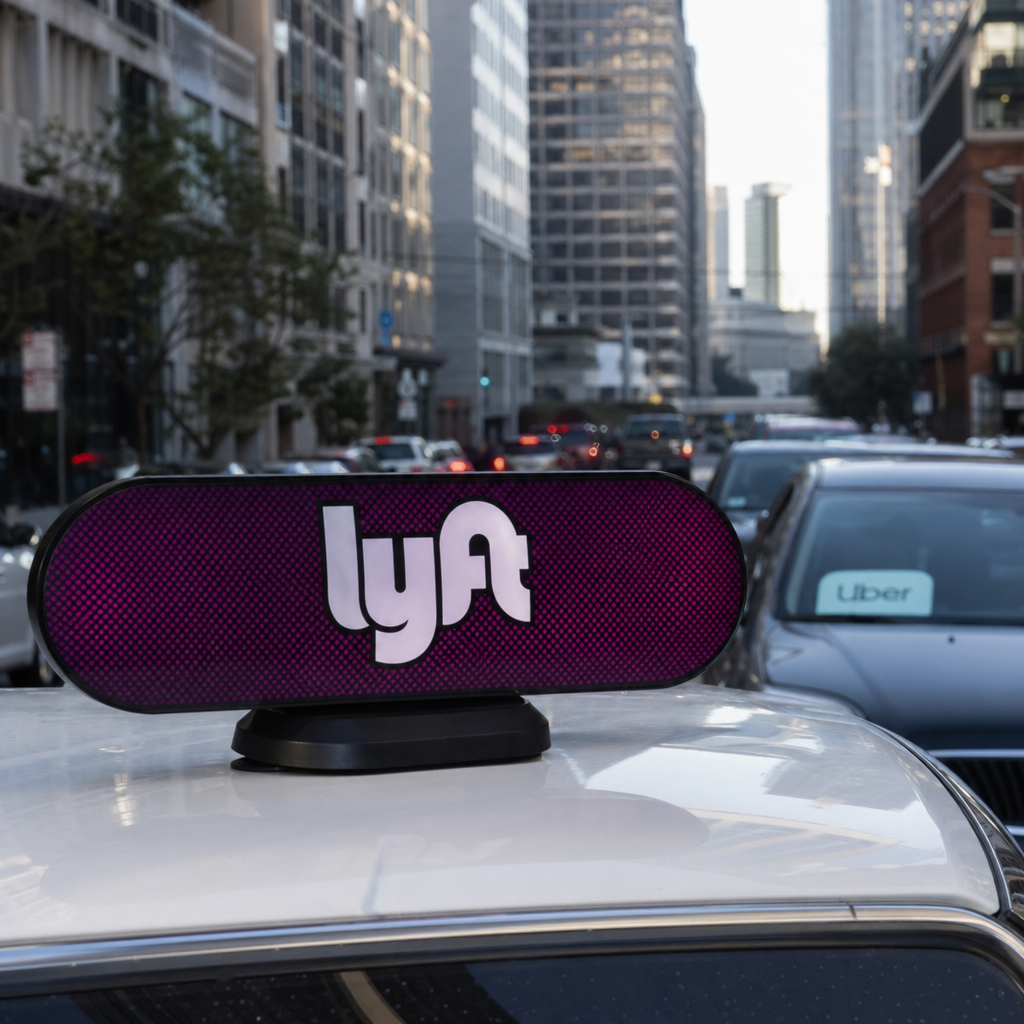
Lyft’s drive in the competitive world of ride-sharing reflects a larger story about how digital platforms reshape urban transportation, labor economics, and consumer expectations. Founded in 2012 as a spinout of Zimride, Lyft grew from a friendly pink-mustache startup into one of North America’s most recognized mobility brands. In practical terms, ride-sharing refers to app-based marketplaces that match passengers needing transportation with drivers using their own vehicles, while corporate giants are firms with the scale, capital access, brand reach, and regulatory influence to shape an entire industry. This hub article examines Lyft not as an isolated company profile, but as a gateway into the wider “Company Spotlights” subtopic, where the most useful analysis connects business strategy, operating model, financial discipline, competitive positioning, and long-term risk.
Having worked on transportation-market analysis and platform benchmarking, I have seen that readers usually ask the same core questions: What makes Lyft different from larger rivals? How does it make money? Why has profitability been difficult across ride-sharing? What should investors, operators, and consumers watch next? Those are the right questions, because ride-sharing is a scale business constrained by regulation, driver supply, insurance costs, and local demand density. A company can have a beloved app experience and still struggle if unit economics deteriorate in key cities. Conversely, a platform with intense pricing discipline and better marketplace balance can steadily improve contribution margins even in a brutally competitive category.
As a hub for deeper coverage of corporate giants, this article maps the essential themes that connect Lyft to adjacent analyses of Uber, DoorDash, Tesla, Amazon, and other platform-led businesses. Lyft matters because it offers a clear case study in how a focused company competes against a larger opponent without trying to win every market, every product line, or every geography. Its decisions around North American concentration, multimodal transport, autonomous vehicle partnerships, driver incentives, and cost structure reveal how modern public companies survive when they are not the category leader. Understanding Lyft therefore helps readers understand much more than one brand; it clarifies how strategy works when scale, trust, and execution must align every day.
Lyft’s Business Model and Revenue Engine
Lyft primarily generates revenue by taking a portion of gross bookings from rides arranged on its platform, then managing the difference between what riders pay and what drivers receive after incentives, insurance, support, and platform costs. In plain language, the company operates a two-sided marketplace. Riders open the app expecting speed, safety, and predictable pricing. Drivers open the app expecting enough trip volume and earnings opportunity to justify time, fuel, maintenance, and depreciation. If either side weakens, the marketplace suffers. This is why ride-sharing economics depend on liquidity: enough drivers in the right places at the right times to keep wait times low without flooding the market with underutilized supply.
Lyft has also expanded beyond standard rides into offerings such as scheduled trips, airport transportation, business travel integrations, bikes and scooters in select markets, and partnerships that connect the app to broader mobility planning. In my experience reviewing platform operations, ancillary products rarely matter because they are fashionable; they matter when they reduce customer acquisition costs, increase trip frequency, or improve retention. Airport rides, for example, often carry higher basket sizes, while corporate travel can deliver recurring demand from expense-account users. Similarly, multimodal options can keep a customer inside one ecosystem, even if a car ride is not always the best fit.
The central challenge is balancing growth and margin. Heavy rider discounts can stimulate trips but erode take rates. Aggressive driver bonuses can improve reliability during peak periods but pressure profitability. Insurance is another major variable, especially in dense metropolitan regions where claims severity can be high. For that reason, serious analysis of Lyft always goes beyond revenue headlines. Gross bookings, active riders, rides per active rider, contribution margin, and adjusted EBITDA trends usually tell a clearer story than app-download rankings alone.
How Lyft Competes Against Larger Rivals
Lyft’s competitive position is often described through comparison with Uber, but that framing is only partially sufficient. The better question is how Lyft chooses battles. Unlike Uber, which built an expansive portfolio across food delivery, freight, and international markets, Lyft has historically emphasized North American ride-sharing and related mobility services. That narrower focus can be a weakness because it reduces diversification, yet it can also be a strength because management attention, capital, and product development stay concentrated on a smaller set of operational problems.
Brand perception has long been part of Lyft’s differentiation. The company cultivated an image centered on friendliness, simplicity, and rider-first experience, particularly in its earlier years. While branding alone does not overcome pricing gaps, it can influence retention when competing apps offer similar pickup times. More concretely, Lyft has tried to compete through marketplace efficiency, service reliability, and targeted partnerships rather than sheer geographic sprawl. A practical example is its emphasis on U.S. and Canadian urban corridors where demand density supports faster matching and more predictable driver utilization.
Competition in ride-sharing is rarely winner-take-all at the national level; it is hyperlocal. In one city, better airport queue management can shift driver loyalty. In another, event traffic or transit gaps can create temporary demand spikes that reward the app with better surge calibration. This is why local operations, policy teams, and driver communications matter more than many casual observers assume. Lyft’s performance is determined city by city, neighborhood by neighborhood, hour by hour.
| Competitive factor | Why it matters for Lyft | Real-world implication |
|---|---|---|
| Driver supply density | Determines pickup times and ride availability | Higher density near airports and downtown cores improves conversion and rider satisfaction |
| Pricing discipline | Affects margins and rider retention | Deep discounts can boost short-term trips but weaken long-term profitability |
| Geographic focus | Concentrates capital and operational attention | North American specialization can sharpen execution but limits diversification |
| Regulatory capability | Shapes market access and labor compliance | Strong local engagement helps navigate driver classification and safety mandates |
| Partnership strategy | Extends platform value without building every asset internally | Transit, rental, and autonomous vehicle alliances can expand reach at lower fixed cost |
Operations, Regulation, and the Economics of Scale
Ride-sharing companies look asset-light on the surface because drivers provide vehicles, but operational complexity is high. Lyft must maintain dispatch technology, trust and safety systems, fraud controls, insurance frameworks, payment infrastructure, customer support, and data science models that forecast demand and supply. Matching algorithms are not cosmetic features; they directly influence wait times, driver idle periods, route quality, and marketplace balance. Small improvements in estimated time of arrival or ride assignment can produce meaningful gains across millions of trips.
Regulation remains one of Lyft’s defining business constraints. Cities and states set rules on background checks, accessibility, airport permits, congestion policies, minimum earnings standards, and worker classification. California’s Proposition 22 debate showed how expensive and consequential labor-policy battles can become for app-based companies. In some jurisdictions, policymakers prioritize flexibility for independent contractors. In others, they push for employee-style protections or minimum pay formulas. Lyft must therefore build a model flexible enough to absorb compliance changes without breaking marketplace economics.
Scale matters because fixed costs such as engineering, compliance, and brand marketing can be spread across more rides. Yet scale does not solve every problem. If a platform expands into low-density markets with weak utilization, its local economics may deteriorate. I have seen this repeatedly in platform businesses: growth that looks impressive in presentation decks can conceal poor route density, expensive incentives, and weak rider retention. For Lyft, disciplined scale is more valuable than reckless expansion. The company’s long-term health depends on profitable frequency, not just footprint.
Technology, Partnerships, and the Future of Mobility
Lyft’s future is tied to how effectively it uses technology to improve convenience, lower friction, and expand transportation options beyond a single point-to-point car ride. Product quality begins with the rider app and driver app, but it extends into navigation, fraud detection, dynamic pricing, customer identity verification, and support automation. Better software reduces cancellations, shortens pickup times, and improves trust. In transportation marketplaces, those gains are not abstract; they directly affect whether a customer opens the app again next week.
Autonomous vehicles are the most discussed long-term variable. Lyft previously sold its in-house autonomous unit, then pursued partnership-oriented approaches with autonomous technology developers and fleet operators. That choice reflects a realistic capital allocation principle: building a complete self-driving stack is vastly more expensive and uncertain than integrating with specialists. If autonomous ride-hailing scales commercially, Lyft could serve as a demand marketplace and fleet distribution layer rather than the manufacturer of the underlying system. This is similar to how other platform companies create value through orchestration instead of vertical ownership.
Partnerships with rental firms, transit agencies, business-travel platforms, and autonomous developers also fit Lyft’s broader strategic pattern. The company does not need to own every adjacent capability to remain relevant. It needs to sit at key decision points in the customer journey. When a traveler books an airport transfer, when an employer reimburses commute benefits, or when a city integrates first-mile and last-mile transit options, Lyft benefits by being the trusted interface. That interoperability is increasingly important as urban mobility becomes more modular and data-driven.
What Lyft Reveals About Corporate Giants
As a hub within “Diving Deeper into Corporate Giants,” Lyft offers a useful lens for comparing modern public companies that compete through platforms rather than traditional vertically integrated operations. Like Amazon, it relies on logistics-like precision and software orchestration. Like DoorDash, it must balance marketplace participants with different incentives. Like Tesla, it operates in a sector where technology narratives can outrun commercial reality. Like Uber, it faces the constant pressure of proving that convenience can coexist with durable profits. Those parallels make Lyft an ideal entry point for readers exploring broader corporate strategy.
The main lesson is that corporate giants are not defined only by revenue size. They are defined by strategic leverage: network effects, data advantages, operating systems, policy influence, and capital allocation choices that shape entire ecosystems. Lyft demonstrates how a second-place company can still matter enormously if it sharpens focus, improves execution, and occupies critical consumer habits. For readers building a deeper understanding of company spotlights, the next step is simple: use Lyft as a benchmark, then compare its model, margins, and strategic choices with other major firms in this hub to see how competitive advantage is really built.
Frequently Asked Questions
What makes Lyft an important company in the ride-sharing industry?
Lyft matters because its growth mirrors the rise of app-based transportation as a mainstream part of urban life. Launched in 2012 as a spinout of Zimride, Lyft helped popularize the idea that a smartphone could function as the entry point to on-demand mobility, connecting riders and drivers in real time through a digital marketplace. What began as a smaller, more personable alternative in the early ride-sharing era evolved into one of North America’s most recognized transportation platforms. That evolution is significant because it shows how quickly consumer habits can change when convenience, pricing transparency, and mobile technology come together in a practical service.
Beyond brand recognition, Lyft is important because it sits at the intersection of several major economic and social trends. It has influenced how people think about car ownership, first-mile and last-mile commuting, airport travel, and late-night transportation. It has also become part of larger debates about gig work, labor classification, local regulation, surge pricing, and the responsibilities of platform companies. In that sense, Lyft is not just a transportation app; it is a case study in how digital platforms reshape service industries, alter urban movement patterns, and raise new questions about competition, worker protections, and consumer expectations.
How does Lyft compete in a crowded and highly competitive ride-sharing market?
Lyft competes by balancing scale, brand identity, pricing strategy, and user experience in a market where riders can switch apps quickly and drivers often compare earning opportunities across platforms. In practical terms, ride-sharing is a marketplace business: the company needs enough drivers to reduce passenger wait times and enough riders to create steady earning opportunities for drivers. That means Lyft’s competitive position depends heavily on network effects, operational efficiency, and its ability to keep both sides of the marketplace engaged. If ride availability falls or prices become uncompetitive, users can move elsewhere almost immediately.
To stay relevant, Lyft has historically emphasized a rider-friendly experience, app simplicity, and a recognizable brand built around accessibility and approachability. It also competes through promotions, loyalty features, partnerships, and service diversification, including options such as scheduled rides, airport trips, and multimodal transportation integrations in some markets. At the same time, Lyft must manage the difficult economics of the sector: attracting drivers with incentives while keeping fares attractive for passengers and moving toward profitability. That challenge is central to the ride-sharing business model. Success is not just about offering rides; it is about creating a reliable, trusted, and cost-effective platform in an environment where regulation, labor costs, fuel prices, and local transportation trends can all affect performance.
How has Lyft changed urban transportation and consumer expectations?
Lyft has helped redefine what many people expect from transportation in cities and suburbs. Before ride-sharing became common, travelers often had to rely on personal vehicles, taxis, public transit schedules, or informal arrangements for local trips. Lyft introduced a more flexible model in which users could request a ride on demand, track driver arrival in real time, see estimated fares in advance, and pay seamlessly through an app. Those features may now feel standard, but they represented a meaningful shift in convenience and transparency when ride-sharing platforms first gained popularity.
The broader impact is that consumers increasingly expect transportation to be immediate, trackable, and personalized. That expectation extends beyond ride-sharing itself and has influenced adjacent sectors, including food delivery, package logistics, and even public transit planning. In urban transportation, Lyft has become part of a larger ecosystem that can complement, compete with, or fill gaps around buses, trains, and taxis. For some riders, it offers an alternative to owning a car or driving in dense traffic. For others, it serves as a practical solution for airport transfers, commuting connections, or late-night travel when public transit options are limited. At the same time, its expansion has fueled policy discussions about congestion, curb management, emissions, and how private mobility platforms fit into long-term city planning.
Why is Lyft often discussed in conversations about labor economics and the gig economy?
Lyft is frequently part of labor economics debates because its business model depends on large numbers of drivers who typically work as independent contractors rather than traditional employees. That structure gives the platform flexibility and allows many drivers to choose their own schedules, work part time, or supplement other income sources. For some people, that flexibility is one of ride-sharing’s biggest advantages. It lowers the barrier to entry for earning money and enables work patterns that fit around school, caregiving, or other jobs.
However, that same model raises important questions about earnings stability, benefits, insurance, workplace protections, and the allocation of economic risk. Critics argue that platform-based work can shift costs such as vehicle maintenance, depreciation, fuel, and downtime onto drivers, while companies retain significant control through app design, pricing algorithms, performance metrics, and access to demand. Supporters counter that many drivers value independence and do not want rigid employment arrangements. Lyft’s role in these debates is significant because it helps illustrate how digital marketplaces can create new forms of work while challenging older legal and economic categories. As a result, policymakers, courts, labor advocates, and business leaders often look at companies like Lyft when considering how labor law should adapt to platform-based employment models.
What challenges and opportunities lie ahead for Lyft in the future of mobility?
Lyft’s future will likely depend on how well it adapts to a transportation landscape that is still evolving. One major challenge is sustaining growth while improving financial performance in a business known for thin margins, heavy competition, and high customer acquisition costs. The company must continue attracting drivers, retaining riders, and managing price sensitivity without sacrificing service quality. It also faces external pressures such as changing regulations, local licensing requirements, insurance costs, economic slowdowns, and shifts in commuting behavior, especially as remote and hybrid work patterns affect urban travel demand.
At the same time, Lyft has meaningful opportunities if it can position itself as more than just a basic ride-hailing app. The broader mobility market includes connections to public transit, bike and scooter access, corporate travel solutions, healthcare transportation, and technology-driven efficiency improvements. Consumer behavior is also creating room for services that are integrated, flexible, and easier to use than traditional transportation systems. If Lyft can strengthen its role within that ecosystem, improve marketplace reliability, and maintain consumer trust, it can remain an important player in the future of mobility. In many ways, the company’s story is still unfolding, and its long-term significance will depend on whether it can keep evolving as urban transportation, labor expectations, and digital platform economics continue to change.