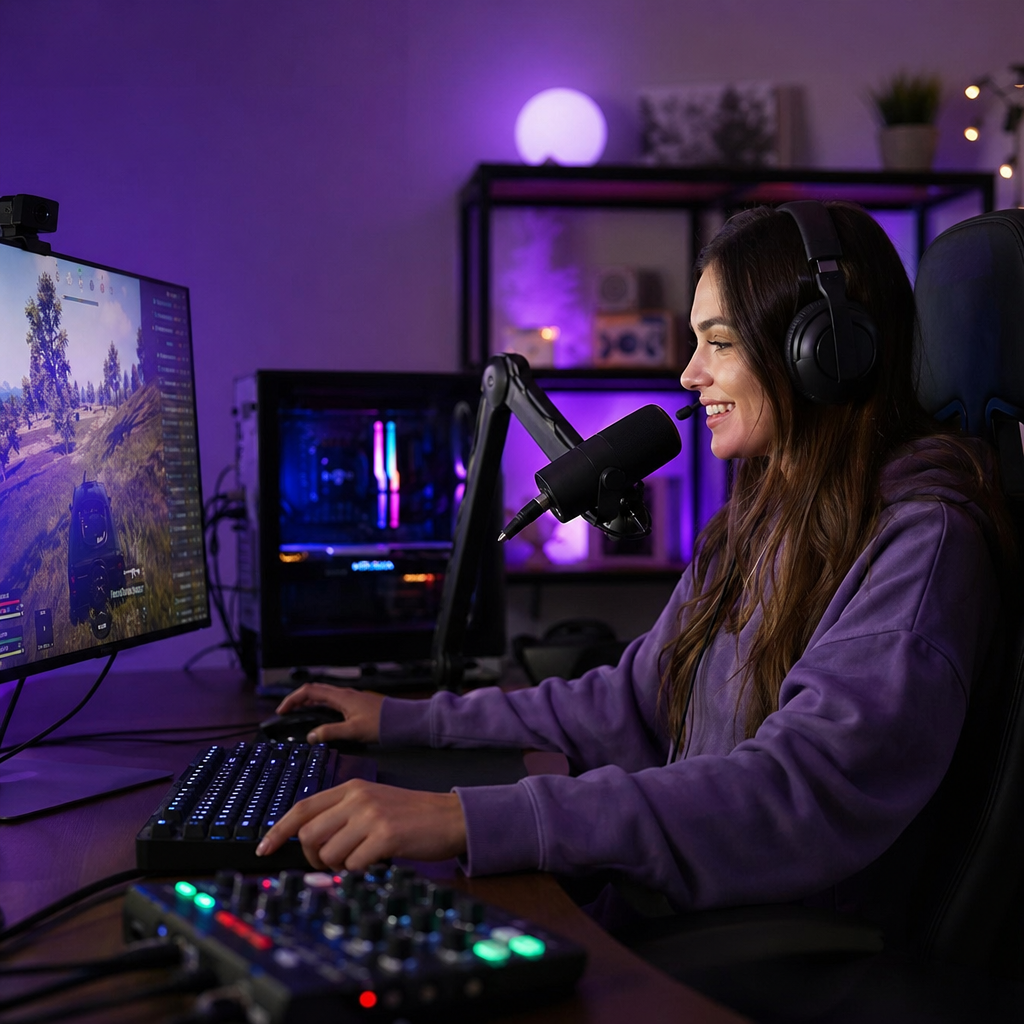
Twitch’s rise to dominance in live streaming reflects a rare mix of product timing, community design, and corporate scale, turning a niche gaming broadcast site into one of the most influential media platforms on the internet. In this Company Spotlights hub, Diving Deeper into Corporate Giants, Twitch deserves close attention because its growth explains how digital platforms build durable audiences, create new labor markets, and reshape entertainment consumption in real time. Live streaming means transmitting video over the internet as events happen, while creator monetization refers to the systems that let streamers earn money through subscriptions, ads, sponsorships, and viewer donations. Platform effects describe the self-reinforcing cycle in which more creators attract more viewers, and more viewers attract more creators. I have worked with streaming brands, creator programs, and community moderation workflows, and Twitch consistently stands out because it solved not only video delivery, but also participation. Users do not simply watch on Twitch; they chat, subscribe, gift, raid, clip, and build identity around channels. That interactivity matters because attention online is increasingly won by platforms that make audiences feel present rather than passive. Twitch is therefore not just a company profile; it is a case study in network effects, creator economics, content governance, and technology infrastructure.
Origins, early positioning, and the breakthrough in gaming
Twitch grew out of Justin.tv, a livestreaming startup launched in 2007 that initially centered on lifecasting. The decisive shift came when the company recognized that gaming generated deeper engagement, repeat visits, and community loyalty than general live video. In 2011, Twitch was spun out as a dedicated gaming platform, and that specialization was not a limitation; it was a strategic advantage. By focusing on game broadcasts, esports, speedrunning, and personality-driven gameplay, Twitch built a clear brand at a moment when broadband access, cheap capture software, and gaming culture were all expanding. I have seen many platforms fail by trying to serve everyone at once. Twitch succeeded because its initial audience knew exactly why it existed.
The platform benefited from several external forces. Competitive gaming was becoming mainstream, with titles like League of Legends, Dota 2, and Counter-Strike building global fan bases. Publishers also started to understand that streamed gameplay acted as discovery, marketing, and community retention. Rather than replacing game sales, streams often boosted them. Twitch became the default venue for tournaments, patch reaction streams, and creator-led launch coverage. This concentration created a feedback loop: if viewers expected the biggest gaming moments to happen on Twitch, creators had to be there, and if creators were there, viewers kept returning. That is how a category leader forms.
Product design that turned watching into participation
Twitch’s strongest product decision was making live chat central instead of secondary. On most video platforms, comments are asynchronous and peripheral. On Twitch, chat is the experience. Streamers react instantly to viewers, moderators shape tone in real time, and community shorthand evolves channel by channel. Emotes such as Kappa and PogChamp became cultural signals that compressed emotion, humor, and group identity into recognizable language. From an engagement perspective, Twitch converted lonely viewing into social attendance. That difference is easy to underestimate until you compare average session behavior. A polished prerecorded video can attract massive reach, but a live creator who answers your message by name creates a stronger habit.
Twitch also built mechanics that reinforced discovery and loyalty. Raids let one streamer send viewers to another channel after a broadcast, spreading traffic and encouraging collaboration. Clips made live moments shareable outside the platform. Bits and subscriptions gave fans simple, native ways to support creators without leaving the stream. Category pages organized content around games and interests, helping viewers browse by intent. These features were practical, but they also carried emotional weight. They made support public, recognition visible, and participation measurable. That combination is unusually powerful in media products because it transforms fandom into action.
Amazon’s acquisition and the power of infrastructure
Amazon acquired Twitch in 2014 for roughly $970 million, a move that gave Twitch resources many competitors could not match. The value was not only financial. Amazon brought cloud infrastructure through AWS, broader advertising relationships, and an ecosystem that later connected with Prime Gaming benefits. In practical terms, infrastructure matters enormously in live streaming. Low latency, global content delivery, reliability during major events, and scalable chat systems are expensive and technically demanding. A platform can have strong creators and still lose users if streams buffer, notifications fail, or concurrent traffic overwhelms the system.
From my experience evaluating platform operations, this is where corporate backing changes the game. Twitch could invest in trust and safety staffing, creator tools, rights management, and region-specific scaling while still defending its leading market position. Amazon also gave Twitch strategic patience. Not every product decision worked, and profitability in creator platforms is complicated because bandwidth, moderation, and revenue sharing are costly. But Amazon’s ownership meant Twitch had time to expand categories such as Just Chatting, music, art, and sports while keeping gaming at the core. The acquisition did not create Twitch’s community advantage, yet it helped preserve and extend it during a period when live video competition intensified.
Creator economics, monetization, and the platform tradeoffs
Twitch’s business model relies on several revenue streams: advertising, channel subscriptions, Bits, sponsorship activation, and commerce-adjacent partnerships. Affiliates and Partners can monetize directly on-platform, while larger creators often layer in YouTube uploads, Patreon support, merchandise, and brand deals. The strength of Twitch’s model is recurring fan support. A monthly subscription is not just payment; it is a membership signal that often includes emotes, badges, and status inside the community. Gifted subscriptions amplify this effect by allowing viewers to support both the streamer and other audience members publicly.
Still, Twitch’s monetization system has real tensions. Revenue shares have been a recurring issue, especially for top creators comparing platform payouts across YouTube, Kick, and direct sponsorships. Advertising creates another tradeoff: more ad load can raise platform revenue but hurt user experience, particularly when preroll ads interrupt discovery. Streamers also face income volatility. A creator may build a loyal audience yet still struggle with burnout, inconsistent subscriber counts, and dependence on platform policies they do not control. That is why serious analysis of Twitch must include both upside and fragility.
| Monetization method | How it works | Primary benefit | Main limitation |
|---|---|---|---|
| Subscriptions | Monthly paid channel memberships | Recurring revenue and community status | Revenue share varies and churn can be high |
| Bits | Viewers buy and spend virtual cheering currency | Easy in-stream support | Less predictable than subscriptions |
| Advertising | Preroll and midroll ads during streams | Scales with audience size | Can reduce retention and discovery |
| Sponsorships | Brands pay creators for integrated promotion | Often highest payout for mid and top creators | Requires sales effort and audience fit |
Competition, category expansion, and why Twitch stayed ahead
Twitch has faced credible pressure from YouTube Live, Facebook Gaming, Mixer before its shutdown, and more recently Kick. Each competitor offered some combination of larger guarantees, stronger archives, easier discoverability, or more favorable creator economics. Yet Twitch retained a lead because dominance in live streaming is not won by contract offers alone. It is won by habit, social norms, and audience expectation. When viewers think of live culture, they still disproportionately think of Twitch. That brand association is difficult to buy.
Another reason Twitch stayed ahead was expansion beyond pure gameplay. Just Chatting became one of the platform’s largest categories, proving that creator personality could be as valuable as game skill. Music streams, watch-adjacent formats, political coverage, cooking, fitness, and sports commentary broadened Twitch’s addressable audience. During the pandemic, this flexibility mattered even more as audiences sought live connection, not just entertainment. At the same time, Twitch’s gaming DNA remained an advantage. It continued to host launch-day excitement, esports watch communities, and highly engaged fandoms around specific titles. The platform did not abandon its core; it layered new behaviors on top of it.
Moderation, safety, and the responsibilities of scale
No platform reaches Twitch’s size without governance challenges. Harassment, hate raids, copyright disputes, gambling controversies, and inconsistent enforcement have all tested the company. Trust and safety on live platforms is uniquely difficult because harmful behavior unfolds in real time, often at high speed, across video, audio, and chat simultaneously. Automated systems help with spam detection and keyword filtering, but nuanced moderation still depends on human review, trained staff, and empowered channel moderators. Twitch has introduced tools such as AutoMod, verification controls, and improved reporting flows, but execution remains uneven from the creator perspective.
This matters strategically, not just ethically. Brands avoid unsafe environments, creators leave spaces where harassment feels unmanaged, and viewers disengage when moderation appears arbitrary. In my work reviewing creator ecosystems, the strongest platforms are not those with the fewest incidents; they are the ones with the clearest rules, fastest responses, and most transparent appeals. Twitch has made progress, but its scale ensures moderation will remain a defining corporate challenge. Any hub page examining corporate giants should recognize that platform power and platform responsibility expand together.
Lessons from Twitch for understanding modern corporate giants
Twitch offers a useful template for analyzing major internet companies. First, category leadership often starts with focus, not breadth. Twitch won by serving gaming deeply before expanding. Second, community architecture can be more defensible than raw technology. Competitors can replicate streaming features, but it is harder to reproduce culture, norms, and creator-viewer rituals. Third, infrastructure and ownership matter. Amazon’s backing gave Twitch resilience, but the community engine had to exist first. Fourth, monetization must align with user behavior. Twitch’s strongest revenue products reward participation, status, and belonging rather than simple view counts alone.
For readers exploring this Company Spotlights hub, Twitch sits alongside other corporate giants as an example of how digital businesses scale through network effects, operational discipline, and constant adaptation. Its rise was not accidental, and its leadership is not guaranteed forever. The company still faces competition, creator dissatisfaction, regulatory scrutiny, and evolving consumer habits. Even so, Twitch changed how the internet experiences entertainment: live, communal, and creator-led. That is the core takeaway. If you are diving deeper into corporate giants, use Twitch as a lens for understanding platform strategy, audience loyalty, and the economics of digital participation, then continue through the hub to compare how other major companies built and defended their positions.
Frequently Asked Questions
1. Why did Twitch become the dominant platform in live streaming instead of remaining a niche gaming website?
Twitch’s dominance came from a powerful combination of timing, product-market fit, and platform design. It entered the market when broadband internet, gaming culture, and creator-led entertainment were all expanding quickly, which gave it an ideal opening to serve an audience that traditional media companies did not fully understand. Early on, Twitch focused intensely on live gaming content, and that specialization mattered. Rather than trying to be everything for everyone, it became the place where gamers could watch skilled play, discover personalities, and participate in events as they happened. That focus helped Twitch build strong network effects: the more streamers it attracted, the more viewers came; the more viewers arrived, the more attractive the platform became for creators.
Another major reason for its rise was community design. Twitch did not just distribute video; it made live interaction central to the experience. Real-time chat, subscriber badges, emotes, channel loyalty, and creator-specific communities turned viewing into participation. Audiences were not passive. They reacted, joked, donated, subscribed, and helped define the culture of each stream. That level of engagement gave Twitch a social stickiness that many competitors struggled to match. Once users formed habits and relationships on the platform, Twitch became harder to replace.
Corporate scale also played an important role, especially after Amazon acquired the company in 2014. The acquisition gave Twitch infrastructure, financial backing, and strategic support at a critical stage of growth. It allowed the platform to invest in reliability, monetization systems, creator tools, and broader international expansion. In short, Twitch won because it understood a specific audience early, built a product around live participation rather than simple broadcasting, and then used scale to deepen its market position.
2. How did Twitch change the way audiences consume entertainment online?
Twitch helped normalize a major shift in digital entertainment: the move from edited, on-demand viewing toward live, interactive, personality-driven media. Before platforms like Twitch became mainstream, much of internet video revolved around prerecorded clips that viewers watched alone and asynchronously. Twitch introduced a different model, one built around immediacy. People were not just tuning in for content; they were tuning in for shared presence. The appeal came from watching something unfold in real time, reacting alongside thousands of others, and feeling connected to both the creator and the audience.
This changed expectations around what entertainment could be. On Twitch, viewers often spend hours with a single streamer, not because every moment is high drama, but because the relationship feels ongoing and communal. That is very different from the tightly packaged structure of traditional television or even short-form social video. Streamers blend performance, conversation, gameplay, humor, and routine into a format that feels more personal and less scripted. As a result, audiences began valuing authenticity, access, and interaction as much as production quality.
Twitch also influenced the broader media ecosystem by proving that communities can form around live digital personalities at massive scale. The platform made it clear that audiences would show up consistently for creators who build trust and routine, not just for celebrity names or polished studio productions. Its success pushed other platforms and media companies to invest more heavily in live formats, creator engagement, and community-centric features. In that sense, Twitch did not just grow within the entertainment landscape; it helped redefine it.
3. What role did Twitch’s community features play in building durable audience loyalty?
Twitch’s community features were central to its long-term success because they transformed individual streams into recurring social spaces. Viewers did not simply visit Twitch to watch gameplay or commentary. They returned to specific channels because those channels felt like communities with shared language, inside jokes, rituals, and norms. Live chat was the foundation of that experience. It gave viewers a way to react instantly, speak directly to streamers, and participate in moments collectively. Whether during a tournament, a surprise announcement, or an ordinary broadcast, chat turned content into an event.
Features such as emotes, subscriber perks, channel points, raids, and moderation systems deepened that sense of belonging. These tools helped creators shape identity within their channels and gave fans visible ways to express commitment. Even small design decisions mattered. Subscriber badges signaled loyalty, custom emotes gave communities their own vocabulary, and raids encouraged cross-channel discovery while reinforcing the broader ecosystem. Together, these features made Twitch feel less like a video platform and more like a network of live clubs built around personalities and interests.
This loyalty was economically significant as well. Because viewers felt attached to communities, they were more willing to support creators through subscriptions, donations, and other forms of direct monetization. That created a virtuous cycle: stronger communities produced more consistent revenue, which enabled creators to stream more often and invest further in their channels. Durable audience loyalty on Twitch was not an accident of popularity. It was the result of a product intentionally designed to reward participation, identity, and routine social engagement.
4. How did Twitch create new labor markets and career paths for digital creators?
Twitch was important not only as a media platform, but also as a labor platform. It helped turn live streaming into a viable profession for a wide range of people, including gamers, entertainers, commentators, educators, artists, musicians, and niche experts. Before Twitch, there were fewer clear pathways for individuals to build businesses around real-time broadcasting. Twitch changed that by creating monetization systems that allowed creators to earn directly from their audiences through subscriptions, bits, donations, sponsorships, and advertising. In doing so, it enabled a new category of digital work centered on consistent live presence rather than traditional employment or studio-based production.
What makes this especially significant is that Twitch did not simply create a handful of internet celebrities. It helped establish an entire creator economy with layered income opportunities. Top streamers could build major businesses, but mid-sized and smaller creators could also generate meaningful revenue by cultivating dedicated communities. Around those creators, additional jobs emerged as well, including moderators, editors, talent managers, graphic designers, brand consultants, esports commentators, and event organizers. Twitch therefore contributed to a broader economic ecosystem, not just a single platform audience.
At the same time, Twitch also highlighted the pressures of digital labor. Streaming rewards consistency, long hours, audience management, and constant engagement, which can blur the line between work and personal life. Income can be volatile, platform rules can change, and competition for attention is intense. That complexity is part of why Twitch matters in business analysis. It shows how digital platforms can create new opportunities while also introducing new forms of precarious work. Its rise offers a case study in how online platforms do not merely distribute content; they shape entire labor markets and career structures.
5. Why is Twitch an important company to study when analyzing modern digital platform power?
Twitch is an important company to study because it demonstrates how platform power is built through a blend of culture, technology, monetization, and strategic ownership. It began with a focused use case, expanded through strong community engagement, and then leveraged scale to become a major force in online entertainment. That trajectory reveals a lot about how modern internet companies establish durable positions. Success was not just about attracting traffic. Twitch built habits, social relationships, creator dependence, and audience routines, all of which made its ecosystem resilient and difficult for competitors to disrupt.
It is also a revealing example of how platforms influence both consumer behavior and market structure. Twitch changed how people spend leisure time, how creators earn income, how brands approach digital audiences, and how live media is produced and distributed. It sits at the intersection of entertainment, social networking, advertising, and labor economics. That makes it especially valuable in a Company Spotlights context, because its history reflects several of the most important themes in the modern digital economy: the rise of creator-led media, the strength of community-driven platforms, the value of real-time engagement, and the role of large corporate parents in accelerating growth.
Studying Twitch also helps explain a larger truth about internet platforms: the most influential companies are often the ones that convert user participation into lasting ecosystems. Twitch did not simply host livestreams. It created an environment where audiences, creators, advertisers, and partners all had reasons to keep returning. That is the essence of platform dominance. For anyone trying to understand how corporate giants build influence online, Twitch offers a clear and highly relevant case.