Silicon Valley has long been at the forefront of technological innovation, and its latest exploration in the realm of Virtual Reality (VR) for training is no exception. In an era where immersive technology is transforming the way we learn and work, VR has emerged as a game-changing tool, particularly in training and skill development. By creating realistic, interactive environments, VR allows users to engage in lifelike simulations that sharpen their skills and enhance their understanding of complex tasks. Let’s delve into how Silicon Valley-based companies are pioneering the use of VR in training applications, transforming various industries and redefining the future of learning.
Introduction: The Boom of Virtual Reality in Training
The rapid advancement of VR technology has paved the way for a multitude of innovative applications, especially in the training domain. Not too long ago, the concept of VR was confined to science fiction, but today it’s a tangible reality used to solve real-world problems. Silicon Valley, the epicenter of tech innovation, is leading the charge with cutting-edge VR solutions designed to revolutionize training across sectors. The fundamental idea behind using VR for training is to create a fully immersive experience that engages the user’s senses and allows for hands-on practice in a safe, controlled environment. With VR, learners can experience scenarios they might never encounter in the real world, thus vastly enriching their learning process.
From medical professionals honing surgical techniques to military personnel engaging in combat simulations, the applications of VR training are incredibly diverse. Companies like Google, Facebook (Meta), and various startups are at the helm, constantly pushing the boundaries of what’s possible. The economic implications are substantial as well; VR training can significantly reduce costs associated with traditional training methods such as travel, equipment, and instruction. Furthermore, it allows for repetitive practice without the associated risks, ensuring that learners achieve a high level of proficiency before applying their skills in the real world.
In this article, we will explore the primary ways in which VR is being utilized for training purposes in Silicon Valley. We’ll look at industry-specific applications, discuss the benefits of VR training, examine case studies, and speculate on future developments. By the end, it will be evident that VR is not just a fleeting trend, but a profound shift in how training is approached and executed.
Transforming Employee Training and Onboarding
One of the most compelling applications of VR in Silicon Valley is in employee training and onboarding. Traditionally, new employees undergo extensive training programs that often involve a combination of classroom instruction and hands-on experience. While effective, these traditional methods can be time-consuming, costly, and sometimes unable to fully prepare employees for real-world scenarios. Enter VR, a revolutionary tool that has the potential to transform the onboarding process.
With VR, new hires can be immersed in realistic simulations of their work environment, allowing them to gain practical experience and develop crucial skills before even stepping foot in the actual workplace. This level of immersion helps to bridge the gap between theoretical knowledge and practical application, making the learning experience more effective and engaging. For instance, a new employee at a manufacturing plant can practice operating complex machinery in a virtual environment, reducing the risk of costly mistakes and ensuring they are well-prepared for the challenges ahead.
Companies like Strivr, a Silicon Valley-based startup, are at the forefront of VR training for employee onboarding. Strivr’s VR platform has been used by major corporations such as Walmart and Verizon to create customized training programs. These programs have been shown to not only improve employee performance but also increase retention rates. By using VR, companies can provide consistent and standardized training experiences, regardless of geographic location, ensuring that all employees receive the same high-quality instruction.
Moreover, VR training can be easily scaled and updated, allowing companies to quickly adapt to changes in the industry or specific job roles. This flexibility is particularly valuable in fast-paced sectors like technology and finance, where staying ahead of the curve is essential. As more companies recognize the benefits of VR training, it’s likely that this technology will become the standard for employee onboarding and skill development.
Enhancing Medical Training and Simulation
The medical field is one of the most critical areas where VR is making a significant impact. Training healthcare professionals, especially surgeons, traditionally involves extensive education and hands-on practice, often with real patients, which comes with inherent risks. VR technology offers an alternative by providing a risk-free environment where medical practitioners can hone their skills.
Medical schools and hospitals are increasingly adopting VR to simulate complex surgical procedures and medical scenarios. These simulations allow trainees to practice techniques repeatedly until they achieve perfection. Companies like Osso VR and 3D Systems have developed highly sophisticated VR platforms that replicate the operating room environment, complete with detailed anatomical models. This enables surgeons to perform virtual surgeries, familiarize themselves with new medical instruments, and practice emergency response procedures.
One of the standout benefits of VR in medical training is its ability to offer instant feedback. Trainees can immediately see the consequences of their actions, allowing them to learn from mistakes without any real-world repercussions. This form of experiential learning accelerates skill development and enhances confidence among medical professionals.
Furthermore, VR training can bridge the gap between theoretical knowledge and practical application. Medical students can experience real-life situations that textbooks cannot adequately convey, such as patient interactions and the dynamic nature of an operating room. This holistic approach to training prepares future healthcare providers for the complexities of actual medical practice.
In addition to surgery, VR is also being used for other medical training purposes, such as diagnostic procedures and patient care simulations. This technology not only improves the proficiency of individual practitioners but also enhances teamwork and communication skills within healthcare teams. As VR continues to advance, it’s likely that its applications in medical training will expand, ultimately leading to better patient outcomes and more efficient healthcare systems.
Innovating Military and Defense Training
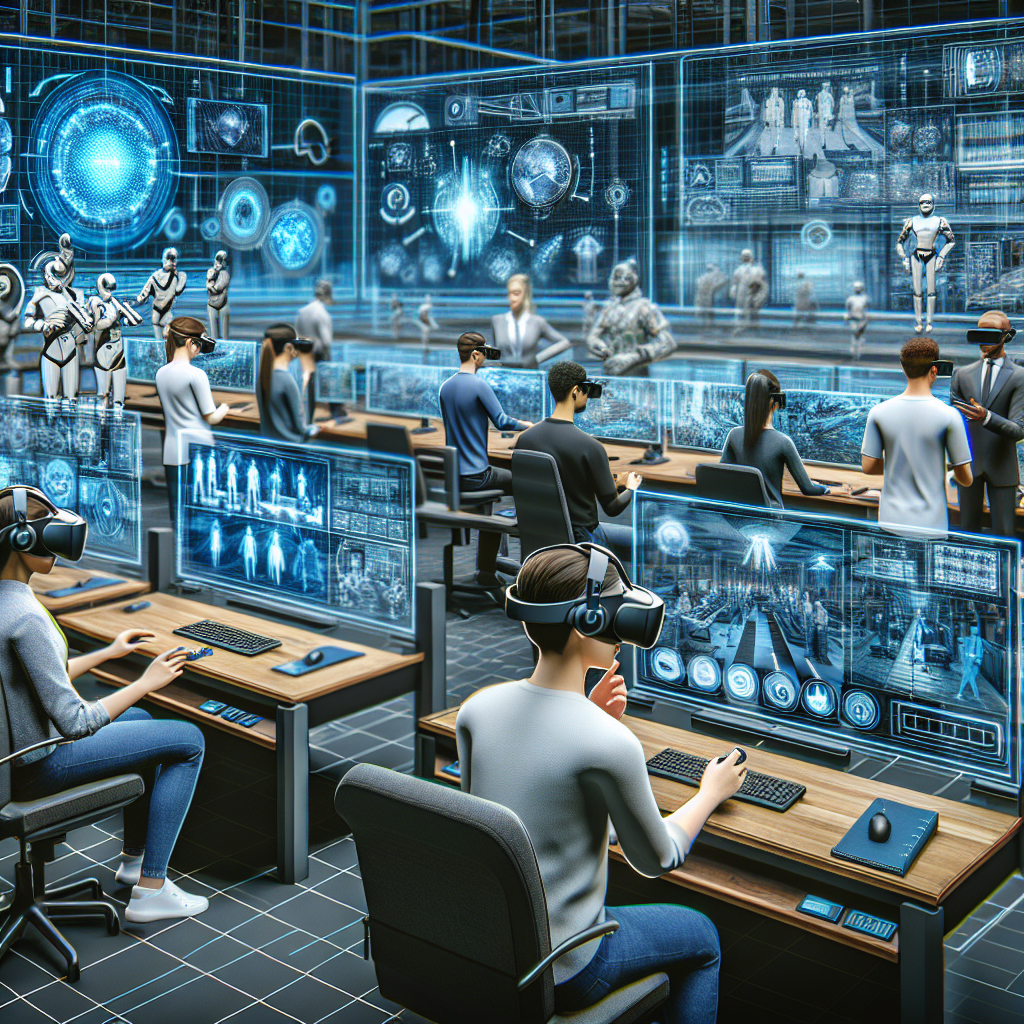
The military and defense sectors have long been pioneers in utilizing cutting-edge technology for training and operations. VR has proven to be an invaluable tool in preparing military personnel for a wide range of scenarios, from combat situations to equipment handling and tactical coordination. Silicon Valley companies, leveraging advanced VR technology, are playing a crucial role in enhancing the effectiveness and safety of military training programs.
One of the primary advantages of VR in military training is the ability to create realistic, immersive environments that replicate the complexities of real-world combat. Trainees can engage in simulations that mimic various terrains, weather conditions, and combat scenarios, allowing them to practice strategies and tactics in a controlled setting. This level of immersion helps to develop situational awareness and decision-making skills, which are critical in high-stress environments.
Companies like Oculus, a subsidiary of Facebook (Meta), and Ingenuity Studios have developed sophisticated VR platforms for military training. These platforms offer a range of simulations, from basic combat drills to advanced mission planning. By using VR, military personnel can conduct exercises that would be logistically challenging or dangerous to perform in real life. For example, soldiers can practice urban combat scenarios without the need for extensive physical infrastructure or travel.
In addition to combat training, VR is also being used for equipment handling and maintenance. Trainees can familiarize themselves with complex machinery and weaponry, learning how to operate and maintain them without the risk of damage or injury. This hands-on experience is invaluable, especially when dealing with high-cost or high-risk equipment.
Moreover, VR training can enhance teamwork and communication skills. Military units can engage in virtual exercises that require coordination and collaboration, fostering a strong sense of camaraderie and trust among team members. This is particularly important in combat situations, where effective communication and teamwork can be the difference between success and failure.
Revolutionizing Education and Lifelong Learning
Education is another area where VR is making significant strides, offering innovative solutions that enhance the learning experience for students of all ages. Traditional classrooms, while effective, often struggle to engage students fully and provide practical hands-on experiences. VR addresses these challenges by creating immersive educational environments that make learning more interactive, engaging, and impactful.
Silicon Valley companies are at the forefront of integrating VR into educational curricula. For instance, Google Expeditions allows students to take virtual field trips to historical sites, underwater ecosystems, and even outer space. These virtual experiences provide a level of engagement and excitement that traditional teaching methods cannot match, helping to foster a love for learning and curiosity about the world.
Beyond K-12 education, VR is also making waves in higher education and vocational training. Universities and technical schools are using VR to offer simulations that complement their degree programs. For example, engineering students can use VR to visualize complex structures and conduct virtual experiments, while medical students can practice procedures in a lifelike environment. This hands-on experience enhances understanding and retention of information, better preparing students for their future careers.
Moreover, VR is facilitating lifelong learning and professional development. Adults looking to acquire new skills or advance their careers can benefit from VR training programs that offer flexible and immersive learning experiences. For instance, professionals in fields such as aviation, automotive repair, and construction can use VR to practice and refine their skills without the need for extensive physical resources.
Another promising application of VR in education is in special education and inclusive learning. VR can be used to create customized learning environments that cater to the unique needs of students with disabilities. For example, students with autism can practice social interactions in a controlled, virtual setting, helping them develop crucial social skills in a safe and supportive environment.
As VR technology continues to advance, its applications in education will likely expand, offering new and exciting ways to enhance the learning experience. From virtual classrooms to interactive simulations, VR is poised to revolutionize education and make learning more accessible and engaging for everyone.
Case Studies: Success Stories of VR Training
To understand the true impact of VR training, it’s essential to look at real-world examples of how it is being implemented and the results it has achieved. Several Silicon Valley companies have successfully integrated VR into their training programs, yielding impressive outcomes. Let’s explore a few notable case studies that highlight the effectiveness of VR training.
One prominent example is Walmart’s use of VR for employee training. Walmart partnered with Strivr to develop a VR training program for its associates, focusing on customer service, operational procedures, and emergency response. The VR modules allowed employees to experience various scenarios, such as managing large crowds during Black Friday sales and handling customer complaints. The results were remarkable, with significant improvements in employee performance, confidence, and customer satisfaction. Walmart reported a 10-15% increase in employee retention rates and a noticeable reduction in training costs.
Another success story comes from the healthcare sector, where Stanford University School of Medicine implemented VR training for its medical students and residents. Using VR platforms developed by Osso VR, students were able to practice surgical procedures in a realistic virtual environment. The VR training simulations provided detailed feedback, allowing trainees to refine their techniques and gain confidence. The program resulted in a reduction in surgical errors and improved patient outcomes. Additionally, students reported feeling more prepared and confident as they transitioned from virtual practice to real-life surgeries.
In the defense sector, the U.S. Army has adopted VR training to enhance soldier preparedness. The Synthetic Training Environment (STE) developed by the Army uses VR to simulate combat scenarios and mission planning. Soldiers can conduct virtual war games, practice tactical maneuvers, and develop critical decision-making skills in a safe and controlled environment. The comprehensive VR training program has led to improved readiness, reduced training costs, and enhanced soldier resilience and adaptability.
These case studies demonstrate the versatility and effectiveness of VR training across different industries. By providing immersive, hands-on experiences, VR training is helping organizations achieve their goals more efficiently and effectively. As more companies recognize the value of VR, it’s likely that we will see an increase in its adoption and further success stories in the future.
Conclusion: The Future of VR Training in Silicon Valley
The integration of Virtual Reality in training is a testament to Silicon Valley’s relentless pursuit of innovation and excellence. As we have seen, companies across various industries are leveraging VR to create immersive, interactive, and effective training programs. From employee onboarding and medical training to military simulations and educational experiences, VR is transforming the way we learn and develop skills.
The benefits of VR training are clear: it offers a safe and controlled environment for practice, reduces training costs, enhances engagement and retention, and provides instant feedback. These advantages make VR an attractive option for organizations looking to improve their training programs and prepare their workforce for future challenges.
Looking ahead, the future of VR training in Silicon Valley seems promising. As technology continues to evolve, we can expect even more sophisticated and immersive VR experiences. Advances in hardware, such as more comfortable and affordable VR headsets, will make VR training more accessible to a broader audience. Additionally, developments in AI and machine learning will enhance the realism and adaptability of VR simulations, providing more personalized and effective training experiences.
Moreover, as remote work and distributed teams become more common, VR training can bridge the gap by offering consistent and high-quality training experiences regardless of location. This will be particularly valuable for global organizations looking to maintain a cohesive and well-trained workforce.
In conclusion, Virtual Reality for training is more than just a trend; it is a transformative technology that is reshaping the way we learn and develop skills. Silicon Valley’s innovative approaches to VR training are leading the charge, setting new standards for excellence and efficiency. As we move forward, the continued adoption and advancement of VR technology will undoubtedly unlock new possibilities and opportunities, driving us towards a future where learning is more immersive, engaging, and effective than ever before.