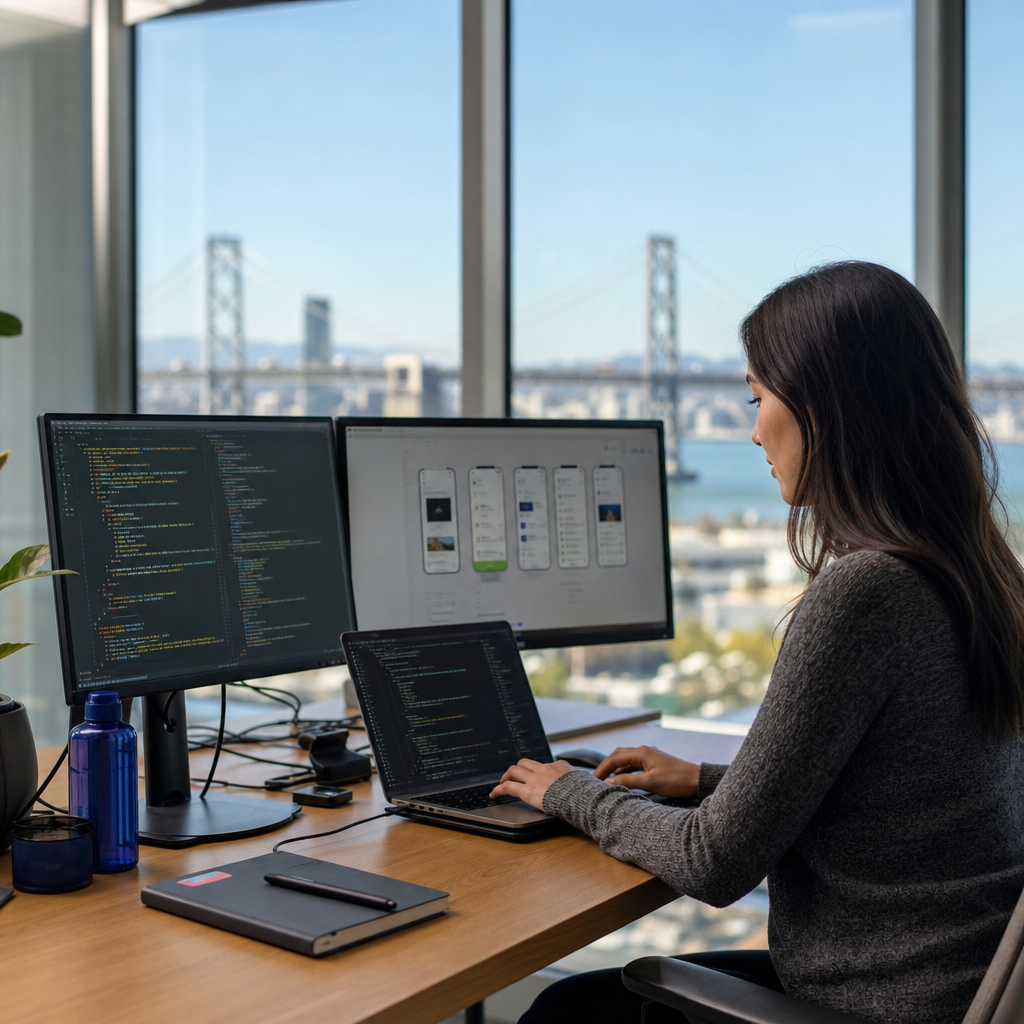
Coding for creatives has become one of Silicon Valley’s most important educational movements because designers, writers, artists, musicians, filmmakers, and product thinkers increasingly shape digital products alongside engineers. In this context, coding means learning the logic, syntax, and tools used to build software, while creatives refers to people trained primarily in visual communication, storytelling, interaction, or media production rather than computer science. The phrase learning curve matters here because the challenge is rarely raw intelligence; it is the transition from intuitive, exploratory work into structured problem solving, version control, and computational thinking. I have worked with design bootcamps, startup education teams, and creator-focused coding workshops, and the same question appears every time: how do talented creative people learn technical skills without losing their creative edge?
Silicon Valley offers a distinctive answer. Its educational programs are not limited to traditional degrees. They include university extension certificates, startup-led academies, product design schools, no-code incubators, coding bootcamps, community maker spaces, and hybrid online cohorts built around real portfolios. These programs matter because the regional job market rewards people who can connect aesthetics, user needs, and software execution. Companies do not just want someone who can sketch a wireframe or write a script. They want professionals who can prototype, test, iterate, collaborate in GitHub, and communicate with engineers using shared technical language. For creatives, that can shorten the distance between idea and shipped product.
This hub article maps the learning curve comprehensively, explaining how Silicon Valley’s unique educational programs help creatives move from curiosity to capability. It covers what makes these programs different, which skills are taught first, how course formats compare, where common obstacles appear, and how learners translate classroom effort into employable work. If you are evaluating coding for creatives programs, deciding between design and development pathways, or building an educational plan under the broader Educational Resources topic, this page provides the framework.
What makes Silicon Valley programs different
Silicon Valley educational programs stand out because they teach coding in relation to products, users, and rapid iteration rather than as an isolated academic subject. In a conventional introductory programming course, students may spend weeks on abstract exercises before touching a real interface. In creative-focused programs around San Francisco, San Jose, Palo Alto, and online schools tied to the region, learners often build landing pages, interactive prototypes, browser-based visuals, or simple apps in the first week. That immediate application changes motivation. A motion designer can see JavaScript animate a canvas element. A writer can build a content-rich website with semantic markup and structured navigation. A photographer can create an image portfolio with responsive layouts and performance optimization.
Another distinguishing feature is cross-functional instruction. The strongest programs are staffed not only by teachers but by product designers, front-end engineers, developer advocates, and startup founders who have shipped software. As a result, lessons include how code is used in real teams: branching in Git, reviewing pull requests, writing tickets, using Figma with component libraries, and testing assumptions with users. Stanford Continuing Studies, Berkeley Extension, General Assembly, Springboard, and specialized schools such as Interaction Design Foundation partner ecosystems all reflect this practical orientation in different ways. Some emphasize front-end fundamentals, while others focus on user experience engineering, creative coding, or no-code product development. The common thread is employability through applied work.
The core learning curve for creative learners
For most creatives, the learning curve follows a predictable sequence. First comes structure: understanding files, folders, naming conventions, and the difference between local and deployed work. Then comes language: HTML for content structure, CSS for presentation, and JavaScript for behavior. After that, the learner confronts logic: variables, conditionals, loops, functions, events, and state. This is the point where many people feel coding has become “too technical,” but that reaction usually reflects a gap in practice design rather than a lack of ability. Creative learners do best when abstract logic is tied to visible outcomes, such as toggling a navigation menu, filtering a gallery, or animating text on scroll.
In my experience, the hardest conceptual jumps are not syntax errors. They are debugging, decomposition, and version control. Debugging asks learners to treat mistakes as evidence, not failure. Decomposition requires breaking a big creative idea into small programmable parts. Git introduces a workflow discipline that can feel unnatural to people used to editing live files intuitively. Good Silicon Valley programs address these pain points explicitly with pair programming, studio critiques, office hours, and milestone-based projects. They teach command line basics, browser developer tools, accessibility checks, and responsive design patterns early, because those skills reduce frustration and build confidence faster than memorizing theory alone.
Which educational formats work best
There is no single best format for coding for creatives, because outcomes depend on time, budget, prior experience, and career goals. Full-time bootcamps provide immersion and accountability, which helps career changers who need momentum and daily support. Part-time cohort programs fit working professionals who can sustain steady progress over months. University extension certificates add institutional credibility and often cover stronger fundamentals, though they may move more slowly. Creator-friendly online schools offer flexibility and lower cost, but self-pacing can expose weak habits. Workshop series and community labs are excellent for exploration, especially for people interested in creative coding through p5.js, Processing, TouchDesigner, or physical computing with Arduino.
| Program format | Best for | Main advantage | Common limitation |
|---|---|---|---|
| Full-time bootcamp | Career changers | Fast portfolio development | High intensity and cost |
| Part-time cohort | Working creatives | Structured flexibility | Slower skill compounding |
| University extension | Learners wanting foundations | Academic rigor and signaling | Less startup speed |
| Self-paced online | Independent learners | Lower cost and access | Higher dropout risk |
When comparing options, ask direct questions. How many projects are reviewed by humans? Are students using GitHub from week one? Does the curriculum include accessibility under WCAG principles, performance basics measured in Lighthouse, and responsive design across breakpoints? Is there career support tied to real hiring practices, such as portfolio reviews and mock interviews? The best programs answer these clearly.
Skills that matter most in creative technology pathways
Creative learners do not need to master every branch of software development at the start. They need a sequence that aligns with likely outcomes. For web-focused paths, the essential stack is HTML, CSS, JavaScript, Git, GitHub, Figma handoff, responsive design, accessibility, and basic deployment through tools like Netlify or Vercel. For data storytelling or generative art, learners may add Python, Jupyter, D3.js, or p5.js. For product design professionals moving closer to implementation, React literacy can be useful, especially understanding components, props, state, and design systems. For creators building audience products quickly, no-code and low-code tools such as Webflow, Framer, Bubble, or Zapier can complement rather than replace coding foundations.
Employers in Silicon Valley consistently value the ability to bridge disciplines. A designer who understands semantic HTML writes better component specifications. A marketer who can manipulate APIs can automate campaign reporting. A filmmaker who understands web performance will compress assets intelligently and protect page speed. A game artist who learns Unity scripting can collaborate more effectively with technical teams. The practical benefit is leverage: coding lets creatives test ideas themselves before waiting for engineering bandwidth. That makes them stronger collaborators and, in many cases, stronger candidates for hybrid roles such as UX engineer, creative technologist, product designer, front-end designer, or developer advocate.
Common obstacles and how strong programs solve them
The biggest obstacle is mismatched expectations. Many creatives assume coding should feel immediately expressive, but early programming often feels procedural and exacting. Strong programs manage this by sequencing quick wins before complexity. A learner might first recreate a polished portfolio homepage, then add interactivity, then connect content to a simple data source. That progression preserves creative motivation while introducing rigor. Another obstacle is math anxiety. In reality, entry-level front-end work relies far more on logic, pattern recognition, and persistence than on advanced mathematics. Programs that explain this upfront prevent unnecessary self-elimination.
Community also matters. Learners persist longer when they can compare notes, ask naive questions safely, and watch peers struggle productively. Silicon Valley programs often use critique culture borrowed from design education, but the best versions make feedback concrete: name the bug, show the browser behavior, explain the fix, then reflect on the principle. Finally, hiring anxiety can distort learning. Some students chase frameworks too early because job listings mention them. Effective instructors keep fundamentals first. A learner who understands the DOM, CSS cascade, accessibility landmarks, and asynchronous JavaScript can pick up new tools faster than someone who memorized a framework tutorial without understanding the platform.
How to choose the right program and build momentum
The right program depends on the role you want in twelve to eighteen months. If your goal is UX engineering, choose a curriculum with strong front-end fundamentals, component thinking, accessibility, and close collaboration between design and code. If your goal is creative technology for installations or interactive media, prioritize JavaScript, graphics libraries, sensors, and project-based studios. If you want to launch a creative business online, combine coding basics with Webflow, analytics, SEO-aware site structure, and conversion testing. Always review graduate portfolios, instructor backgrounds, project depth, and outcomes transparency before enrolling.
Start small but start publicly. Build one portfolio site, one interactive project, and one practical tool that solves a real problem in your field. Document your process in case studies. Use GitHub consistently. Ask for critique from both designers and developers. Silicon Valley’s unique educational programs work best when learners treat coding not as a separate identity, but as a force multiplier for creative work. Explore the subtopics in this Learning Curve hub, compare pathways carefully, and choose a program that turns your ideas into working products.
Frequently Asked Questions
What does “coding for creatives” actually mean in Silicon Valley educational programs?
In Silicon Valley, “coding for creatives” usually refers to teaching software skills in a way that connects directly to creative practice rather than starting with abstract computer science theory alone. These programs are designed for people such as designers, writers, artists, musicians, filmmakers, marketers, and product thinkers who may not come from a traditional engineering background but still need to understand how digital products are built. Instead of treating code as something reserved for developers, these educational models frame coding as a practical creative tool for prototyping ideas, shaping user experiences, building interactive media, automating repetitive tasks, and collaborating more effectively with technical teams.
That approach matters because modern creative work increasingly happens inside digital systems. A visual designer may need to understand HTML, CSS, and basic JavaScript to communicate interaction intent. A filmmaker or media artist may use code for generative visuals, interactive installations, or web-based storytelling. A writer working in product may benefit from understanding content systems, interfaces, and experimentation tools. In that sense, coding is not presented as a replacement for creative expertise. It is taught as an amplifier that gives creative professionals more control, vocabulary, and confidence in technology-driven environments.
Silicon Valley programs also tend to define coding broadly. It can include front-end web development, creative coding frameworks, app prototyping, no-code and low-code tools, data visualization, and even introductory product engineering concepts. The goal is not always to turn creatives into full-time software engineers. More often, it is to help them understand logic, syntax, systems thinking, and the structure behind digital experiences so they can participate at a higher level in product development and innovation.
Why has coding become so important for designers, artists, writers, and other creative professionals?
Coding has become important for creative professionals because the boundary between idea-making and product-making has narrowed dramatically. In today’s digital economy, many of the most influential creative outputs are not static pieces of media. They are websites, apps, immersive experiences, digital campaigns, interactive stories, software-enabled brands, and content systems that evolve over time. That means creatives are no longer contributing only at the concept or aesthetic stage. They are increasingly involved in how digital experiences function, adapt, and scale.
For designers, coding knowledge creates a stronger understanding of what is possible in interfaces, motion systems, responsive layouts, and design implementation. For writers and storytellers, it opens opportunities in UX writing, interactive narrative, content design, and digital publishing formats. For artists and musicians, it can support experimentation with generative systems, live visuals, sound tools, and creative technology platforms. Even for professionals who never intend to write production-level software every day, learning the basics of code improves communication with engineers and reduces the friction between a creative concept and a working prototype.
Another reason coding matters is speed. Creative professionals who can build rough prototypes themselves often test ideas faster, validate concepts earlier, and contribute more strategically in cross-functional teams. Instead of relying entirely on a developer to interpret a concept, they can show behavior, structure, and interaction more directly. In Silicon Valley, where iteration speed and product experimentation are central, that capability is highly valued. Coding literacy also increases career resilience. As industries become more digital, creative professionals who understand technical workflows are often better positioned for hybrid roles in product design, creative technology, innovation, and digital strategy.
What makes Silicon Valley’s coding programs for creatives different from traditional programming education?
The biggest difference is that Silicon Valley programs for creatives usually start with outcomes and applications rather than with formal theory alone. Traditional programming education often emphasizes computer science foundations, algorithms, data structures, and deep engineering rigor from the beginning. Those topics are valuable, but they can feel disconnected for someone whose primary goal is to design a better interface, launch an interactive portfolio, build a prototype, or create a digital art project. Creative-focused programs often reverse that order. They begin with something tangible and motivating, then introduce technical concepts as needed to support the work.
These programs also tend to be highly project-based. Students might build a landing page, prototype an app interface, create an interactive storytelling piece, design a generative visual experiment, or collaborate on a startup-style product concept. That structure makes learning more intuitive for creative minds because it connects syntax and logic to visible outcomes. Instead of asking, “Why am I learning this?” students can immediately see how coding affects form, function, and user experience. The learning curve often feels less intimidating when progress is tied to making something real.
Another distinction is the interdisciplinary culture. Silicon Valley educational environments frequently blend design thinking, entrepreneurship, product strategy, and technical literacy. A creative learner may not only study code, but also user research, rapid iteration, collaboration workflows, version control, and the realities of shipping digital products. Instructors may come from startup, product design, creative technology, or engineering backgrounds, which means the teaching often reflects real-world cross-functional work. This practical, hybrid orientation is part of what makes Silicon Valley’s educational programs unique. They do not simply teach code in isolation. They teach how code operates inside the broader ecosystem of modern creative production.
Do creatives need to become full software engineers to benefit from these programs?
No, and in most cases that is not the primary goal. Many of Silicon Valley’s educational programs are built on the idea that coding literacy exists on a spectrum. A creative professional does not need to become a backend architect or a senior full-stack engineer to gain substantial value from learning how software works. Often, the most meaningful benefit comes from reaching a level where the person can understand technical constraints, build simple prototypes, read and modify code, communicate clearly with engineering teams, and make smarter product decisions.
For example, a product designer may benefit enormously from knowing HTML, CSS, JavaScript basics, and how component-based systems work, even if they never apply for an engineering title. A creative technologist might focus on experimental interfaces and interactive installations rather than enterprise software development. A writer in a digital product team may use coding knowledge to understand content models, testing platforms, and design systems without becoming a programmer in the conventional sense. The level of depth depends on the role, goals, and type of creative work involved.
That said, some creatives do use these programs as a bridge into more technical careers. Once they overcome the initial learning curve and realize that coding is teachable, many discover that they enjoy problem-solving at a deeper level. They may move into front-end development, creative engineering, UX engineering, product prototyping, or technical design roles. The key point is that these programs do not force a single definition of success. They recognize that code can serve different purposes: creative expression, collaboration, prototyping, technical fluency, career expansion, or full professional transition. That flexibility is one reason the model has become so influential.
What should someone expect when starting a coding program designed for creatives?
Someone entering a coding program for creatives should expect a learning experience that is both empowering and challenging. The early stages often involve a new vocabulary, unfamiliar logic patterns, and problem-solving habits that can feel very different from traditional creative training. Terms like variables, functions, loops, APIs, responsive layouts, and version control may initially seem technical or abstract. However, strong programs reduce that friction by connecting each concept to visible outcomes and practical use cases. Rather than treating confusion as a sign that a student does not belong, they treat it as a normal part of developing computational thinking.
Students should also expect the learning curve to come in waves. There is usually an initial burst of excitement when simple changes create immediate visual or interactive results, followed by a period where complexity increases and progress feels slower. That phase is common and important. It is where learners begin moving from imitation to understanding. Silicon Valley-style programs often support that transition through studio critique, collaborative work, hands-on projects, mentorship, and iterative assignments that mirror real product workflows. The best programs help students build confidence not by pretending coding is easy, but by making it approachable, relevant, and cumulative.
Most importantly, learners should expect a shift in mindset. Coding for creatives is not just about memorizing syntax. It is about learning how systems behave, how ideas become tools, and how to think structurally without losing originality. Over time, students often find that coding sharpens their creative process rather than constraining it. They become better at testing ideas, working across disciplines, and understanding the architecture behind digital experiences. For many creatives, that combination of technical fluency and creative perspective becomes a major professional advantage in Silicon Valley and far beyond.