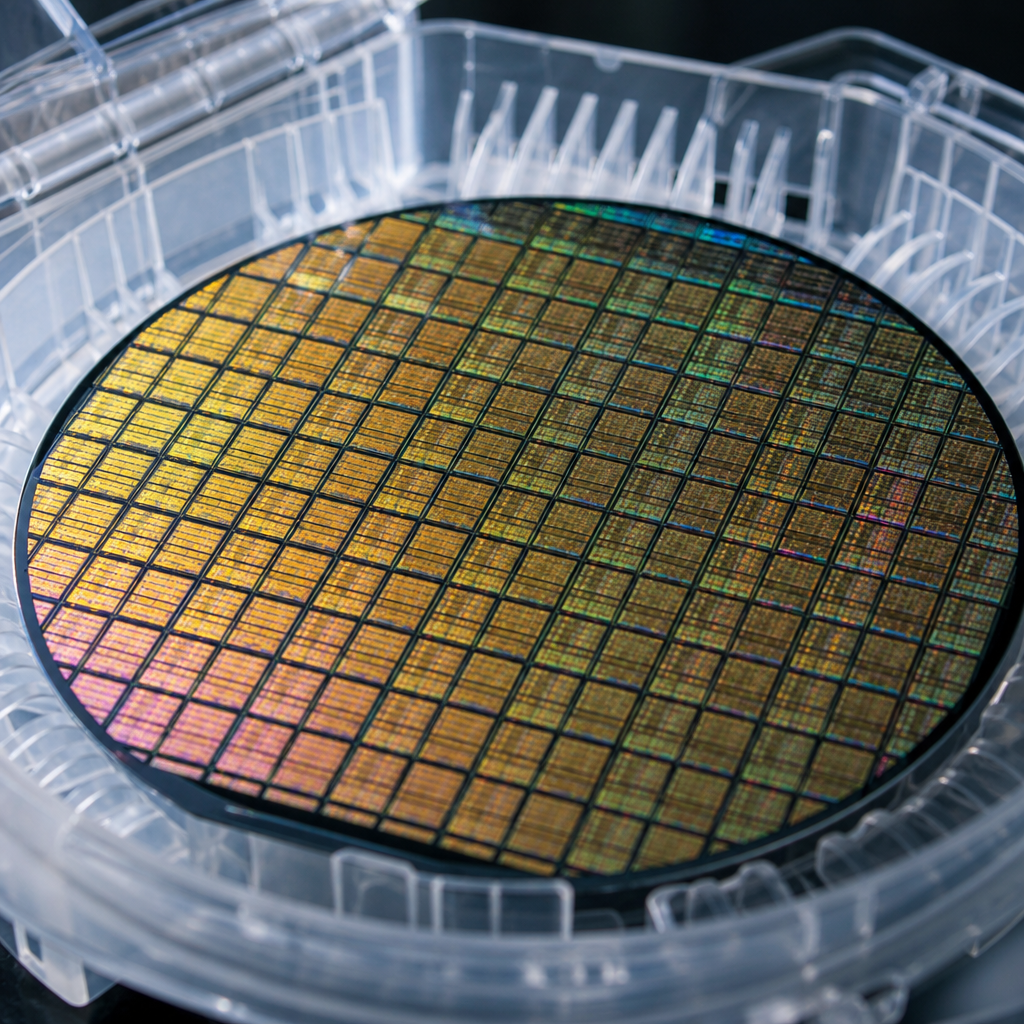
Gordon Moore helped create the modern semiconductor industry by moving from Fairchild Semiconductor to Intel and by articulating the trend later called Moore’s Law, a simple observation that became the planning rule for computing progress. In any serious history of semiconductor roots, Moore stands at the center because his career connects the invention culture of Silicon Valley, the manufacturing breakthroughs behind integrated circuits, and the business decisions that turned fragile laboratory devices into global infrastructure. Understanding Gordon Moore means understanding several linked ideas: what a semiconductor is, why Fairchild mattered, how Intel emerged, and why Moore’s Law shaped chip design, software expectations, and capital investment for decades. I have worked through these milestones in product history reviews and technical archives, and one lesson is consistent: Moore’s significance was not only that he predicted density growth, but that he helped build the organizations capable of delivering it. This historical perspective matters because nearly every digital system, from cloud servers to medical devices, traces its economics and performance assumptions back to the semiconductor roots Moore helped establish.
Semiconductor roots: why Fairchild became the industry’s proving ground
To see why Gordon Moore became so influential, start with Fairchild Semiconductor in the late 1950s. Fairchild emerged after the “Traitorous Eight” left Shockley Semiconductor Laboratory in 1957, frustrated by William Shockley’s management and eager to commercialize silicon transistors more effectively. Among them were Robert Noyce, Jean Hoerni, and Gordon Moore, figures who would define the next stage of electronics. Fairchild mattered because it combined scientific talent with a practical manufacturing mindset. The company did not treat transistors as isolated scientific novelties. It treated them as products that had to be repeatable, affordable, and manufacturable at scale.
Moore, trained as a chemist and physicist, fit this environment perfectly. Early semiconductor progress depended as much on materials control and process discipline as on circuit ideas. Silicon had advantages over germanium, especially in thermal stability, but making reliable silicon devices required precise handling of impurities, oxidation, and patterning. Fairchild became the place where process engineering began to look like a coherent industrial system. Jean Hoerni’s planar process, introduced in 1959, was pivotal because it used silicon dioxide to protect transistor junctions and made photolithographic patterning practical on a wafer surface. Robert Noyce then recognized that the same planar approach could support interconnections between devices, enabling the monolithic integrated circuit.
Moore worked inside this transition from discrete transistors to integrated circuits. That experience explains why he later saw scaling as both a technical and economic curve. At Fairchild, engineers were not just making chips smaller for elegance. They were improving yield, reducing packaging complexity, and increasing the number of useful functions produced per wafer. In plain terms, more components on one chip meant less manual assembly, fewer failure points, and lower cost per function. That logic became the foundation of the integrated circuit business and the deeper meaning behind Moore’s Law.
From observation to doctrine: how Moore’s Law began
Moore’s Law began as an observation published in 1965 in Electronics magazine, not as a physical law. Moore examined the rate at which components on the most economical integrated circuits had increased and projected that the trend would continue for at least a decade. His original statement anticipated a doubling roughly every year; by 1975 he refined it to about every two years, a cadence often simplified in popular retellings. The important point is that Moore was charting the relationship between component density and cost effectiveness. He was not merely claiming that engineers could squeeze in more transistors. He was saying the industry had a roadmap for delivering better electronics economically.
This distinction matters. Semiconductor history is full of feats that worked in the lab but failed in production. Moore’s insight had power because it matched the realities of manufacturing learning curves, lithography improvements, larger wafers, and design innovation. As feature sizes shrank, more dies fit on each wafer. If yields stayed under control, the cost per transistor dropped dramatically. This is why Moore’s Law influenced not only engineers but also financial planners, software developers, and government buyers. A computer purchased five years later would likely be far more capable at a similar price point.
In practice, Moore’s Law became a target. Intel, IBM, Texas Instruments, and later TSMC, Samsung, and others used it as a strategic expectation. Roadmaps aligned research spending with future nodes, design tools, and packaging methods. The semiconductor roots of modern computing therefore include not just inventions but a shared industry tempo. Moore gave the industry language for that tempo, and his credibility came from direct experience building integrated circuits at Fairchild.
Leaving Fairchild and building Intel with Robert Noyce
By the late 1960s, Fairchild was losing momentum as organizational complexity and corporate ownership issues weakened the entrepreneurial culture that had fueled its early breakthroughs. This pattern repeated often in Silicon Valley history: a pioneering company succeeds technically, then struggles to preserve speed and focus as it matures. In 1968, Gordon Moore and Robert Noyce left Fairchild to found NM Electronics, soon renamed Intel, with venture support from Arthur Rock. Andrew Grove joined shortly afterward and became essential to Intel’s operating discipline.
Intel’s founding was not a simple act of rebellion. It was a deliberate attempt to create a company optimized for semiconductor memory and advanced integrated circuits. Fairchild had demonstrated the power of the planar process and the integrated circuit, but Intel was built to exploit scaling aggressively. In its first years, Intel focused on semiconductor memory, including SRAM and DRAM, because these products offered clear demand and aligned with the density improvements Moore had analyzed. Intel’s 1103 DRAM, introduced in 1970, became a landmark because it helped displace magnetic core memory, which had dominated computer main memory for years.
What made Intel different was the combination of technical ambition and managerial rigor. Noyce brought vision and industry stature. Moore brought process understanding and analytical judgment. Grove drove execution, insisting on accountability, manufacturing discipline, and direct communication. Having studied many semiconductor company histories, I think this trio is one of the strongest examples of complementary leadership in technology. Intel did not win because of one brilliant invention alone. It won because its founders connected device physics, product strategy, and operational discipline better than most rivals.
Intel products that proved the model
Intel’s early products showed how semiconductor roots matured into a scalable business. The company first became known for memory chips, but its lasting public identity came from the microprocessor. In 1971 Intel introduced the 4004, developed for a calculator project originally commissioned by Busicom. The 4004 was a 4-bit CPU on a single chip, followed by the 8008 and then the 8080, which became foundational for early personal computing systems. These devices did more than reduce board count. They changed system architecture by concentrating programmable control into standard components.
The progression from memory chips to microprocessors illustrates why Moore’s Law mattered. As transistor budgets increased, designers could add registers, instruction decoding, control logic, and eventually cache memory and floating-point units onto the same die or package. The economic value of each generation rose because chips could perform broader classes of work. This dynamic created positive feedback: better chips enabled better software, which drove demand for still better chips.
| Milestone | Year | Why it mattered |
|---|---|---|
| Planar process at Fairchild | 1959 | Made reliable silicon manufacturing and photolithographic scaling practical |
| Moore’s article in Electronics | 1965 | Framed component density growth as an economic trend the industry could plan around |
| Intel founded | 1968 | Created a company designed to push integrated circuit scaling aggressively |
| Intel 1103 DRAM | 1970 | Helped semiconductor memory replace magnetic core memory |
| Intel 4004 microprocessor | 1971 | Showed that a general processing unit could be integrated on one chip |
By the 1980s, Intel shifted from memory toward microprocessors as Japanese competition squeezed DRAM margins. That pivot, often associated with Grove’s strategic decisiveness, still rested on Moore’s original insight: transistor density growth created new opportunities for differentiation in logic. The x86 line, beginning with the 8086 in 1978, eventually became central to the personal computer revolution through IBM PC compatibility and the software ecosystem that followed.
The lasting meaning and limits of Moore’s Law
Moore’s Law is often treated as a promise that computers automatically become faster forever, but its real meaning is narrower and more interesting. It describes a historical trend in the density and cost efficiency of integrated circuits, enabled by advances in lithography, materials, transistor design, interconnects, and manufacturing scale. Performance often improved alongside density, yet the relationship was never automatic. At different times, gains came from higher clock speeds, architectural improvements, parallelism, larger caches, or lower power operation.
The limits became clearer in the 2000s. Dennard scaling, which had allowed power density to remain manageable as transistors shrank, began to break down. Leakage current, heat, and variability made straightforward frequency scaling much harder. The industry responded with multicore processors, FinFET transistors, strained silicon, high-k metal gate materials, EUV lithography, advanced packaging, and chiplet architectures. In other words, the semiconductor roots that Moore helped establish remained vital, but sustaining progress required more complex engineering than simple geometric shrinkage.
Even so, Moore’s Law remains one of the most influential planning heuristics in industrial history. It guided capital expenditure in fabs that cost billions of dollars, coordinated equipment suppliers such as ASML, and shaped software assumptions about future hardware capability. It also exposed tradeoffs. Smaller nodes increase design cost, mask cost, and process complexity. Not every application benefits equally from being at the leading edge; power devices, analog components, and mature-node microcontrollers often prioritize reliability and cost over density.
Why Gordon Moore still anchors any history of semiconductor roots
Gordon Moore’s legacy is larger than the law carrying his name. He represents the bridge between laboratory science, factory discipline, and strategic forecasting. At Fairchild, he learned how process innovation could turn silicon into a manufacturable platform. At Intel, he helped build an institution that translated scaling into dominant products. His 1965 observation gave the industry a clear framework for progress, but his deeper contribution was practical: he helped prove that repeated, organized improvement in semiconductors was possible.
For anyone studying historical perspectives on semiconductor roots, Moore is the hub because so many related stories branch from his career: the Shockley exodus, the rise of Fairchild, the birth of Silicon Valley startups, the memory wars, the microprocessor revolution, and the modern challenge of sustaining scaling beyond classical limits. The lesson is not that progress was inevitable. It was engineered through materials science, manufacturing control, leadership, and relentless capital investment. If you want to understand how today’s digital world was built, start with Gordon Moore, then follow the semiconductor roots outward through Fairchild, Intel, and the enduring logic of integration.
Frequently Asked Questions
Who was Gordon Moore, and why is he so important to the history of semiconductors?
Gordon Moore was one of the central architects of the modern semiconductor industry. Trained as a chemist and physicist, he became a key figure at a moment when electronics was shifting from bulky, unreliable components toward compact, mass-producible integrated circuits. His importance comes not from a single invention alone, but from the way his career linked scientific insight, manufacturing discipline, and business leadership. Moore was part of the generation that helped transform Silicon Valley from a regional research and defense hub into the global center of microelectronics innovation.
His influence is especially clear in two places: Fairchild Semiconductor and Intel. At Fairchild, Moore worked within one of the most consequential teams in technology history, helping push semiconductor devices from experimental products toward practical commercial use. Fairchild became the breeding ground for techniques, talent, and corporate models that shaped the entire valley. Later, as a co-founder of Intel, Moore helped build a company that became synonymous with the microprocessor age. Under his leadership, Intel evolved from a memory-chip startup into one of the defining companies of modern computing.
Moore is also remembered for articulating the pattern later called Moore’s Law, his observation that the number of components on an integrated circuit would continue to increase at a rapid and regular pace. That insight mattered because it gave the industry a roadmap. It was not merely a prediction about technology; it became a planning principle for research, fabrication, investment, and product development. For that reason, Gordon Moore stands at the center of any serious account of semiconductor history: he connected the lab, the factory, and the boardroom in a way few others ever did.
What was Gordon Moore’s role at Fairchild Semiconductor, and why did Fairchild matter so much?
Fairchild Semiconductor was one of the foundational companies of Silicon Valley, and Gordon Moore played a major role in its rise. He joined Fairchild as part of the group of talented young scientists and engineers who had broken away from Shockley Semiconductor Laboratory, seeking a more productive environment for innovation. At Fairchild, Moore worked on semiconductor devices during a period when the industry was still trying to determine how transistors and integrated circuits could be manufactured reliably and at scale. That effort required far more than scientific theory. It demanded process control, materials expertise, and a new style of industrial engineering.
Moore’s contribution at Fairchild reflected his blend of technical depth and practical judgment. He helped the company move from fragile, low-volume experimentation toward repeatable production methods. This was critical because the future of semiconductors depended on yield, reliability, and cost reduction just as much as on raw performance. The ability to manufacture more devices on a chip and do so consistently was what turned semiconductors into a true industry rather than a niche scientific curiosity. Fairchild became a proving ground for exactly that kind of progress.
Fairchild mattered so much because it created both products and a culture. It helped establish the integrated circuit as a commercially viable technology, and it trained a generation of people who later founded or led many other major firms. In that sense, Fairchild was the seedbed of Silicon Valley. Moore’s years there placed him at the heart of the invention culture that defined the region: fast-moving, technically ambitious, and willing to turn research insights into scalable businesses. His later success at Intel cannot be understood without recognizing how formative Fairchild was for him and for the wider semiconductor ecosystem.
Why did Gordon Moore leave Fairchild to help start Intel?
Gordon Moore left Fairchild because, like several other leaders of his generation, he saw that the company’s early innovative energy had become harder to sustain within its corporate structure. Fairchild had achieved remarkable technical success, but as it grew, internal bureaucracy and strategic limitations made it more difficult for top talent to move quickly and pursue new opportunities. This was a common pattern in the early semiconductor industry: the same entrepreneurial culture that generated breakthroughs often became constrained once companies matured or came under broader managerial pressures.
In 1968, Moore and Robert Noyce co-founded Intel because they wanted to build a new company around technical excellence, focused strategy, and freedom to innovate. Andrew Grove soon became another essential leader in shaping the company’s direction. Intel initially concentrated on semiconductor memory, which at the time was a highly promising and competitive market. The founders believed there was room for a company that could combine advanced device design with rigorous manufacturing execution. That combination became one of Intel’s greatest strengths.
Moore’s move from Fairchild to Intel was historically significant because it was more than a career change; it symbolized the next stage of the semiconductor industry. Fairchild had helped prove the technology and establish the talent network. Intel represented the next step: building a company designed from the start to scale innovation into durable industrial power. Over time, Intel’s shift from memory into microprocessors made it one of the most influential companies in the world, and Moore was central to that story. His departure from Fairchild illustrates how Silicon Valley’s history often advanced through spinouts, reinvention, and the migration of expertise from one pioneering company to the next.
What exactly is Moore’s Law, and did Gordon Moore mean it as a law of nature?
Moore’s Law began as an observation Gordon Moore made in 1965 about the pace at which components on integrated circuits were increasing. Looking at the trend in chip development, he noted that the number of components that could be economically placed on a chip was rising dramatically and would likely continue to do so. The formulation was later refined, often simplified in popular discussion as the idea that transistor counts would roughly double every couple of years. While the phrase “law” makes it sound like a fixed scientific principle, that was never the real meaning.
Moore did not present it as a law of nature in the same sense as gravity or thermodynamics. Instead, it was an empirical observation about manufacturing and engineering progress. Its power came from the fact that the industry treated it as both a forecast and a target. Companies organized their research roadmaps, capital spending, and product cycles around the expectation that chip density, performance, and cost efficiency would keep improving on a predictable schedule. In other words, Moore’s Law was partly descriptive and partly self-fulfilling. By believing in the trend and investing to sustain it, the industry helped make it real for decades.
The broader significance of Moore’s Law is that it explained why computing advanced so quickly and so consistently. As more transistors could fit on a chip at lower cost per function, computers became smaller, cheaper, faster, and more widespread. This affected not only personal computers, but also telecommunications, consumer electronics, data centers, industrial control systems, and eventually smartphones and artificial intelligence infrastructure. Even though the pace has become more complicated in recent years due to physical and economic limits, Moore’s Law remains one of the most important organizing ideas in the history of technology because it shaped expectations for innovation across the entire digital age.
How did Gordon Moore help turn fragile laboratory breakthroughs into a global industry?
Gordon Moore’s lasting achievement was that he helped bridge the gap between discovery and industrialization. Many people contribute to a technological revolution by making a key invention, but Moore’s impact was broader. He understood that a breakthrough only changes the world if it can be manufactured reliably, improved steadily, and sold within a viable business model. That perspective made him unusually influential. He was not just a scientist or executive; he was one of the people who understood how technical scaling, production economics, and long-term strategy had to work together.
At Fairchild and later Intel, Moore helped build organizations that treated manufacturing as a source of innovation rather than a back-end function. In semiconductors, this is crucial. The process technology used to fabricate chips often determines what products are possible, how affordable they become, and how quickly they can improve. Moore recognized that consistent progress required relentless attention to process refinement, yield improvement, miniaturization, and disciplined reinvestment. That mindset helped move the industry away from one-off breakthroughs and toward a repeating cycle of advancement.
He also helped create confidence in the future of semiconductors by articulating a believable trajectory for progress. Investors, engineers, customers, and policymakers could all organize around the expectation that integrated circuits would keep getting better and cheaper. That predictability encouraged enormous capital investment and made semiconductors foundational to the global economy. In that sense, Moore did more than help invent a technology sector. He helped define its rhythm. His career shows how the semiconductor revolution depended not only on brilliant ideas in the lab, but also on leadership capable of transforming those ideas into stable products, scalable factories, and enduring companies.