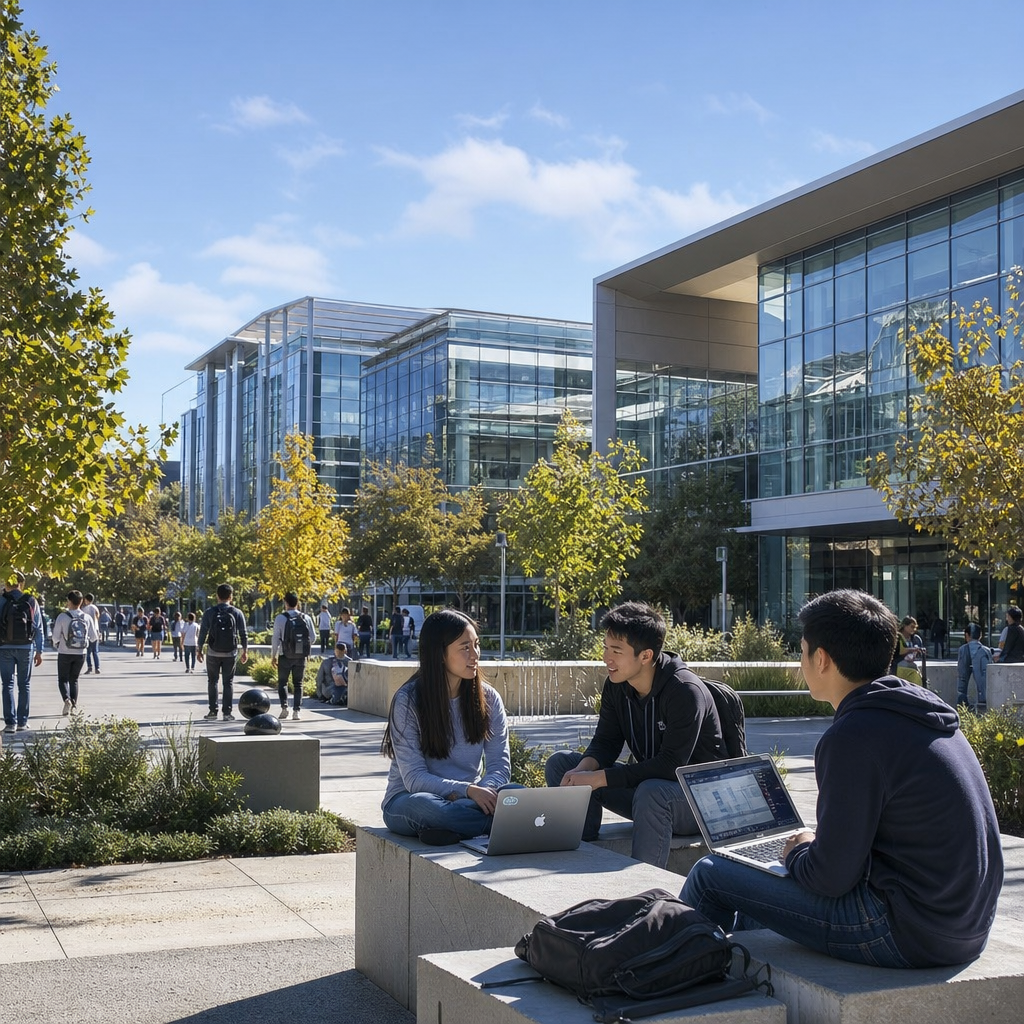
Mastering cloud technology now sits near the center of modern technical education, and Silicon Valley’s educational programs have become a proving ground for how people actually learn these skills. In this context, cloud technology means the delivery of computing services such as storage, databases, networking, analytics, software, and machine learning over the internet, usually through platforms like Amazon Web Services, Microsoft Azure, and Google Cloud. The learning curve refers to the progression from basic concepts, such as virtualization and shared infrastructure, to practical abilities like deploying containerized applications, automating infrastructure, securing identity, and controlling cost. I have worked with teams onboarding analysts, developers, and career changers into cloud roles, and the same pattern appears repeatedly: the subject is not impossible, but it is layered, fast moving, and easiest to master when education connects theory to hands-on practice.
Silicon Valley matters because it combines universities, bootcamps, vendor academies, startup labs, and employer-backed training in one ecosystem. Learners do not study cloud in isolation there; they study it alongside software engineering, data science, cybersecurity, and product development. That matters because cloud jobs rarely reward memorization alone. Employers want people who can explain why a workload belongs on a virtual machine instead of Kubernetes, when serverless lowers operational overhead, how identity and access management prevents privilege sprawl, and what tradeoffs appear between speed, resilience, and cost. A strong educational program shortens this learning curve by organizing concepts in the right order, giving students realistic environments, and teaching operational habits that map directly to production work. This hub explains how Silicon Valley’s leading programs approach cloud learning, what students should expect at each stage, and how to choose a path that produces durable, job-ready skill.
Why the cloud learning curve feels steep at first
The cloud learning curve feels steep because beginners are usually learning several disciplines at once. A student may think they are signing up to learn one platform, but they quickly encounter Linux administration, networking fundamentals, programming logic, identity management, observability, and cost governance. In practice, cloud fluency is cumulative. You cannot troubleshoot an application timing out behind a load balancer if you do not understand DNS, ports, firewalls, certificates, and application logs. Silicon Valley programs that work well acknowledge this reality instead of hiding it. They sequence content so students first understand shared responsibility, regions and availability zones, compute models, object storage, and network segmentation before moving into CI/CD pipelines, infrastructure as code, and distributed systems.
Another reason the curve feels difficult is that terminology changes across providers while core principles stay the same. AWS uses IAM roles, Azure teaches Entra ID integration, and Google Cloud emphasizes service accounts and organization policies, yet all are addressing identity, least privilege, and controlled access. Strong programs teach the underlying model first, then map it to provider-specific services. This is one reason courses tied too narrowly to a single certification can leave gaps. Exams are useful milestones, but production competence comes from pattern recognition. Students need to see the same architectural problem solved in different ways: a static website on object storage and CDN, an API behind managed containers, or a data pipeline using event queues and serverless functions. When instructors make those parallels explicit, the learning curve becomes manageable rather than overwhelming.
How Silicon Valley programs structure effective cloud education
The best programs in Silicon Valley use a staircase model. They begin with conceptual foundations, move into guided labs, then shift toward project-based work and collaborative operations. At Stanford continuing studies, extension programs, and private technical academies, the successful courses are rarely lecture only. They combine short theory blocks with sandbox accounts, architecture diagrams, peer reviews, and postmortems. Students learn more when they deploy a working application, break it, inspect logs in CloudWatch or Stackdriver, fix security groups, and document the incident. That mirrors real operations.
Programs also tend to integrate industry-standard tooling early. Terraform appears frequently because infrastructure as code teaches repeatability and version control discipline. Docker is introduced before Kubernetes because containers clarify packaging and runtime consistency. GitHub Actions, GitLab CI, or Jenkins are used to show how code moves from commit to deployment. Monitoring stacks often include Prometheus and Grafana in multi-cloud or Kubernetes courses, while vendor-native tools handle baseline observability in introductory tracks. This layered structure matters because students build mental models instead of isolated tricks. When I have reviewed junior cloud portfolios, the strongest ones show not just that a student launched resources, but that they defined them declaratively, enforced permissions, measured uptime, and shut them down responsibly.
| Learning stage | Primary focus | Typical tools | Expected outcome |
|---|---|---|---|
| Foundation | Core cloud concepts, networking, Linux, security basics | AWS Console, Azure Portal, Google Cloud Console, CLI | Understand shared responsibility and deploy simple workloads |
| Applied practice | Automation, containers, identity, monitoring | Terraform, Docker, Git, CloudWatch, Grafana | Build repeatable environments and troubleshoot issues |
| Professional readiness | Architecture, cost control, team workflows, incident response | Kubernetes, CI/CD pipelines, policy tools, ticketing systems | Operate production-style projects with documentation and governance |
What students should learn first, and what can wait
Students often ask whether they should start with coding, certification prep, or a specific cloud provider. The correct answer is to start with foundations that transfer. Learn basic networking first: IP addressing, subnets, routing, NAT, DNS, and TLS. Learn Linux commands and permissions well enough to navigate a server, inspect logs, edit configuration files, and manage processes. Understand how applications use compute, memory, persistent storage, and environment variables. Only after that should students specialize deeply in Kubernetes, data engineering, or cloud security. Silicon Valley instructors who place advanced orchestration before fundamentals usually create fragile confidence.
There are also topics that can wait without harming progress. Beginners do not need deep expertise in service mesh, policy-as-code engines, or multi-region disaster recovery on day one. They should know these concepts exist, but mastery belongs later. What cannot wait is cost awareness. One of the most practical lessons I emphasize is that every cloud action has an operational and financial consequence. Students should learn tagging, budgets, autoscaling behavior, and idle resource cleanup from the start. In a lab environment, that habit prevents surprise billing; in a workplace, it signals maturity. Programs that teach cloud as unlimited infrastructure miss one of the most important real-world constraints.
How hands-on labs, mentors, and capstones accelerate mastery
Hands-on labs are where cloud learning becomes sticky. Watching an instructor explain VPC peering or role-based access control is useful, but actually configuring networks and fixing denied permissions creates durable understanding. The best Silicon Valley programs use temporary lab environments with guardrails, then remove scaffolding as students progress. Early labs may provide a checklist for launching a virtual machine and securing SSH access. Later labs require students to design the network, choose instance profiles, store secrets safely, and expose the service through a managed load balancer. That progression develops judgment, not just recall.
Mentorship is equally important because cloud errors are often diagnostic puzzles. A student may have a healthy container image, yet the application still fails because the health check path is wrong, the security group blocks traffic, or an environment variable never reached the runtime. Experienced mentors shorten the feedback loop by teaching systematic troubleshooting: verify DNS resolution, inspect logs, check IAM bindings, test connectivity, and review recent changes. Capstone projects then pull everything together. A credible capstone might include a three-tier web application, Terraform-managed infrastructure, CI/CD deployment, centralized logging, and a written runbook. That kind of project demonstrates employable competence far better than a certificate badge alone.
Choosing the right program for your goals
Not every learner needs the same path. Career changers usually benefit from structured programs with instructor support, office hours, and portfolio requirements. Working developers may prefer shorter, targeted courses on containers, cloud architecture, or platform engineering. IT professionals moving from on-premises administration often need less help with networking and systems fundamentals but more support with managed services, automation, and governance. In Silicon Valley, the strongest options clearly state prerequisites, lab expectations, and career outcomes. If a program promises cloud mastery in a few weekends, that is a warning sign. Real proficiency requires time, repetition, and guided failure.
Evaluate programs using concrete criteria. Check whether labs use current services and whether students receive enough hands-on access to build and break systems safely. Review instructor backgrounds for actual architecture, operations, or security experience. Look for coverage of documentation, incident analysis, and cost controls, not just deployment screenshots. Ask whether the curriculum includes portfolio projects, peer collaboration, and exposure to at least one automation framework. Also consider how the program connects to the broader educational resources ecosystem. A strong hub should point learners toward deeper articles on certifications, cloud security, DevOps tooling, data pipelines, and interview preparation, because no single course covers everything. The best educational programs act as structured launchpads into lifelong practice.
Mastering cloud technology is less about chasing every new service and more about building durable operational understanding through the right educational sequence. Silicon Valley’s educational programs stand out when they teach transferable principles first, reinforce them with guided labs, and then demand real project execution using tools employers recognize. Students who understand networking, Linux, identity, automation, observability, and cost management can move across providers and adapt as platforms change. That is the real way to flatten the cloud learning curve.
As a hub within educational resources, this topic should help readers make informed next steps rather than consume isolated advice. Start by identifying your current level, then choose a program that matches it with honest prerequisites, hands-on practice, and measurable outcomes. Build one serious portfolio project, document your decisions, and review what failed as carefully as what worked. If you do that consistently, cloud technology becomes teachable, navigable, and professionally valuable. Use this guide as your starting point, then explore the connected learning paths that turn foundational knowledge into long-term expertise.
Frequently Asked Questions
1. What does “cloud technology” actually include, and why is it such a major focus in Silicon Valley educational programs?
Cloud technology refers to the delivery of computing services over the internet rather than through hardware and software managed entirely on-site. In practical terms, that includes infrastructure such as virtual servers and storage, development tools, managed databases, networking, cybersecurity services, analytics platforms, software delivery, and increasingly, artificial intelligence and machine learning environments. Major providers such as Amazon Web Services, Microsoft Azure, and Google Cloud package these capabilities into services that companies can scale up or down based on need. That flexibility is one reason cloud computing has become foundational across startups, enterprise organizations, healthcare, finance, education, and media.
Silicon Valley educational programs emphasize cloud technology because it sits at the intersection of software development, data, product delivery, and business scalability. Students are not just learning how to launch an application; they are learning how modern digital systems are designed, secured, deployed, monitored, and improved. In Silicon Valley especially, the cloud is treated as a core operating environment for innovation. Educational programs there often reflect employer expectations, which means they teach students to work with real-world architectures, collaboration tools, and deployment pipelines rather than abstract theory alone.
Another reason for this focus is that cloud skills are highly transferable. A learner who understands core cloud concepts such as compute, containers, identity management, storage classes, database selection, cost optimization, and automation can apply that knowledge across many roles. Whether someone wants to become a cloud engineer, DevOps specialist, software developer, data engineer, security analyst, or technical product professional, cloud literacy now provides a competitive advantage. Silicon Valley programs recognize that, so they often position cloud mastery as both a technical skill set and a long-term career foundation.
2. Why do many learners find cloud technology difficult at first, and how do strong educational programs help reduce the learning curve?
The learning curve in cloud technology can feel steep because the subject combines several disciplines at once. Beginners are often exposed to infrastructure concepts, networking basics, operating systems, security principles, automation, application deployment, and billing models in a relatively short period of time. Even simple tasks can involve unfamiliar terminology, from virtual machines and object storage to IAM roles, load balancers, Kubernetes clusters, and serverless functions. For someone without prior experience in systems administration or software engineering, it can seem like learning multiple technical languages simultaneously.
Another challenge is that cloud platforms are extremely broad. AWS, Azure, and Google Cloud each offer hundreds of services, and newcomers often worry that they need to understand all of them immediately. In reality, effective learning starts with foundational concepts: how resources are organized, how compute and storage work, how applications connect to databases, how users and permissions are managed, and how systems are monitored. High-quality educational programs in Silicon Valley usually know this and structure their curriculum accordingly. They break large topics into progressive, skill-based modules that build confidence before moving into advanced architecture or specialization.
The best programs also reduce the learning curve by making instruction hands-on. Instead of only explaining cloud concepts, they have learners create environments, deploy applications, configure permissions, troubleshoot performance issues, and examine logs. This practical repetition helps students connect theory to real outcomes. Strong programs further support progress by using mentorship, project reviews, peer collaboration, and scenario-based learning. When students can ask why something failed, test solutions, and see professional workflows in action, cloud technology becomes far more approachable and memorable.
3. What are Silicon Valley cloud education programs typically teaching today beyond the basics?
While foundational cloud instruction still matters, many Silicon Valley programs now teach well beyond simple virtual server setup or introductory storage management. A modern curriculum often includes infrastructure as code, continuous integration and continuous delivery, containerization, microservices, API management, observability, cloud security best practices, and multi-environment deployment strategies. Students may work with tools such as Terraform, Docker, Kubernetes, GitHub Actions, or platform-native monitoring systems because employers increasingly expect familiarity with automated, repeatable workflows rather than one-off manual configuration.
Security is also a major part of advanced cloud education. Strong programs treat it as a built-in discipline, not an afterthought. Learners are introduced to identity and access management, secrets handling, encryption, network segmentation, compliance awareness, vulnerability reduction, and incident response fundamentals. In the real world, cloud professionals are expected to make systems not only functional but also resilient and secure. Silicon Valley’s educational ecosystem often mirrors this expectation by embedding security reviews and best practices throughout technical projects.
In addition, many programs now connect cloud learning to adjacent fields such as data engineering, machine learning operations, and large-scale application design. For example, a student may learn how to build a data pipeline using managed services, deploy a machine learning model into a cloud environment, or design a serverless backend that can scale during periods of heavy traffic. This broader approach reflects how cloud platforms are used in industry: not as isolated infrastructure, but as the foundation for products, analytics, experimentation, and growth. As a result, students graduate with a more realistic view of how cloud skills support modern technical teams.
4. How can students or professionals choose the right cloud learning program in Silicon Valley?
Choosing the right program starts with identifying your goal. Some learners want job-ready practical skills as quickly as possible, while others need a deeper academic foundation or a pathway into a specialized role like cloud security, DevOps, or data infrastructure. A strong program should clearly explain who it is designed for, what prerequisites are expected, what tools and platforms are covered, and what outcomes students should realistically expect. If a course promises mastery without hands-on practice, mentorship, or meaningful project work, it is usually worth looking more carefully before enrolling.
Curriculum quality matters more than marketing language. Look for programs that teach core cloud concepts in sequence, provide labs or sandbox environments, and require students to solve real implementation problems. The most useful offerings often include projects such as deploying a web application, configuring networking and permissions, automating infrastructure, monitoring performance, and documenting architecture decisions. These activities help students build not just knowledge, but evidence of competence. In Silicon Valley, where employers value practical execution, that distinction is especially important.
It is also wise to evaluate instructor experience, industry alignment, and career support. Programs led by professionals who have worked directly with production cloud environments tend to offer more relevant guidance than courses built around certification vocabulary alone. That does not mean certifications are unimportant; they can be valuable milestones. But they are most effective when paired with real project experience and the ability to explain design tradeoffs. Finally, learners should consider whether the program offers networking opportunities, peer collaboration, mentorship, portfolio feedback, and exposure to hiring expectations. In a competitive market, those extras can significantly improve both learning outcomes and career momentum.
5. What career opportunities can come from mastering cloud technology through Silicon Valley-style education?
Mastering cloud technology can open the door to a wide range of technical and hybrid roles because cloud platforms now support much of the modern digital economy. Learners often begin by targeting positions such as cloud support associate, junior cloud engineer, systems administrator, DevOps technician, platform operations analyst, or backend developer with cloud deployment experience. As skills deepen, opportunities can expand into roles such as solutions architect, site reliability engineer, cloud security engineer, infrastructure engineer, data engineer, machine learning operations specialist, or technical consultant. The career path is not linear, which is actually one of the strengths of cloud education.
Silicon Valley-style programs are especially valuable because they tend to prepare students for the workflows used by fast-moving product teams. Employers increasingly want people who can collaborate across engineering, operations, and security functions, communicate technical decisions clearly, and adapt to changing platforms. Someone who has built and deployed projects, automated environments, worked with version control, and learned to diagnose failures will usually be more attractive to hiring managers than someone who has only memorized service definitions. That is why experiential learning carries so much weight in this field.
Long term, cloud expertise can also create flexibility. It supports careers in startups, enterprise IT, consulting, remote engineering teams, and specialized sectors such as fintech, biotech, and media platforms. It can strengthen entrepreneurial efforts as well, since founders and technical operators often rely on the cloud to launch products quickly and manage growth efficiently. In that sense, cloud education is not only about getting a job; it is about understanding the infrastructure layer behind modern innovation. For many learners, that makes it one of the most strategically valuable technical skill sets they can build today.