Silicon Valley has transformed supply chain management from a back-office logistics function into a real-time, data-driven competitive advantage. In practical terms, supply chain management is the planning, sourcing, production, movement, and delivery of goods, while supply chain technology includes the software, sensors, networks, and automation systems that make those activities faster and more reliable. I have watched teams move from spreadsheet-based planning to machine-learning control towers, and the difference is stark: better forecasts, fewer stockouts, lower freight costs, and clearer accountability. This shift matters because modern supply chains are under constant pressure from volatile demand, labor shortages, geopolitical risk, sustainability expectations, and customer demands for faster delivery. Silicon Valley’s tech innovations stand at the center of that response, blending cloud computing, artificial intelligence, robotics, and startup experimentation into tools that businesses of every size can deploy. For companies exploring advancements and startup success, this topic serves as a hub because the same technologies shaping procurement, warehousing, transportation, and supplier visibility also define the next generation of high-growth logistics startups. Understanding how these innovations work, where they deliver value, and where they still face limitations is essential for leaders who want resilient operations rather than fragile efficiency.
How Silicon Valley Reframed Supply Chain Management
The biggest contribution from Silicon Valley has been architectural, not just incremental. Traditional enterprise resource planning systems recorded transactions after the fact; newer platforms aim to create a live digital representation of inventory, orders, shipments, and constraints across the network. Tools such as SAP Integrated Business Planning, Oracle Fusion Cloud SCM, Kinaxis RapidResponse, and project44 have pushed companies toward concurrent planning, where procurement, manufacturing, and logistics teams work from the same current data. In my work with operations teams, the most immediate gain has been visibility: when planners can see a supplier delay, an inbound container milestone, and downstream customer commitments in one environment, decisions stop bouncing between disconnected departments.
This reframing has also changed performance expectations. A supply chain control tower is no longer a luxury concept reserved for global conglomerates. Midmarket firms now use cloud-based dashboards, API integrations, and event-driven alerts to monitor exceptions as they happen. That matters because speed of response often determines cost. If a carrier misses a dock appointment or a component lead time slips from six weeks to ten, early intervention can prevent premium freight, production downtime, or missed retail windows. Silicon Valley companies excelled by taking consumer-style software usability and applying it to industrial operations that had historically tolerated clunky interfaces and delayed reporting.
Artificial Intelligence, Forecasting, and Decision Automation
Artificial intelligence has become the most visible driver of advancement in supply chain management, but its real value lies in better decision support rather than marketing spectacle. Demand forecasting models now combine historical sales, seasonality, promotions, macroeconomic signals, weather data, and channel-level behavior to produce more accurate projections than simple moving averages. Platforms from Blue Yonder, o9 Solutions, and Anaplan use machine learning to identify patterns that human planners routinely miss, especially in high-SKU environments with intermittent demand. In plain terms, AI helps answer three critical questions: what customers will buy, where inventory should sit, and what action should happen next when conditions change.
Decision automation is especially powerful in exception management. For example, an apparel brand can use predictive analytics to recognize that a late fabric shipment will jeopardize a launch date, then automatically recommend alternate sourcing, air freight for a subset of units, or revised allocation across stores and ecommerce. That does not eliminate human oversight; it shortens the path to action. Good systems also expose confidence intervals, assumptions, and scenario comparisons. This is important because AI in supply chains works best when data quality is strong and process governance is disciplined. If master data is incomplete or lead times are inaccurate, even sophisticated models will produce misleading recommendations.
Startup Success in Logistics and Supply Chain Software
Startup success in this sector comes from solving narrow, painful problems before expanding into broader platforms. Flexport is a useful example. It began by modernizing freight forwarding with better digital interfaces, shipment tracking, and customs coordination, then expanded into a wider logistics operating model. Convoy, before its shutdown and asset sale, demonstrated both the promise and fragility of digital freight matching: software can reduce empty miles and improve truck utilization, but marketplace economics remain hard when freight demand softens. Gatik has shown stronger traction in autonomous middle-mile delivery by focusing on repeatable short-haul routes for retailers, a more constrained use case than open-road robotaxis.
Other startups have succeeded by targeting specific blind spots. FourKites and project44 built visibility networks that aggregate telematics, carrier updates, terminal data, and estimated times of arrival. Flock Freight applied pooling algorithms to shared truckload shipping. Nuro and Zipline focused on autonomous and last-mile delivery in environments where route control and payload limits make automation practical. In warehousing, firms such as Locus Robotics and GreyOrange built robotics around labor-intensive picking workflows. The pattern is consistent: successful startups identify a measurable operational bottleneck, prove cost or service impact quickly, then integrate into the existing enterprise stack instead of asking customers to rip everything out at once.
Warehouse Automation, Robotics, and Fulfillment Efficiency
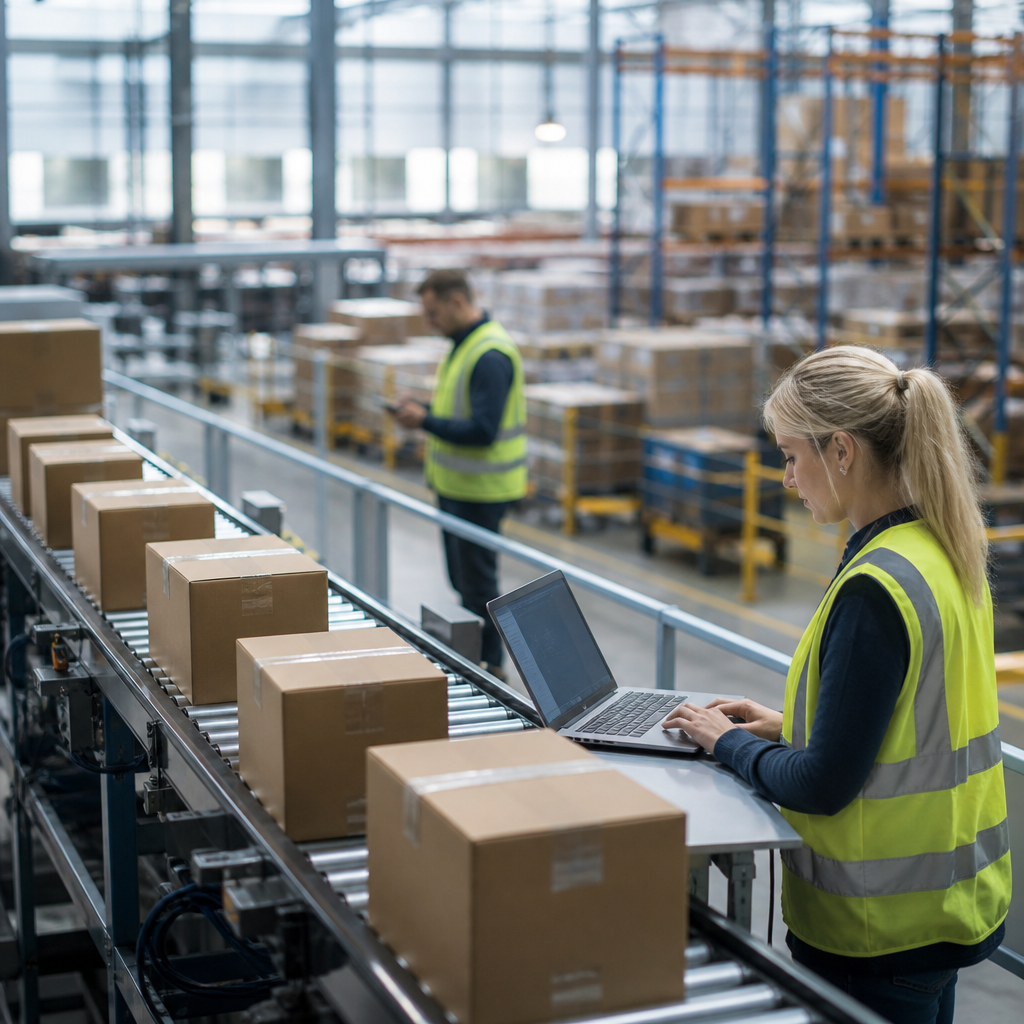
Warehouse innovation has accelerated because distribution centers face the same two constraints almost everywhere: labor scarcity and rising service expectations. Silicon Valley-backed robotics firms approached this with modular automation rather than only giant fixed installations. Autonomous mobile robots can bring shelves or totes to workers, reduce travel time, and improve pick rates without requiring a full facility redesign. That practicality matters. Many operators cannot shut down a distribution center for a year to install new infrastructure, but they can pilot robots in one zone and scale from there.
Automation also improves consistency. Computer vision systems verify picks, dimension parcels, and flag damaged items. Warehouse execution software assigns tasks dynamically based on congestion, staffing, and service-level commitments. Companies using these tools often see gains in throughput and accuracy, but the economics depend on volume stability, SKU profile, and process maturity. A robotics deployment in a high-volume ecommerce fulfillment center can pay back quickly; the same system may underperform in a low-volume, highly variable industrial warehouse. That tradeoff is why experienced operators model peak loads, travel paths, replenishment rules, and maintenance costs before approving capital.
| Innovation Area | Primary Benefit | Typical Startup Example | Main Limitation |
|---|---|---|---|
| Visibility platforms | Real-time shipment tracking and ETA accuracy | project44, FourKites | Dependent on partner data quality |
| AI planning tools | Better forecasting and scenario modeling | o9 Solutions, Blue Yonder | Requires clean historical and master data |
| Warehouse robotics | Higher pick productivity and labor relief | Locus Robotics, GreyOrange | ROI varies by facility volume and layout |
| Autonomous delivery | Lower operating cost on repeat routes | Gatik, Nuro, Zipline | Constrained by regulation and route suitability |
Visibility, Risk Management, and Supply Chain Resilience
Resilience became a board-level priority after pandemic disruptions, port congestion, semiconductor shortages, and geopolitical shocks exposed how little many companies knew about their extended supplier networks. Silicon Valley innovations helped push supply chain risk management beyond tier-one supplier lists toward multi-tier mapping, predictive alerts, and scenario stress testing. Platforms such as Resilinc and Everstream Analytics monitor weather events, financial distress indicators, factory incidents, and regional disruptions, then connect those signals to parts, suppliers, and customer orders. The result is not perfect foresight, but earlier warning and better prioritization.
In practice, resilience work usually starts with segmentation. Not every component deserves the same investment in dual sourcing, safety stock, or traceability. Critical items with long lead times, single-source dependencies, or regulatory exposure need deeper monitoring. I have seen companies reduce disruption impact simply by identifying hidden concentration risk, such as multiple tier-two suppliers clustered in one flood-prone region. Digital tools make those dependencies visible, but action still requires policy decisions: how much inventory to hold, when to diversify suppliers, and what service tradeoffs are acceptable. Technology sharpens choices; it does not remove them.
Sustainability, Traceability, and the Next Wave of Growth
Sustainability has shifted from branding language to operating requirement, especially for companies reporting emissions or facing customer pressure on sourcing and packaging. Supply chains generate major portions of corporate carbon footprints, particularly through transportation, purchased goods, and energy-intensive production. Silicon Valley startups are helping firms measure Scope 3 emissions, optimize routes, consolidate loads, and evaluate lower-carbon alternatives. Tools from Watershed and similar climate software providers give procurement and logistics teams clearer baselines, while optimization engines can reduce miles traveled and improve asset utilization at the same time.
Traceability is advancing alongside sustainability. Cloud ledgers, serialized tracking, IoT sensors, and supplier portals make it easier to prove where a product came from, how it moved, and whether conditions such as temperature remained within tolerance. This is especially important in food, pharmaceuticals, and high-value electronics. The next wave of startup growth will likely come from combining these capabilities rather than treating them as separate products. The strongest companies will connect planning, execution, risk, compliance, and emissions data into workflows that managers can actually use. For leaders following tech innovations and startups, the lesson is clear: invest where technology improves decision speed, resilience, and measurable operating performance. Start with a painful use case, demand interoperable systems, and scale what proves value.
Frequently Asked Questions
1. How has Silicon Valley changed the way supply chain management works?
Silicon Valley has fundamentally reshaped supply chain management by turning it from a largely reactive, back-office function into a proactive, real-time operating system for the business. Traditionally, many supply chains depended on manual updates, disconnected spreadsheets, and delayed reporting. That meant leaders were often making decisions based on yesterday’s data rather than what was happening in the moment. Silicon Valley’s influence introduced cloud platforms, machine learning, advanced analytics, connected sensors, and automation tools that now allow companies to see inventory levels, supplier performance, transportation status, production constraints, and customer demand in near real time.
This shift matters because speed and visibility are now competitive advantages. Instead of waiting for a disruption to ripple through the network, companies can identify risks earlier and respond faster. For example, if demand spikes in one region, modern supply chain systems can quickly recommend reallocating inventory, adjusting production schedules, or rerouting shipments. If a supplier begins missing quality or delivery targets, the system can flag the issue before it becomes a larger service problem. In practical terms, Silicon Valley’s innovations have made supply chains more intelligent, more connected, and far more capable of supporting growth, resilience, and customer satisfaction.
2. What technologies are driving the biggest supply chain innovations today?
Several technologies are driving today’s most important supply chain improvements, and they often work best when combined rather than used in isolation. Cloud-based supply chain software is one of the biggest enablers because it gives teams a shared platform for planning, sourcing, inventory management, transportation, and fulfillment. Instead of each department using separate tools, cloud systems make it easier to coordinate decisions across the entire network. Artificial intelligence and machine learning add another layer of value by helping companies forecast demand more accurately, optimize inventory, detect anomalies, and recommend actions based on patterns that humans may miss.
Internet of Things devices, including sensors, scanners, RFID tags, and telematics systems, are also central to modern supply chains. These tools provide real-time information about location, temperature, equipment health, and shipment conditions. That level of visibility is especially important in industries like food, pharmaceuticals, electronics, and manufacturing, where delays or handling issues can have serious consequences. Automation technologies such as warehouse robotics, autonomous mobile systems, and smart picking tools improve speed and accuracy inside fulfillment operations, while digital twins and simulation platforms let companies test scenarios before making major network changes. Together, these technologies help supply chains become faster, more predictable, and better equipped to manage disruption.
3. Why is real-time data so important in modern supply chain management?
Real-time data is important because supply chains are dynamic systems where conditions can change by the hour or even by the minute. Customer demand shifts, shipments get delayed, suppliers face shortages, production lines slow down, and weather or geopolitical events can quickly disrupt normal operations. When companies rely on stale or incomplete information, they are more likely to overstock, stock out, miss delivery commitments, or make expensive last-minute decisions. Real-time data gives leaders a current view of what is actually happening across procurement, manufacturing, transportation, warehousing, and order fulfillment.
More importantly, real-time data improves decision quality. It allows planners to move beyond static forecasts and react to live demand signals. It helps operations teams identify bottlenecks before they cascade through the network. It supports customer service teams by providing accurate delivery updates instead of estimates based on outdated systems. When paired with analytics and machine learning, real-time data can also become predictive, helping companies anticipate problems rather than just observe them. That is why Silicon Valley’s technology-first approach has been so influential: it recognizes that better visibility is not just about reporting, but about creating faster, smarter, and more resilient supply chain decisions.
4. How do machine learning and automation improve supply chain performance?
Machine learning improves supply chain performance by finding patterns in large volumes of operational data and turning those patterns into better forecasts, recommendations, and alerts. In a traditional planning environment, teams often rely heavily on historical averages, manual judgment, and fixed rules. Machine learning models can go further by incorporating seasonality, promotions, supplier lead times, regional demand shifts, market signals, and even external factors such as weather or economic trends. The result is often more accurate demand planning, better inventory positioning, fewer stockouts, and less excess inventory tied up across the network.
Automation complements machine learning by helping companies act on those insights faster and more consistently. In warehouses, automation can reduce manual travel time, improve order accuracy, and increase throughput. In transportation, automated routing and load planning can reduce costs and improve on-time delivery. In procurement and planning, workflow automation can accelerate approvals, exception handling, and replenishment decisions. The broader value is that employees spend less time on repetitive administrative tasks and more time solving strategic problems. When machine learning and automation are combined, supply chains become not only more efficient but also more adaptive, capable of responding to change with speed and precision instead of delay and guesswork.
5. What should companies focus on if they want to modernize their supply chain successfully?
Companies looking to modernize their supply chain should begin with a clear business objective, not just a desire to adopt new technology. The most successful transformations start by identifying specific pain points such as poor forecast accuracy, limited inventory visibility, frequent stockouts, slow fulfillment, supplier risk, or high logistics costs. Once those priorities are defined, organizations can choose technologies that directly support measurable outcomes. This prevents the common mistake of investing in impressive tools without a plan for how they will improve service, efficiency, or resilience. Modernization also requires strong data foundations, since advanced systems are only as effective as the quality, consistency, and accessibility of the information feeding them.
Just as important, companies need cross-functional alignment and a practical implementation strategy. Supply chain modernization affects procurement, operations, IT, finance, customer service, and executive leadership, so it cannot succeed as a siloed initiative. Teams should focus on integration across systems, clear governance, employee training, and phased rollout plans that deliver value quickly while reducing disruption. It is also wise to measure progress using concrete metrics such as forecast accuracy, inventory turns, order cycle time, fill rate, transportation cost, and on-time delivery performance. In Silicon Valley fashion, the best approach is iterative: start with high-impact use cases, learn from results, and scale what works. That mindset helps organizations build a supply chain that is not only more digital, but also more agile, resilient, and competitive.