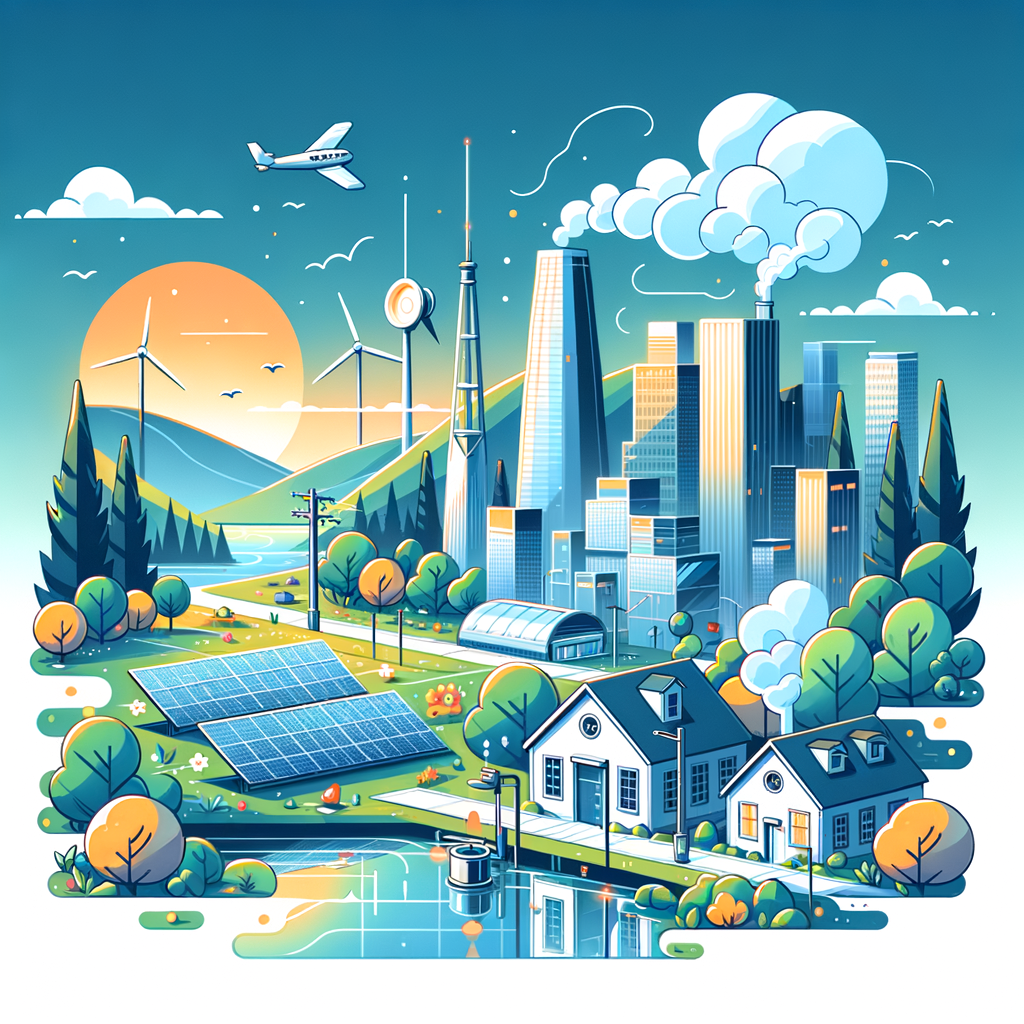
Silicon Valley, known as the cradle of technological innovation, has been a transformative force in numerous industries. From its early days of semiconductors and personal computers to the modern era of artificial intelligence and blockchain technologies, this region has been at the epicenter of progress. However, as the global community faces increasing environmental concerns, including climate change, deforestation, and pollution, there is a pressing need to integrate technology with environmental stewardship. Environmental monitoring technology is one area where Silicon Valley’s influence can make a significant impact. As we delve into this topic, it becomes clear that Silicon Valley’s role in shaping the future of environmental monitoring is crucial. These technologies not only promise to enhance our ability to track and understand environmental changes but also empower us to take proactive measures in preserving the planet. This article explores in detail how the innovative spirit of Silicon Valley is poised to revolutionize environmental monitoring tech, examining current advancements, future prospects, and potential challenges.
Environmental monitoring consists of analyzing various components of ecosystems to assess their health and sustainability. It involves tracking air quality, water levels, soil conditions, wildlife populations, and much more. With Silicon Valley’s technological prowess, new advances in sensors, data analytics, and communication technologies are becoming integrated into these tasks. This is not merely a theoretical or niche field; it is where meaningful change can impact everyday life and global environmental policies. The urgency of developing and deploying these technologies cannot be understated. Global warming, urban pollution, and natural habitat destruction are on the rise. Further complicating things, governmental bodies face challenges when implementing effective regulatory actions quickly. Technological solutions originating from Silicon Valley hold potential to fill these gaps by offering real-time, accurate, and scalable ways to monitor the environment. Moreover, the valley’s investments and innovations could ensure that monitoring becomes far more sophisticated, setting new standards globally.
Current Innovations and Developments
Silicon Valley has already made significant strides in environmental monitoring through the development of smart sensors. These sensors are much more than simple devices; they are the backbone of an interconnected monitoring system that gathers data from every corner of the earth. Modern sensors leverage AI and machine learning to process enormous datasets in real-time. Companies in the valley are utilizing these technologies to predict air quality changes, track wildlife movements, and even monitor seismic activities. AI algorithms are tailored to make sense of complex data streams, offering insights that were unattainable through traditional methods. For instance, smart drones equipped with environmental sensors can cover vast areas, providing real-time data on deforestation and water pollution. Another leap in technology is the use of satellite imagery enhanced by machine learning to monitor environmental changes globally. This has proven invaluable for tracking deforestation, melting ice caps, and even urban sprawl.
While sensors and AI are critical, integrating data into actionable insights is the next frontier. This is where advanced data analytics come into play. Startups in Silicon Valley are focusing on creating platforms that not only accumulate data but also visualize and interpret it in meaningful ways. These platforms allow scientists, policymakers, and even the public to access comprehensive environmental data effortlessly. Technologies like blockchain also hold promise in ensuring the transparency and immutability of environmental data, a necessity for global coordination and trust. Furthermore, the Internet of Things (IoT) adds another layer to the system, enabling various devices and sensors to communicate seamlessly. This interconnectedness empowers a holistic approach to environmental monitoring where information is shared across systems and sectors.
Another area of interest in Silicon Valley is the development of bio-monitoring technologies. These involve using living organisms as bio-indicators to assess the health of an environment. For instance, certain plant species and algae are sensitive to air pollution and water quality and thus can serve as live monitors. Companies in Silicon Valley are exploring genetic engineering techniques to enhance the sensitivity and reliability of these bio-indicators. Such innovations not only augment traditional methods but also offer sustainable, low-impact alternatives. Additionally, the burgeoning field of synthetic biology opens up new avenues for developing custom organisms designed to perform specific monitoring tasks, from detecting pollutants to signaling climate anomalies.
The role of startups cannot be overemphasized in this ecosystem. Funding, mentorship, and collaboration opportunities have created an enabling environment for small companies with big ideas. Incubators and accelerators in the valley are offering pathways for groundbreaking environmental tech startups, providing both the resources and the networking required to scale. Venture capital is also playing a pivotal role, with investments in climate and environmental tech surging in recent years. This influx of capital not only supports technological development but also accelerates the deployment of solutions on a global scale.
Challenges and Complexities
Despite the optimism, challenges remain in the development and deployment of environmental monitoring technologies. One of the most significant issues is the standardization of data. With multiple systems and platforms generating immense volumes of data, lack of consistency and interoperability can be barriers. Standardized frameworks are essential for integrating data sets from different sources, ensuring they can be used for comprehensive analysis and policymaking. Moreover, there are concerns about data privacy and security. As monitoring technologies become more pervasive, the potential for misuse or mishandling of data increases. Companies must prioritize creating secure, transparent, and privacy-respecting systems.
The sustainability of these technologies is another area of concern. While they aim to monitor and improve the environment, the tools themselves must not contribute further to ecological degradation. This means sustainable practices in manufacturing sensors, maintaining servers, and powering devices. Many companies are working towards carbon-neutral production processes and using renewable energy sources to power their technological infrastructures. Nonetheless, it requires a concerted effort from the industry to establish norms that prioritize environmental sustainability.
Another challenge lies in societal acceptance and engagement. Public awareness and trust are vital for the successful implementation of environmental monitoring technologies. There’s often skepticism regarding technological interference, and some communities may resist change due to cultural or economic factors. Thus, educational and outreach programs need to accompany technological rollout, explaining benefits, addressing concerns, and fostering community support. Policymakers play an essential role here, and they can work alongside tech companies to explain how these technologies align with public good and policy objectives.
Moreover, the global nature of environmental issues necessitates international cooperation, which can be politically complex. Nations have differing priorities and levels of technological readiness, complicating efforts to create unified solutions. International regulations and agreements can be beneficial, but they must be flexible enough to accommodate various local contexts. Tech companies, governments, and NGOs must collaborate through forums and global networks to create adaptable and inclusive strategies.
Future Prospects
Looking ahead, the potential for growth and advancement in environmental monitoring technologies in Silicon Valley is enormous. As computational capabilities increase and costs decrease, we can anticipate even more sophisticated devices and applications. The integration of quantum computing with environmental monitoring is on the horizon, offering unprecedented analytical power to process complex environmental models and simulate climate forecasts with incredible precision. In addition, advances in battery technology and renewable energy can make these monitoring systems even more efficient and sustainable.
The future also holds promise for further democratizing access to environmental data. Publicly available platforms, open-source technologies, and citizen science projects will enable wider participation and data sharing, enhancing accountability and driving grassroots action. This participatory approach encourages communities to take ownership of their surroundings, using tools that were once exclusive to scientists and large organizations.
Automation will continue to play a crucial role. Autonomous drones could perform continuous monitoring with minimal human intervention, while robotic aquatic sensors might revolutionize underwater monitoring. Combined with advancements in machine learning, these autonomous systems could evolve to become predictive ecosystems, warning of natural disasters before they occur and suggesting mitigation strategies.
Conclusion
Silicon Valley, as a hub of innovation and technological prowess, stands at a critical juncture in redefining the landscape of environmental monitoring. Through advanced sensors, machine learning, biotechnology, and a plethora of other innovations, the valley’s contributions could prove pivotal in addressing the pressing environmental challenges of our time. These technologies not only enhance our understanding but provide the tools to act decisively. While the journey is fraught with challenges, from data standardization to public trust and international coordination, the possibilities remain exciting and transformative.
Ultimately, the synergy between technology and environmental conservation offers a path to a more sustainable future. By leveraging the innovations emerging from Silicon Valley, we can develop a holistic and effective environmental monitoring infrastructure. This will empower societies to make informed decisions, adapt to changes, and safeguard the planet for generations to come. The road ahead requires collaboration, commitment, and creativity, and with Silicon Valley leading the charge, the future of environmental monitoring is bound to be bright and impactful.
“`htmlFrequently Asked Questions
1. How is Silicon Valley contributing to the development of environmental monitoring technology?
Silicon Valley, often seen as a hub for tech innovation, is making significant strides in the environmental sector by fostering advancements in monitoring technology. This region has given birth to a range of startups and established tech giants that are increasingly focusing on sustainability. For instance, companies are leveraging artificial intelligence to process vast amounts of environmental data, which aids in identifying trends and making predictions about climate change and natural resource depletion.
Moreover, Silicon Valley firms are at the forefront of developing sensors and Internet of Things (IoT) devices designed to track environmental conditions in real-time. These devices offer unprecedented precision in measuring air and water quality, and even tracking wildlife populations. These capabilities are crucial for scientists and environmentalists who need accurate data to form effective conservation strategies. In effect, the technological resources emerging from this region are empowering global efforts to understand and mitigate the impact of human activities on the planet.
2. What role does artificial intelligence play in environmental monitoring?
Artificial Intelligence (AI), a technology extensively cultivated in Silicon Valley, plays a pivotal role in modern environmental monitoring. AI algorithms excel in processing and analyzing large datasets, which is invaluable when it comes to handling complex and dynamic environmental data. Using AI, researchers can predict environmental changes such as deforestation rates, climate fluctuations, and pollution patterns with a high degree of accuracy.
Furthermore, machine learning models are trained to categorize and detect changes in satellite images, enabling the early detection of natural disasters like wildfires and floods. This predictive capability is crucial for creating smart response strategies that can mitigate the impact of such events. Overall, AI helps transform raw environmental data into actionable insights, providing a powerful tool in our quest for ecological sustainability.
3. How are IoT devices changing environmental monitoring?
The Internet of Things (IoT) is another transformative technology widely developed in Silicon Valley, which is significantly enhancing environmental monitoring efforts. IoT devices come in the form of sensors embedded in various environments such as forests, oceans, and even urban landscapes, where they collect a constant stream of data on environmental parameters like temperature, humidity, light levels, and pollutants.
These devices offer real-time data collection and transmission, making it easier to detect and respond to environmental issues as they arise. For example, IoT sensors placed in water bodies can monitor for pollutants and trigger alerts if contamination is detected, allowing for rapid response and mitigation measures. This real-time, on-the-spot data gathering is revolutionizing how ecosystems are studied and preserved, offering a new level of precision and immediacy that traditional methods cannot match.
4. Why has environmental monitoring become a significant area of focus for tech companies in Silicon Valley?
The increasing focus on environmental monitoring in Silicon Valley can be attributed to the urgent need to address climate change, resource depletion, and other global ecological threats. Tech companies recognize the opportunity to apply their expertise to pressing planetary challenges and are increasingly incentivized to develop solutions that can scale globally. Additionally, there is growing consumer demand for sustainable and environmentally friendly practices, which is pushing these companies to innovate in this space.
Investing in environmental tech also aligns with Silicon Valley’s ethos of creating impactful change and driving social progress through technology. There is an awareness that sustainable tech innovations not only represent a lucrative market opportunity but are also essential for ensuring a viable future for our planet. As a result, tech companies are actively financing research and development in renewable energy, waste reduction, carbon footprint minimization, and biodiversity protection, viewing these areas as both a moral obligation and a business imperative.
5. What challenges do Silicon Valley companies face in advancing environmental monitoring technology?
While Silicon Valley is a leader in technological development, companies in this region face several unique challenges when it comes to progressing environmental monitoring technology. One of the primary hurdles is ensuring the accuracy and reliability of data collected by IoT devices, which can be influenced by various external factors such as weather conditions or technical malfunctions. Achieving high-quality data is essential for making informed decisions and forecasts.
Another significant challenge is data privacy. As more sensors and IoT devices are deployed, the risk of misusing collected information increases, raising concerns around data security and the need for stringent regulations to protect sensitive environmental data. Additionally, the rapid pace of technological change often outstrips existing regulatory frameworks, creating a lag in legislation that can hinder the broad application and adoption of new technologies.
Finally, there’s the issue of maintaining sustainability in tech development itself. Building and running data centers, producing IoT devices, and other tech-related activities consume considerable energy and resources. Silicon Valley companies are thus trying to balance technological advancement with sustainable practices, pushing for greener tech production processes and renewable energy use within their operations.
“`