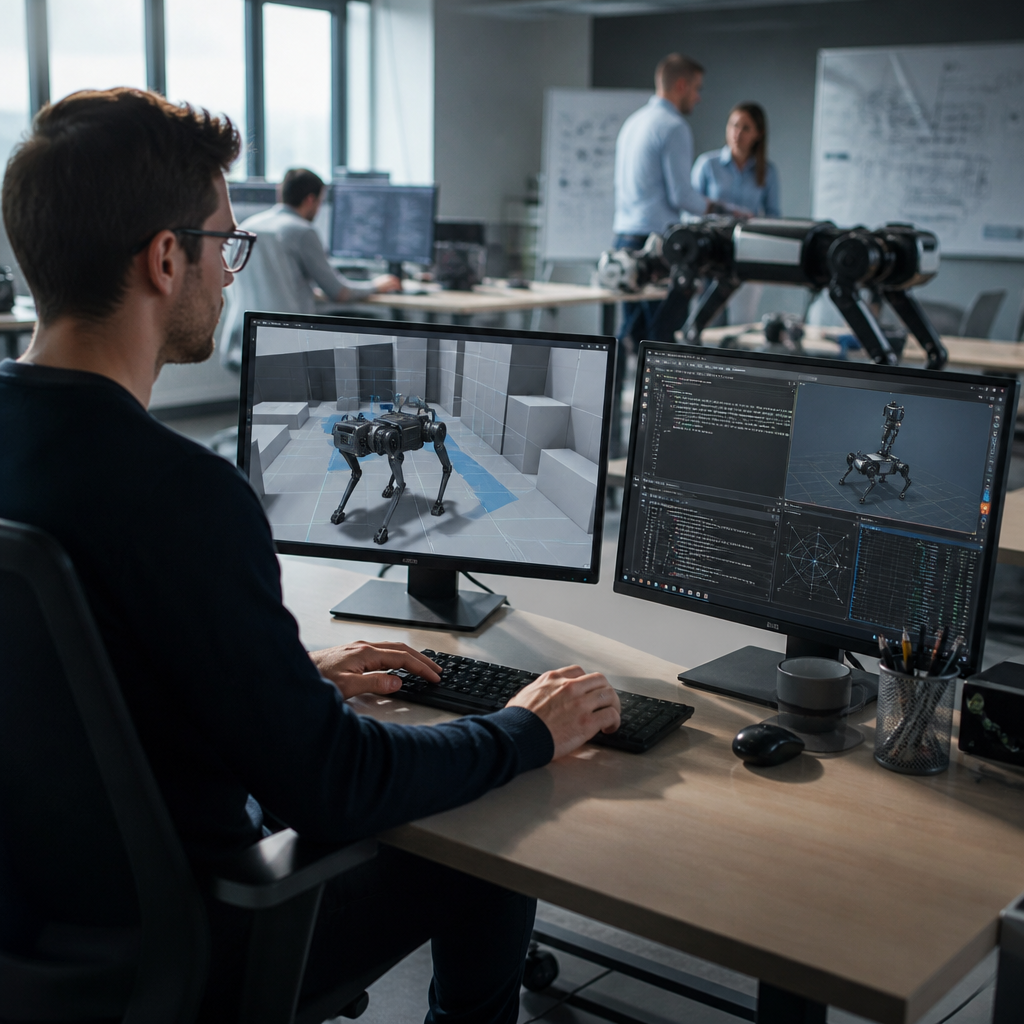
Robotics simulation startups are changing how physical AI is built by training machines in virtual worlds before those machines ever touch a factory floor, warehouse aisle, roadway, or hospital corridor. In practical terms, robotics simulation means using software to model robots, sensors, environments, and physics so developers can test perception, planning, control, and safety at scale. Physical AI refers to intelligence expressed through embodied systems such as robotic arms, humanoids, autonomous mobile robots, drones, and self-driving vehicles, where software decisions must survive contact with gravity, friction, latency, and uncertainty. I have worked with teams that burned months collecting edge-case data on real hardware, only to unlock progress once they moved iteration into simulation. That shift matters because real-world robotics development is slow, expensive, and risky. A single warehouse robot crash can damage inventory, halt operations, and expose a startup’s weak validation process. Simulation offers a faster path to data generation, policy training, failure testing, and deployment readiness. For founders, operators, and technical buyers, this category now sits at the center of modern robotics commercialization.
The reason the market is expanding is simple: robotics systems need enormous amounts of experience, but physical testing does not scale cleanly. A startup training a grasping model on a real robot may get hundreds of picks per day; the same company can generate millions of trials in parallel in a simulator. Tools such as NVIDIA Isaac Sim, Gazebo, Unity, Unreal Engine, MuJoCo, and Webots have lowered the barrier to building these environments, while advances in reinforcement learning, imitation learning, synthetic data generation, and differentiable physics have made simulation far more useful than it was a decade ago. Investors also understand the economics. If simulation shortens development cycles, reduces hardware wear, and improves safety validation, it directly improves capital efficiency. That is why robotics simulation startups now serve not only robot makers, but also logistics firms, manufacturers, agriculture operators, defense contractors, and healthcare innovators looking to de-risk automation before field deployment.
What robotics simulation startups actually do
Robotics simulation startups build the software layer that lets companies design, train, test, and validate machines in digital environments. Some focus on high-fidelity physics simulation for manipulation, locomotion, or contact-rich tasks. Others specialize in synthetic sensor data for cameras, LiDAR, radar, depth sensors, or tactile arrays. A third group provides scenario generation and test orchestration, helping teams define thousands of conditions a robot must survive, from poor lighting to slippery floors to unexpected human behavior. In my experience, the strongest platforms combine these functions rather than treating them as disconnected modules.
This category spans several business models. Infrastructure platforms sell simulation environments and developer tools. Vertical startups package those capabilities for warehouse robotics, autonomous driving, drone autonomy, surgical robotics, or industrial inspection. Services-heavy companies help enterprises build digital twins of real facilities, then connect those twins to robot fleets for deployment planning. There are also startups focused on verification, where the goal is not to train a policy but to prove that a system meets performance and safety thresholds before launch. Together, these companies form the backbone of physical AI development.
Why virtual training matters for physical AI
Training machines in virtual worlds matters because embodied intelligence faces the reality gap: behavior that works in simulation may fail on hardware if the simulator does not capture real dynamics closely enough. The best startups address this by modeling rigid-body dynamics, contact forces, sensor noise, actuator limits, and timing constraints, then introducing domain randomization so policies learn across varied conditions rather than memorizing one clean environment. OpenAI’s dexterous hand research popularized this approach by randomizing object properties and dynamics to improve transfer from simulation to the real world. Today, startups use similar methods across mobile manipulation, quadruped navigation, and automated picking.
Simulation also solves a data bottleneck. Edge cases that are rare in production can be generated intentionally. An autonomous forklift startup can create occluded intersections, dropped pallets, reflective floors, and pedestrian near-misses on demand. A drone company can train for gusts, GPS degradation, and low-visibility landings without risking an aircraft. For healthcare robotics, virtual environments help test instrument positioning, collision boundaries, and workflow timing before any pilot inside a clinic. The result is not magic; real-world testing is still essential. But simulation compresses the search space so field trials become targeted and defensible rather than exploratory and expensive.
Core technologies behind modern simulation platforms
Several technical layers determine whether a robotics simulation startup delivers value. First is the physics engine, which governs collision detection, joint constraints, contact resolution, deformable objects, and fluid or particulate behavior where relevant. Manipulation companies care deeply about grasp stability and friction modeling, while legged robotics teams need accurate contact impulses and terrain interaction. Second is rendering and sensor simulation. If a robot depends on visual perception, the platform must produce realistic imagery, depth maps, point clouds, and sensor artifacts such as motion blur, rolling shutter, or multipath noise.
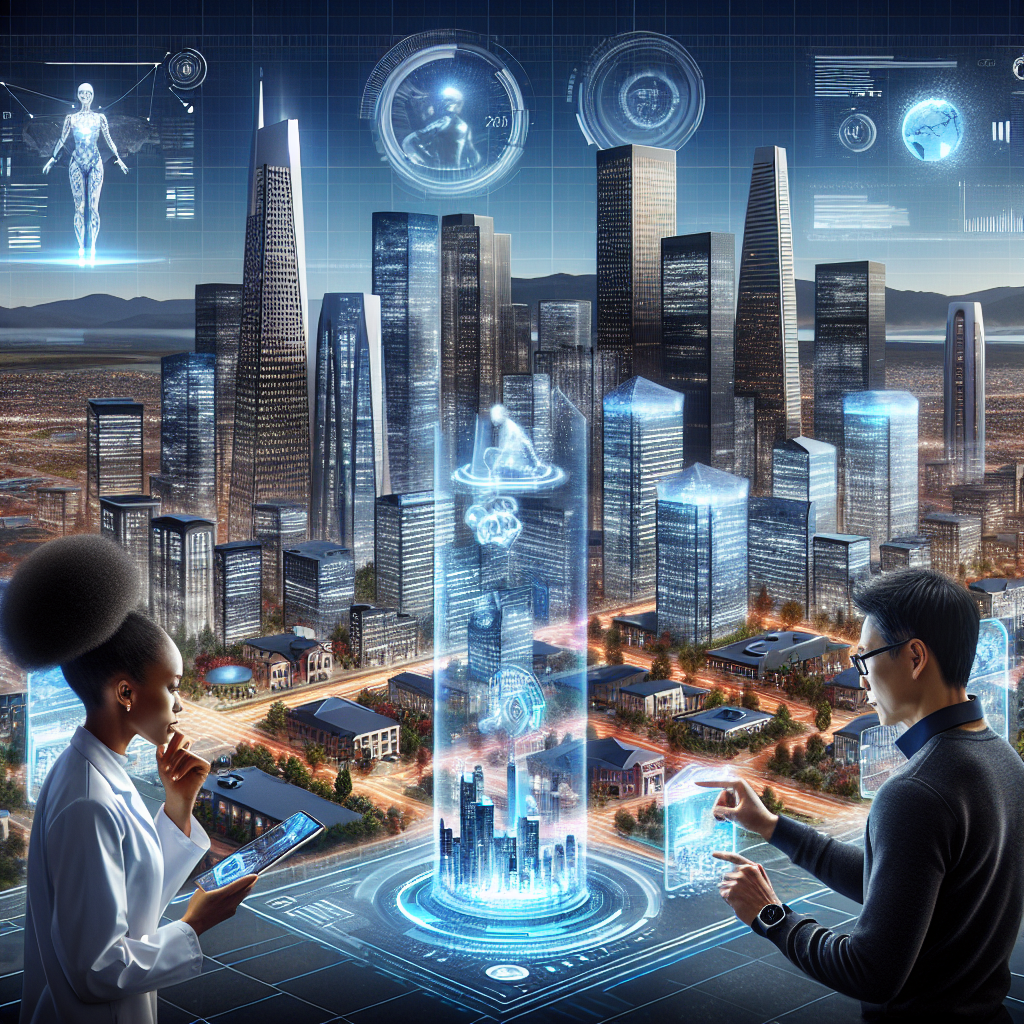
Third is orchestration. Modern robotics teams do not run one simulation at a time; they launch thousands of episodes across cloud clusters, score outcomes, and feed the results into machine learning pipelines. Startups that integrate with ROS, Kubernetes, Python workflows, and experiment tracking systems usually move faster inside enterprise environments. Fourth is digital twinning. A true digital twin is not just a 3D model; it is a synchronized representation of a real asset, process, or facility connected to operational data. In factories and warehouses, this lets teams simulate robot traffic, throughput, queueing, and failure modes using actual layouts and constraints.
| Simulation focus | Main use case | Typical buyer | Key challenge |
|---|---|---|---|
| Physics training | Policy learning for manipulation or locomotion | Robot OEMs | Closing the reality gap |
| Synthetic data | Perception model development | Autonomy teams | Sensor realism and annotation quality |
| Scenario testing | Validation and safety evaluation | Enterprises, regulators, OEMs | Coverage of rare edge cases |
| Digital twins | Deployment planning and operations optimization | Manufacturers, logistics operators | Keeping models synchronized with reality |
Startup opportunities across industries
Warehouse automation is one of the clearest opportunities because facilities are structured, repetitive, and economically sensitive to downtime. Startups can simulate traffic management for AMRs, bin-picking for robotic arms, and labor-robot coordination before installation. Manufacturing is similar but often requires tighter tolerances and more complex integration with PLCs, MES platforms, and safety systems. In automotive and electronics plants, simulation can reduce commissioning time by validating cell design and cycle times before hardware arrives.
Autonomous vehicles remain a major simulation market because on-road validation demands enormous mileage and rigorous scenario coverage. Companies such as Waymo, Cruise, and Zoox have invested heavily in simulation stacks for years, which created demand for specialized tooling around scenario generation, replay, and sensor modeling. Agriculture is another promising area. Field robots must cope with variable terrain, weather, crop geometry, and biological uncertainty, making simulation useful for navigation and perception pretraining. Defense, energy, mining, and offshore inspection also rely on virtual environments because real testing can be dangerous, remote, or regulated.
How leading startups create defensible value
A robotics simulation startup is not defensible simply because it has a nice 3D environment. Durable value usually comes from one of five assets: proprietary physics tuned for specific tasks, superior synthetic data pipelines, deep workflow integration, hard-won domain knowledge, or a network effect around models and scenarios. For example, a startup serving warehouse robotics may build a library of pallet types, rack geometries, lighting conditions, and operational edge cases gathered across dozens of customer deployments. That dataset becomes difficult for a new entrant to replicate quickly.
Another moat is validation credibility. If a startup can show that its simulated performance metrics correlate strongly with real-world outcomes, customers will trust the platform in procurement and safety reviews. That trust is earned through benchmarking, calibration, and transparent limits. The best founders I have seen do not claim simulation replaces reality. They show exactly where it accelerates learning, where it predicts deployment risk, and where physical testing remains mandatory. That balance wins enterprise buyers who have seen too many oversold autonomy promises.
Challenges, limits, and what buyers should evaluate
The biggest limitation in robotics simulation is fidelity versus speed. High-fidelity environments can model subtle dynamics but may run too slowly for large-scale learning. Faster approximations support more training episodes but may miss critical contact behaviors or sensor quirks. Buyers should ask how the platform handles calibration, randomization, scenario coverage, and transfer testing. They should also examine integration with existing robot software stacks, data pipelines, and security requirements. A simulator that looks impressive in a demo but cannot fit into CI workflows or on-premise infrastructure will stall in production.
Standards and governance matter as the sector matures. Safety-oriented robotics teams often align validation practices with structured hazard analysis, test traceability, and configuration control, even when no universal simulation standard covers every use case. Procurement teams should ask for evidence of repeatability, versioning, and auditability. They should also check whether the startup supports human-in-the-loop review, because many edge cases require expert judgment rather than purely automated scoring. Finally, cost discipline matters. Simulation should reduce time and risk, but building and maintaining realistic digital environments is not free.
The future of physical AI hubs and startup ecosystems
Physical AI and robotics are moving toward a stack where foundation models, multimodal perception, simulation, and real-world operations reinforce each other. Humanoid robotics startups, autonomous vehicle developers, and industrial automation firms are all converging on the same requirement: vast, structured experience before deployment. Simulation is how they acquire that experience economically. As this subtopic expands, expect tighter links between robotics simulators, synthetic data engines, robot learning platforms, edge deployment tools, and digital twin systems used in live operations.
For anyone tracking tech innovations and startups, robotics simulation is the hub layer worth understanding first because it connects nearly every major robotics category. It influences product development speed, model quality, safety readiness, and unit economics. The key takeaway is clear: training machines in virtual worlds before reality is no longer a niche research tactic; it is a commercial necessity for building credible physical AI. Follow the startups solving transfer, validation, and operational integration, and you will understand where robotics is heading next. Use this hub as a starting point, then map the companies, tools, and industry verticals most relevant to your organization’s automation strategy today.
Frequently Asked Questions
What do robotics simulation startups actually do, and why are they important?
Robotics simulation startups build software platforms and tools that let companies design, train, test, and validate robots inside highly realistic virtual environments before deploying them in the real world. Instead of learning only through expensive physical trials, robots can be exposed to millions of simulated scenarios involving different layouts, lighting conditions, surface materials, object types, traffic patterns, sensor noise, and edge cases. These platforms typically model the robot itself, its sensors such as cameras and lidar, the surrounding environment, and the physics that govern movement, contact, friction, collision, and uncertainty.
The reason this matters is simple: building physical AI directly in the real world is slow, costly, and sometimes dangerous. A warehouse robot that misjudges a pallet, an autonomous vehicle that fails to recognize an unusual obstacle, or a hospital delivery robot that cannot navigate crowded hallways can create serious operational risks. Simulation helps teams discover those weaknesses earlier. Startups in this space are important because they make advanced development infrastructure more accessible to robotics companies that may not have the resources to build their own simulator stack from scratch.
In practice, these startups often serve as the bridge between artificial intelligence development and physical deployment. They help engineers test perception, motion planning, manipulation, reinforcement learning policies, autonomy stacks, and safety systems under controlled conditions. For robotics companies operating in factories, logistics centers, roadways, agriculture, or healthcare, simulation shortens iteration cycles and improves confidence before real machines ever touch production environments.
How does training robots in virtual worlds improve real-world performance?
Training in virtual worlds improves real-world performance by giving robots access to scale, repetition, and variety that would be difficult to achieve physically. In a simulator, a robotic arm can practice grasping thousands of object shapes in a short period of time, a mobile robot can navigate countless floor plans, and an autonomous machine can encounter rare but critical edge cases that might only occur occasionally in the real world. This volume of experience is especially valuable for machine learning systems, which generally improve when exposed to more data and more diverse operating conditions.
Simulation also enables controlled experimentation. Engineers can isolate one variable at a time, such as lighting, wheel slippage, payload weight, weather, clutter, or sensor degradation, and evaluate exactly how a robot responds. That level of control is much harder to achieve in live testing. By systematically introducing variation, teams can make robotic systems more robust and less brittle when they eventually face the messiness of reality.
Another major advantage is safety. It is far better to let a robot fail virtually than physically, especially when the alternative could involve equipment damage, production downtime, or harm to people. In simulation, failure becomes useful training data rather than an expensive incident. Startups focused on robotics simulation often support techniques such as domain randomization, synthetic data generation, and sim-to-real transfer, all of which are designed to help a model trained in software generalize to real environments. While simulation does not replace real-world testing, it dramatically improves readiness, reducing the number of surprises that emerge during deployment.
What is the difference between robotics simulation and traditional software testing?
Traditional software testing usually focuses on whether code behaves correctly under known inputs and expected conditions. It checks functionality, logic, integration, reliability, and performance in digital systems where outcomes are relatively deterministic. Robotics simulation goes much further because robots must perceive, decide, and act in the physical world, where uncertainty is constant and actions have material consequences. A robotics simulator is not just checking whether code runs. It is evaluating how an embodied system interacts with geometry, motion, force, time, noise, and changing environments.
For example, a standard software test might confirm that a navigation module outputs a path from point A to point B. A robotics simulation test would ask much more: Does the robot avoid dynamic obstacles? Does it still perform well if a camera lens is partially obscured? What happens if the floor is slippery, the map is incomplete, or a human suddenly changes direction? For a robotic arm, traditional testing might confirm that a control command is issued correctly, while simulation would examine whether the gripper actually makes contact, whether the object shifts, whether force thresholds are exceeded, and whether the task succeeds across many object variations.
This is why simulation is central to physical AI. The challenge is not only computational correctness but behavioral reliability in complex environments. Robotics simulation startups provide the infrastructure to run that broader form of testing at scale, often combining physics engines, synthetic sensor streams, environment generation, machine learning pipelines, and performance analytics into a single workflow. The result is a much more realistic development process for machines that must operate outside the neat boundaries of purely digital systems.
What are the biggest challenges in making simulated robotics training useful in the real world?
The biggest challenge is the so-called sim-to-real gap, which refers to the differences between simulated environments and the messy unpredictability of reality. No matter how advanced a simulator is, it remains an approximation. Real sensors have quirks, real materials behave inconsistently, real humans move unpredictably, and real environments contain countless small details that may not be modeled perfectly. If a robot learns behaviors that rely too heavily on idealized simulation conditions, performance can drop when it is deployed physically.
To address this, robotics simulation startups work on increasing fidelity and improving transfer methods. Some focus on better physics, more realistic rendering, and more accurate sensor modeling. Others emphasize robustness techniques such as domain randomization, where the simulator intentionally varies textures, friction, object placement, illumination, timing, and noise so the model learns to handle uncertainty instead of overfitting to a single virtual setup. The goal is not always perfect realism in every detail, but enough diversity and physical plausibility to help trained systems generalize.
There are also operational challenges. High-quality simulation can be computationally intensive, especially when training AI models at large scale. Building digital twins of real facilities takes time and expertise. Teams must validate that simulator results correlate with actual performance metrics. In regulated or safety-critical settings such as transportation, manufacturing, or healthcare, simulated success is not enough on its own. It must be followed by rigorous real-world validation. Even so, the value of simulation remains strong because it allows companies to shift much of the experimentation, debugging, and failure discovery earlier in the development cycle.
Which industries benefit most from robotics simulation startups, and what does the future look like?
Industries that benefit most are those where robots operate in complex, repetitive, safety-sensitive, or large-scale environments. Manufacturing is a major example, because robotic arms, inspection systems, and mobile platforms must work efficiently around equipment, inventory, and human operators. Warehousing and logistics also benefit heavily, as companies use simulation to optimize picking, sorting, navigation, fleet coordination, and exception handling. Transportation and autonomous driving rely on simulation to test rare scenarios that would be impractical or unsafe to recreate on public roads. Healthcare, agriculture, construction, defense, and service robotics are also strong candidates because each involves physical uncertainty and high operational stakes.
The future looks increasingly tied to the broader rise of physical AI. As more companies build embodied systems such as autonomous mobile robots, humanoids, industrial manipulators, and intelligent field machines, the need for scalable virtual training environments will only grow. Simulation is likely to become a core layer of robotics infrastructure, not just a niche tool for specialists. We can expect tighter integration between simulation platforms, foundation models, synthetic data pipelines, digital twins, and real-world telemetry from deployed fleets. That feedback loop will help robots learn continuously across virtual and physical settings.
For startups, this creates a significant opportunity. The winners will likely be those that make simulation faster, more realistic, easier to integrate, and more directly tied to measurable business outcomes such as shorter development cycles, lower testing costs, better safety performance, and faster deployment. In that sense, robotics simulation startups are not just helping robots practice in virtual worlds. They are reshaping how intelligent machines are engineered for the real one.