AI inference startups are reshaping the economics of modern software by making large language models and other neural networks faster to run, cheaper to serve, and easier to deploy at scale. Inference is the stage where a trained model generates an answer, classifies an image, transcribes audio, or powers a recommendation inside a live product. It differs from training, which is the compute-heavy process of teaching a model from massive datasets. For most companies, training happens occasionally, while inference happens constantly, every time a user asks a question or an application triggers a prediction. That imbalance is why AI infrastructure and data centers are increasingly designed around inference efficiency rather than training headlines alone.
I have worked with teams choosing between GPUs, custom accelerators, and optimized serving stacks, and the same reality appears every time: latency, throughput, and cost per token determine whether an AI feature survives contact with production. A model that looks impressive in a benchmark can become uneconomic when millions of daily requests hit it. Startups in this space target the bottlenecks directly. They optimize kernel execution, memory movement, batching, quantization, routing, networking, and rack-level power usage. They also help companies decide where inference should run: hyperscale cloud, colocated data center, sovereign facility, or edge environment.
This matters because inference spending is becoming the durable revenue layer of AI. Enterprises care less about a one-time model demo than about service-level agreements, predictable bills, and data governance. Consumer apps need low response times to avoid churn. Developers need compatible APIs and observability. Regulators and procurement teams want clarity on energy use, security boundaries, and vendor concentration. As a hub for AI infrastructure and data centers, this topic connects chips, servers, cooling, interconnects, orchestration software, model optimization, and power markets into one operational question: how do you deliver useful AI at a cost structure that makes business sense?
Why inference has become the core battleground
Inference has become the core battleground because usage scales with every query, click, transcript, image generation request, or agent action. In a production environment, shaving even a fraction of a cent from cost per request can materially improve gross margin. Lowering latency by 100 milliseconds can also change user behavior, especially in chat, search, and coding assistants where responsiveness shapes trust. Startups know that customers rarely buy raw FLOPS. They buy outcomes such as tokens per second, requests per watt, stable tail latency, and utilization rates that stay high outside benchmark conditions.
Three metrics define most buying decisions. First is latency, especially time to first token for language models and p95 response times for interactive systems. Second is throughput, often measured as concurrent requests or tokens per second per GPU. Third is total cost of ownership, which includes hardware depreciation, cloud rental, networking, storage, orchestration overhead, engineering time, and energy. In my experience, teams that optimize only one of these usually lose somewhere else. Aggressive batching improves throughput but can hurt latency. Running very large models improves quality but can destroy unit economics. The best inference startups treat optimization as a full-stack problem rather than a single software trick.
The startup stack: chips, systems, and serving software
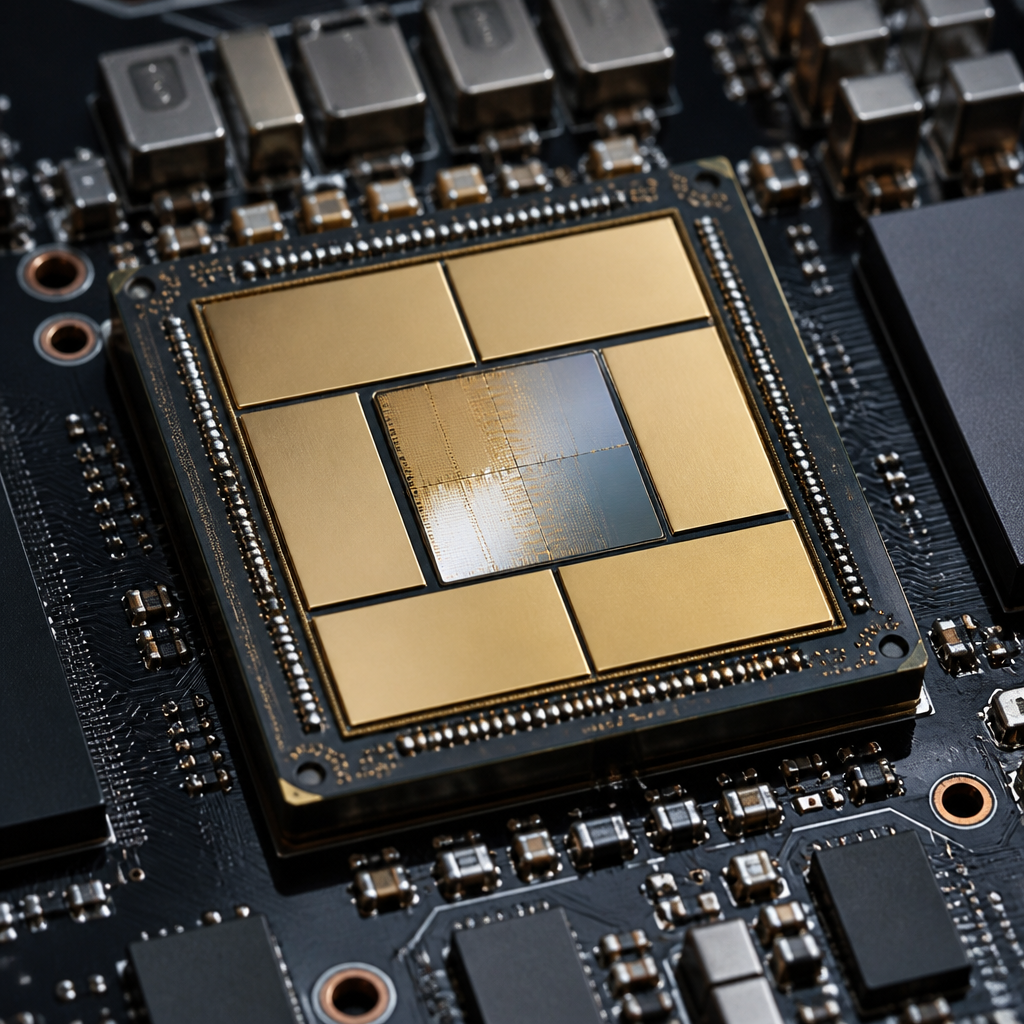
AI inference startups generally compete in three layers. The first layer is silicon. Companies building inference chips promise better performance per watt than general-purpose GPUs by tailoring memory hierarchies, dataflow, and precision support for transformer workloads. Firms such as Groq, Cerebras, and SambaNova have all argued that architecture matters more than simply scaling conventional accelerators. NVIDIA still dominates with its CUDA ecosystem, but startups can win where customers value lower power draw, deterministic latency, or supply diversity.
The second layer is systems infrastructure: servers, networking, storage, and data center design. Inference clusters behave differently from training clusters. They often prioritize high utilization, rapid autoscaling, request routing, and mixed workloads rather than giant synchronized training jobs. That changes decisions around NVLink, InfiniBand, Ethernet fabrics, PCIe topology, local NVMe caching, and rack density. It also elevates thermal design. A dense inference rack can be economical only if cooling supports sustained performance without throttling. Direct-to-chip liquid cooling and rear-door heat exchangers are no longer niche in serious AI facilities.
The third layer is serving software, where many younger startups move fastest. This is where model weights are loaded, quantized, sharded, cached, and exposed through APIs. Tools such as vLLM and TensorRT-LLM have become important because they improve token generation efficiency through techniques like paged attention, speculative decoding, and better memory management. Managed platforms then build on top with routing, observability, fallback models, and cost controls. For buyers, this means a practical truth: the cheapest inference path is often a combination of mainstream hardware and smarter software, not necessarily a moonshot chip.
Techniques that make models faster and cheaper
The biggest gains in AI inference usually come from a handful of repeatable methods. Quantization reduces numerical precision, commonly from FP16 to INT8 or lower, to cut memory usage and improve speed with limited accuracy loss when done carefully. Distillation trains a smaller model to mimic a larger one, creating a cheaper model for production tasks. Continuous batching groups requests dynamically to keep accelerators busy. Prefix caching reuses common prompt segments so systems avoid recomputing identical context. Mixture-of-experts architectures activate only relevant subnetworks, lowering compute per token compared with dense models of similar capability.
Not every optimization fits every workload. Retrieval-heavy enterprise assistants may benefit more from prompt compression and vector database tuning than from extreme quantization. Real-time speech systems care deeply about streaming latency and decoder efficiency. Computer vision pipelines often gain from model pruning and ONNX or TensorRT compilation. Startups that succeed explain these tradeoffs clearly rather than claiming universal gains. In vendor evaluations, I look for reproducible benchmarks, hardware disclosure, sequence lengths, concurrency levels, and quality measurements. A token-per-second claim without those details tells almost nothing.
| Optimization method | Primary benefit | Typical tradeoff | Best fit example |
|---|---|---|---|
| Quantization | Lower memory use and faster serving | Possible accuracy degradation | Customer support chatbots |
| Continuous batching | Higher hardware utilization | Can increase queueing latency | High-volume API platforms |
| Distillation | Smaller, cheaper production models | Loss of edge-case capability | Classification and extraction tasks |
| Speculative decoding | Faster token generation | More system complexity | Interactive coding assistants |
| Prefix caching | Reduced recomputation | Limited gains on novel prompts | Enterprise copilots with standard instructions |
Why data centers matter as much as models
AI infrastructure and data centers are central to the inference race because physics and facility economics set hard limits on software ambition. Power availability is now a gating factor in many markets. Utilities can take years to approve new capacity, and prime sites near fiber routes and enterprise demand are scarce. Even when hardware is available, operators need transformers, switchgear, backup systems, cooling loops, and compliance controls. The result is that inference startups increasingly partner with colocation providers, cloud platforms, and specialist operators rather than treating data centers as a generic commodity.
Location also shapes performance and governance. Inference for a global consumer app may sit in multiple regions to reduce round-trip latency. A bank or healthcare provider may require specific jurisdictional controls, audit trails, and private networking. Edge inference can make sense when bandwidth is expensive or response time must be near real time, as in industrial vision systems or autonomous retail. However, edge deployments add management complexity, fragmented capacity, and hardware servicing challenges. Centralized inference remains easier to optimize, but distributed architectures are growing where data locality or resilience matters.
Energy efficiency is not a marketing extra. It is a direct cost driver and, increasingly, a procurement criterion. Power usage effectiveness still matters, but for AI facilities the more immediate issue is useful compute per watt at sustained load. A startup that improves utilization from 35 percent to 65 percent can create meaningful savings without building a new data center. Likewise, reducing memory bandwidth pressure can save both time and electricity. The best operators monitor rack-level telemetry, thermal headroom, queue depth, and model-level costs continuously because inference economics shift with workload mix.
Who is winning, and what buyers should watch
No single startup has won the inference market, because customer needs differ too much. Groq has drawn attention for low-latency language model serving. Together AI, Fireworks AI, and Baseten focus on developer-friendly inference platforms. OctoAI emphasized model customization and serving efficiency before its acquisition by NVIDIA, which signaled how strategically valuable this layer has become. Meanwhile, hyperscalers continue to build in-house chips and managed inference services, and open-source projects keep narrowing the gap between startup platforms and self-hosted stacks.
For buyers, the smartest approach is disciplined evaluation. Ask how a vendor performs on your prompt lengths, concurrency profile, compliance requirements, and budget ceiling. Compare cloud API pricing against reserved infrastructure and hybrid deployment models. Check whether the stack supports open model formats, Kubernetes-based orchestration, standard observability tools, and multi-region failover. Look closely at egress, minimum commitments, and migration friction. The strongest inference startups reduce dependency risk instead of creating a new lock-in point.
What comes next for AI infrastructure and startup competition
The next phase of AI inference will be shaped by smaller specialized models, smarter routing, and tighter integration between model serving and data center operations. Many applications will stop sending every request to the largest available model. Instead, gateways will classify intent, retrieve context, and route work to the cheapest model that meets quality thresholds. That architectural shift favors startups that can orchestrate heterogeneous fleets across GPUs, custom accelerators, and cloud regions while maintaining consistent APIs and observability.
Another change is the rise of enterprise demand for predictable inference. Chief information officers increasingly want committed throughput, security controls, and cost governance rather than bursty experimentation. That benefits providers with strong scheduling, tenancy isolation, and hardware supply planning. It also creates room for startups serving vertical workloads such as legal review, call center analytics, or industrial monitoring, where optimization can be tuned for narrow tasks and stable prompts. In other words, the race is not only about the fastest hardware. It is about turning AI inference into dependable infrastructure.
For companies following tech innovations and startups, the key takeaway is simple: inference is where AI becomes a business, and infrastructure is what determines whether that business scales responsibly. The winning startups will combine efficient software, practical hardware choices, disciplined data center design, and transparent economics. If you are building, buying, or investing in AI systems, map your stack from model request to rack power draw and identify where cost, latency, or governance breaks first. Then use that insight to choose partners and architectures that keep AI useful, fast, and affordable.
Frequently Asked Questions
What is AI inference, and why are inference startups getting so much attention right now?
AI inference is the moment when a trained model is actually used in the real world to produce an output. That output might be a chatbot response, an image classification, a speech-to-text transcript, a fraud score, a product recommendation, or a code suggestion. In simple terms, training teaches a model what to do, while inference is the stage where the model does the job. This distinction matters because most businesses do not train frontier models from scratch very often, but they may run inference millions or even billions of times inside customer-facing products.
Inference startups are attracting attention because they focus on the part of the AI stack that directly affects software economics. Once a model is integrated into a live application, cost per request, latency, throughput, and reliability become critical. If a model is too expensive to serve or too slow to respond, even a highly capable system may be impractical for mainstream use. Startups in this space aim to solve that problem by optimizing how models are executed across hardware, software frameworks, and cloud infrastructure.
They are also gaining momentum because AI adoption has shifted from experimentation to production. Companies now want systems that can handle real traffic, scale globally, and maintain predictable margins. That creates demand for technologies such as model compression, batching, caching, quantization, routing, token-level optimization, and specialized inference hardware. Inference startups sit at the center of this trend because they can help customers run larger models more efficiently or deliver similar performance with lower-cost infrastructure.
How is inference different from AI training, and why does that difference matter for business economics?
Training and inference use the same model architecture, but they represent very different operational realities. Training is the resource-intensive process of adjusting model parameters using massive datasets. It usually happens in concentrated bursts, often requiring large clusters of GPUs or other accelerators over days or weeks. Inference, by contrast, happens after training is complete. It is the continuous process of serving predictions or generated outputs whenever a user or system makes a request.
That difference matters because many companies can treat training as a periodic capital investment, while inference becomes an ongoing operating expense. A business might fine-tune or retrain a model occasionally, but if that model powers search, customer support, document analysis, ad targeting, or coding assistance, inference runs every minute of every day. Over time, serving costs can exceed the cost of developing the model itself, especially when applications generate long responses or process large volumes of data.
Inference also has stricter real-time requirements. A training job can run for hours in the background, but an end user will not tolerate a chatbot that takes too long to respond or a recommendation engine that slows down a checkout flow. That means inference economics are tied not just to raw compute cost, but also to user experience, conversion rates, retention, and product design. Startups that improve tokens per second, reduce memory usage, or cut infrastructure overhead can materially change whether an AI feature is profitable, scalable, or even usable.
For that reason, the race in inference is not only about technical elegance. It is about turning advanced models into commercially viable services. Faster and cheaper inference can make AI available in more applications, support higher user volumes, and allow companies to experiment without seeing cloud bills spiral out of control.
What technologies do AI inference startups use to make models faster and cheaper?
Inference startups typically improve performance through a combination of software optimization, systems engineering, and hardware-aware design. One common technique is quantization, which reduces the numerical precision used by a model, such as converting weights from higher-precision formats to lower-precision ones. This can dramatically lower memory requirements and increase speed, often with limited impact on quality if done carefully. Another widely used method is pruning or compression, which removes unnecessary parameters or restructures computation to preserve useful behavior with less overhead.
Many startups also focus on runtime optimization. That includes more efficient scheduling across GPUs, better batching of user requests, smarter token generation pipelines, and reduced communication overhead between chips or servers. In large language model workloads, generating output one token at a time can create bottlenecks, so inference platforms often optimize attention mechanisms, memory access patterns, and context handling to reduce delay and improve throughput. Some companies build custom inference engines specifically tuned for transformer architectures or multimodal models.
Caching is another powerful lever. If users repeatedly ask similar questions or reuse shared contexts, certain computations can be stored and reused rather than recomputed from scratch. Routing is equally important: instead of sending every request to the largest and most expensive model, a platform may direct simple tasks to smaller models and reserve premium models for harder prompts. This approach can sharply reduce average cost while preserving overall performance.
On the infrastructure side, inference startups may design around specialized chips, edge devices, or hybrid deployment models. Some optimize for high-end GPU clusters, while others target CPUs, custom accelerators, or on-device inference for privacy and latency benefits. The most effective companies usually combine these layers into a full-stack system, where model architecture, compiler choices, runtime behavior, and hardware utilization all reinforce each other. That is why the best inference gains often come not from a single trick, but from an integrated stack built specifically for production deployment.
Why does lower inference cost matter so much for companies building AI products?
Lower inference cost matters because it directly affects whether an AI feature can become a sustainable business, rather than a costly demo. Every live AI interaction has a unit cost. If a product serves thousands of users per day, those costs may be manageable. But when usage scales to millions of prompts, transcripts, searches, recommendations, or image analyses, small differences in cost per request turn into major differences in gross margin.
For software companies, this has strategic implications. A lower serving cost can allow a business to offer more generous free tiers, increase response quality, support longer context windows, or roll out AI across more parts of the product. It can also make pricing more competitive. If one company can deliver similar output quality at a fraction of the compute cost, it has more room to experiment with subscriptions, usage-based pricing, enterprise contracts, or bundled features. Inference efficiency can therefore become a competitive moat, not just an engineering metric.
Lower cost also expands the range of viable use cases. Some applications require only occasional model calls, but others are deeply inference-heavy. Think real-time copilots, customer support agents, voice assistants, content moderation pipelines, or personalized recommendations across large user bases. In these settings, high serving costs can crush profitability or force product teams to degrade the user experience. More efficient inference lets teams keep latency low, maintain accuracy, and support higher interaction volumes without breaking the budget.
There is also a broader market effect. When inference becomes cheaper, AI moves from being a premium add-on to a standard capability in modern software. That shift encourages adoption across industries such as healthcare, finance, retail, logistics, and media. In other words, lower inference cost does not just help individual companies save money. It changes what kinds of AI-powered products can exist at all.
What should investors, founders, and enterprise buyers look for when evaluating AI inference startups?
They should start by looking beyond headline speed claims and asking what kind of performance the startup delivers under real production conditions. Benchmarks can be misleading if they are based on narrow workloads, synthetic prompts, or ideal hardware setups. What matters is whether the platform improves latency, throughput, reliability, and cost per request for the actual models and traffic patterns customers care about. A strong inference startup should be able to explain its gains clearly and show reproducible results in realistic environments.
It is also important to understand where the startup sits in the stack. Some companies build developer platforms and APIs, others build inference engines, compilers, model optimization tools, or specialized hardware systems. The business model and defensibility will vary accordingly. Buyers should ask whether the product integrates cleanly with existing frameworks, supports popular open-source and commercial models, and works across multiple deployment environments such as cloud, on-premises, and edge devices. Flexibility is valuable because AI infrastructure changes quickly.
Another key factor is whether the startup can maintain quality while reducing cost. Speed alone is not enough if output quality drops, model behavior becomes unstable, or security and compliance suffer. Enterprises should look for evidence of robust observability, fallback mechanisms, governance controls, and predictable scaling. For customer-facing AI, uptime and consistency matter just as much as raw efficiency.
Finally, the best inference startups usually understand that this market is not just about better kernels or faster chips. It is about enabling production AI economics. Founders and investors should pay attention to whether the company solves a painful budget or scaling problem that customers already have, and whether the solution compounds in value as model usage grows. In a crowded field, the winners are likely to be the startups that turn technical optimization into measurable business outcomes.