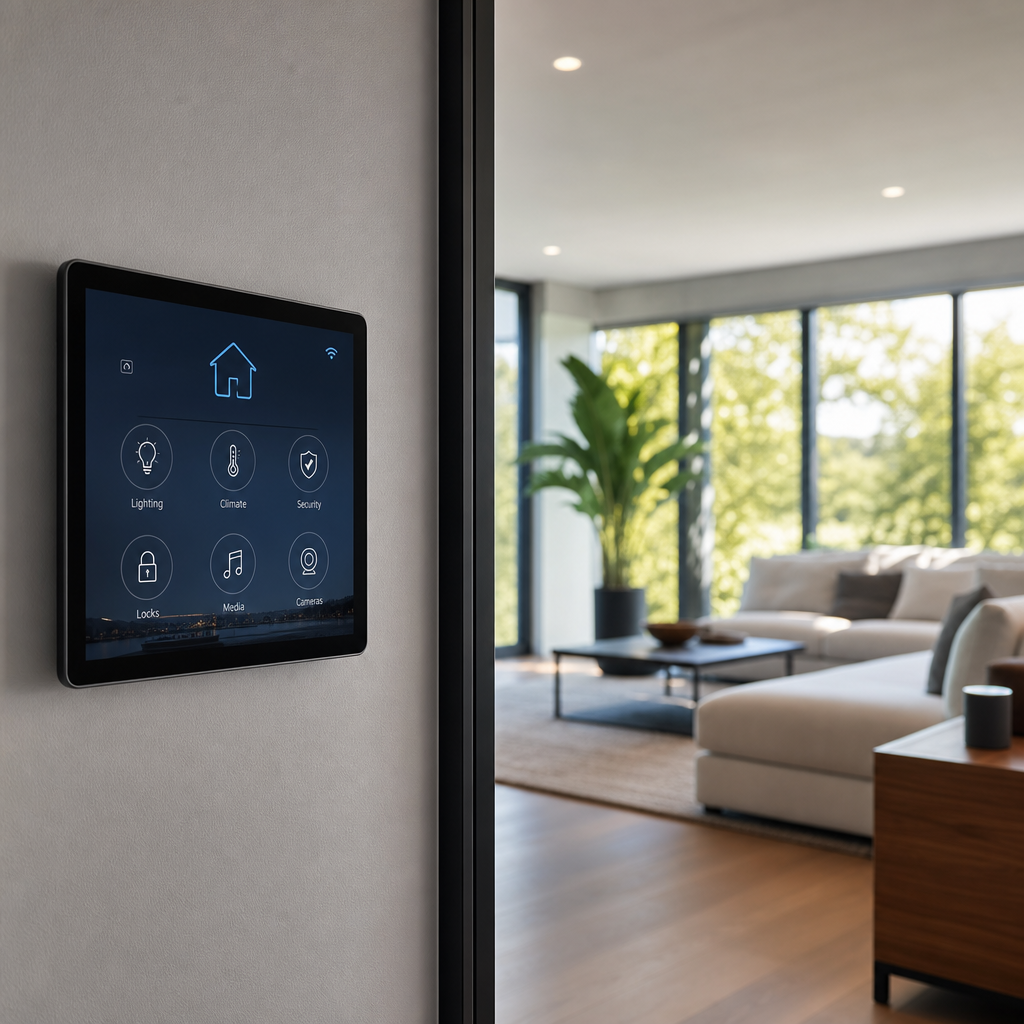
Smart home technologies have moved from novelty to infrastructure, and Silicon Valley has shaped much of that shift through connected thermostats, voice assistants, intelligent lighting, sensors, and home automation platforms. In practical terms, smart home technology means internet-connected devices that monitor, automate, or optimize household functions such as climate control, security, energy use, entertainment, and appliance management. The learning curve matters because buyers are no longer choosing a single gadget; they are choosing ecosystems, protocols, privacy tradeoffs, installation methods, and long-term maintenance commitments. I have helped households and small property owners deploy these systems, and the biggest mistake is assuming convenience comes automatically. It does not. Good outcomes come from understanding interoperability, networking basics, data permissions, and the difference between useful automation and expensive clutter. Silicon Valley’s innovations offer valuable lessons because many of the dominant products, design patterns, and business models originated there. Learning from them helps homeowners, educators, and students evaluate what works, what fails, and what skills are required to build a reliable, secure, and adaptable smart home.
How Silicon Valley shaped the modern smart home
Silicon Valley influenced the category by combining hardware design, cloud software, mobile apps, and subscription services into consumer-ready products. Nest, founded by former Apple engineers Tony Fadell and Matt Rogers, showed that a thermostat could become a learning device by tracking temperature preferences, occupancy patterns, and energy schedules. Google later acquired Nest in 2014, accelerating integration with voice control and data-driven automation. Apple pushed another model with HomeKit, prioritizing device certification, local control, and privacy-oriented architecture. Amazon changed the market through Echo and Alexa, proving that voice interfaces could become the front door to home automation. These companies did not just sell devices; they normalized a new expectation that homes should respond contextually to user behavior.
The key lesson is that successful smart home systems reduce friction. Users do not want to study ten apps to dim lights or lock doors. The best products abstract complexity while preserving control. Silicon Valley companies also taught the market that hardware alone rarely wins. Platforms win when devices, software updates, and third-party integrations reinforce each other. That is why a student studying this field should learn not only device categories, but also ecosystem strategy, API thinking, edge computing, and recurring service economics.
Understanding the learning curve: from device setup to system thinking
The smart home learning curve begins with simple tasks such as connecting a bulb to Wi-Fi, but it quickly expands into broader systems thinking. New users usually ask the same questions: Which devices work together? Do I need a hub? What happens if the internet fails? How much technical skill is required? The direct answer is that basic smart lighting and speaker setups are easy, while whole-home automation, security integration, and multi-protocol reliability require planning. In my experience, most frustration comes from buying devices before mapping use cases. A better approach is to define routines first: arriving home, sleeping, monitoring deliveries, reducing heating bills, or assisting aging family members.
Learning also means understanding protocols. Wi-Fi devices are common and easy to buy, but too many can burden a home router. Zigbee and Z-Wave create mesh networks that often improve battery life and reliability for sensors and switches. Thread, increasingly important through Matter-compatible devices, is designed for low-latency, resilient communication across brands. Bluetooth is useful for setup and proximity features, but it is rarely the backbone of a full automation strategy. Once users grasp these differences, product decisions become more rational and less marketing-driven.
Core technologies every learner should master
Anyone using this Educational Resources hub to understand smart home technologies should focus on five building blocks: connectivity, control platforms, sensors, automation logic, and cybersecurity. Connectivity includes router placement, bandwidth, network segmentation, and signal coverage. Control platforms include Apple Home, Google Home, Amazon Alexa, Samsung SmartThings, and Home Assistant. Sensors provide the intelligence layer: motion, contact, temperature, humidity, leak, smoke, air quality, and occupancy detection. Automation logic transforms sensor data into action through routines, scenes, triggers, and conditions. Cybersecurity protects the entire system from weak passwords, outdated firmware, and unnecessary cloud exposure.
Home Assistant deserves special attention because it represents a different lesson from Silicon Valley’s mainstream approach. It is open source, highly customizable, and capable of deep local automation without dependence on a single vendor. That flexibility comes with a steeper learning curve, especially around YAML, integrations, backups, and troubleshooting. By contrast, Apple Home and Alexa lower the barrier to entry but may limit advanced logic or device compatibility. Learning the tradeoff between convenience and control is central to becoming competent in this space.
| Technology Area | What Beginners Need to Learn | Common Pitfall | Practical Example |
|---|---|---|---|
| Connectivity | Wi-Fi coverage, mesh networks, router capacity | Adding too many 2.4 GHz devices to a weak router | Doorbell camera drops offline at the front porch |
| Protocols | Zigbee, Z-Wave, Thread, Matter basics | Buying incompatible devices from different ecosystems | Sensor cannot trigger lights in the chosen app |
| Automation | Triggers, conditions, scenes, schedules | Overcomplicated routines that fail silently | Lights turn on at noon because presence logic is wrong |
| Security | Firmware updates, MFA, guest networks | Using default passwords or abandoned devices | Old camera remains exposed after vendor support ends |
Real-world applications that justify the effort
Smart homes are worth learning when they solve clear problems. Energy management is one of the strongest examples. Smart thermostats can reduce unnecessary heating and cooling by using occupancy schedules, geofencing, and weather adjustments. The U.S. Department of Energy has long emphasized that programmable temperature setbacks can lower energy consumption, and modern learning thermostats make those setbacks easier to maintain. Smart plugs reveal phantom loads from devices that draw power while idle. Leak sensors placed near water heaters, washing machines, and sinks can prevent thousands of dollars in water damage by sending immediate alerts and shutting off a smart valve.
Accessibility is another high-value use case. Voice control helps users with limited mobility operate lights, blinds, locks, and media systems. Motion-triggered pathways improve safety for older adults at night. Video doorbells and connected locks can support remote caregiving, provided privacy is handled carefully. Security automation also adds practical value when designed correctly: contact sensors verify whether windows are open, cameras confirm deliveries, and presence-based routines simulate occupancy during travel. The lesson from Silicon Valley here is simple: the best innovation is not a flashy demo, but an everyday reduction in friction, risk, or waste.
What Silicon Valley got right, and where users should stay cautious
Silicon Valley companies succeeded by making advanced technology feel approachable. Clean setup flows, app-based onboarding, over-the-air updates, and voice-first interfaces dramatically widened adoption. Device miniaturization, better industrial design, and machine-learning features made products easier to place and easier to trust. Matter, backed by major industry players through the Connectivity Standards Alliance, reflects another positive lesson: standards matter. Interoperability is improving because the market finally recognized that consumers should not need a brand-specific education for every device they buy.
Still, caution is necessary. Cloud dependence remains a major weakness. When a vendor changes pricing, discontinues support, or suffers an outage, core home functions can degrade. Privacy is another concern. Cameras, microphones, occupancy data, and behavioral patterns create deeply sensitive data trails. Not every company handles that data with equal care, and terms of service can change. Product longevity is uneven too. I have seen homeowners install inexpensive devices only to discover two years later that the app is gone, firmware updates stopped, and integrations broke. The educational takeaway is to evaluate support history, local control options, standards compliance, and exportability before buying into any platform.
How to learn smart home technology efficiently
The most efficient learning path starts small and builds competence in layers. Begin with one ecosystem and one room. A sensible starter project might include smart bulbs or switches, a motion sensor, and a voice assistant or mobile control app. From there, add a thermostat, a video doorbell, or leak detection based on actual household priorities. Document every device, account, password manager entry, firmware version, and automation rule. This sounds meticulous, but disciplined documentation prevents confusion when troubleshooting later.
For deeper study, learners should follow product documentation from Apple, Google, Amazon, Samsung, and Home Assistant; review Matter and Thread guidance from the Connectivity Standards Alliance and Thread Group; and practice with networking tools such as Eero, UniFi, or Google WiFi dashboards to understand signal health and device behavior. Reading this Learning Curve hub alongside related educational resources on home networking, automation design, privacy, and device maintenance will make future implementations more reliable. The central lesson is that smart home success is cumulative. Each small project teaches architecture, usability, and risk management.
Smart home technologies reward informed learners because they turn a house into a system that can save energy, improve safety, and reduce daily friction. Silicon Valley’s innovations provide a useful blueprint: simplify interfaces, connect devices through strong platforms, and use data to automate routine decisions. They also provide warnings about cloud dependence, privacy exposure, and short product life cycles. The most important takeaway from this Learning Curve hub is that effective adoption starts with fundamentals, not impulse purchases. Learn protocols, compare ecosystems, secure the network, and automate only what has a clear purpose. If you approach the category methodically, smart home technology becomes less confusing and far more valuable. Use this hub as your starting point, then explore the connected resources that go deeper into setup, interoperability, security, and long-term maintenance.
Frequently Asked Questions
What does smart home technology actually include today, and how has Silicon Valley influenced its development?
Smart home technology now covers a broad ecosystem of internet-connected devices designed to automate, monitor, and improve how a household operates. That includes smart thermostats, voice assistants, connected lighting, video doorbells, smart locks, security cameras, leak detectors, occupancy sensors, motorized shades, smart plugs, connected appliances, and centralized automation platforms that allow all of these products to work together. Rather than functioning as isolated gadgets, modern smart home systems are increasingly built to share data, respond to routines, and adapt to household patterns in real time.
Silicon Valley’s influence has been especially important because many of the ideas that define the category today were shaped by software-first thinking. Instead of treating a thermostat or light switch as a fixed-function product, Silicon Valley companies approached home devices as evolving platforms. That led to mobile app control, cloud-based updates, machine learning for behavior prediction, voice-enabled interfaces, and ecosystems that connect multiple devices under one experience. Products such as learning thermostats, intelligent speakers, and app-controlled security systems helped turn smart homes from a niche interest into a mainstream consumer market.
Just as important, Silicon Valley pushed the idea that smart home technology should deliver measurable value, not just novelty. Consumers now expect devices to save energy, improve convenience, strengthen security, and reduce friction in daily routines. In that sense, the region’s biggest contribution was not simply inventing connected products, but reframing the home as a responsive environment powered by data, automation, and user-centered design.
How can homeowners tell the difference between useful smart home upgrades and products that are just gimmicks?
The most useful smart home upgrades solve a real, repeatable problem. A good way to evaluate any device is to ask whether it saves time, improves comfort, reduces energy waste, increases safety, or simplifies everyday tasks. For example, a smart thermostat that adjusts heating and cooling based on occupancy and weather can create ongoing savings and better comfort. Smart lighting that follows schedules, reacts to motion, or turns off automatically can improve convenience and efficiency. Leak sensors that send alerts before water damage spreads can prevent expensive repairs. These are practical outcomes, not just technical tricks.
By contrast, gimmicky products often rely on the “because you can” factor. They may add app control to something that does not benefit from remote access, or they may require too much setup for too little return. If a product creates more maintenance than value, needs constant manual correction, or does not integrate well with the rest of the home, it is less likely to be a worthwhile investment. Homeowners should also be cautious of devices that are exciting during the first week but do not become part of a routine after that.
A strong indicator of long-term usefulness is interoperability. Devices that work with major platforms, support automation rules, and fit into a broader system are generally more valuable than one-off products. Reliability also matters more than flashy features. A smart lock must work consistently. A security camera must deliver dependable alerts. A voice assistant must understand commands with minimal friction. In practical buying terms, the best smart home technology tends to be the least distracting: it fades into the background while making the home function better every day.
What should buyers consider before choosing a smart home platform or ecosystem?
Choosing a smart home platform is one of the most important decisions a buyer can make because the platform often determines how easily devices will connect, automate, and scale over time. Before buying anything, homeowners should think about which products they already use, how much automation they want, and whether they prefer simplicity or deeper customization. Some platforms are designed for straightforward setup and voice control, while others offer more advanced routines, conditions, and device-level flexibility.
Compatibility should be the first checkpoint. Buyers need to confirm that the devices they want to use support the same ecosystem, whether that is centered around a voice assistant, a mobile operating system, or a dedicated home automation hub. It is also wise to look for support for widely adopted standards and cross-platform compatibility, because that reduces the risk of being locked into a narrow product line. As the market matures, flexibility is becoming more important than brand loyalty alone.
Privacy, security, and ongoing support also deserve close attention. A strong ecosystem should receive regular software updates, clear security policies, and transparent controls over data collection. Buyers should look at how long a company typically supports its devices, whether the platform continues to function if internet service is interrupted, and whether essential features require subscriptions. A smart home platform is not just a convenience layer; it becomes part of the home’s infrastructure. That means buyers should evaluate it the way they would evaluate any long-term utility: for stability, reliability, and room to grow.
Are smart home devices really good for energy savings and efficiency, or is that overstated?
In many cases, smart home devices can produce meaningful energy savings, but the results depend on the type of product, the home itself, and how the technology is used. The strongest examples usually come from climate control and lighting. Smart thermostats can reduce unnecessary heating and cooling by learning schedules, detecting when a home is empty, and allowing more precise temperature control across time periods. Smart lighting systems can prevent lights from being left on, dim automatically, and align use with occupancy or daylight conditions. Smart plugs and appliance monitoring tools can also help identify devices that consume energy unnecessarily.
That said, energy savings are not automatic. A connected device does not guarantee efficiency simply because it has an app. If homeowners constantly override schedules, use automation inconsistently, or install products without adjusting settings to match real household behavior, the benefits can be limited. The most effective results happen when smart devices are integrated into routines that reflect how people actually live. For example, using geofencing to reduce climate control when everyone leaves the house is far more effective than relying only on manual control through a phone.
Silicon Valley’s contribution here has been to apply data-driven optimization to household systems that were previously static. Instead of a one-size-fits-all schedule, devices can respond dynamically to occupancy, habits, weather forecasts, and energy usage patterns. That creates opportunities not just for convenience, but for measurable operational improvements. For homeowners who approach smart home technology strategically, especially in heating, cooling, lighting, and appliance management, the efficiency gains are very real and often cumulative over time.
What are the biggest privacy and security concerns with smart home technologies, and how can homeowners reduce the risks?
The biggest privacy and security concerns usually come from the fact that smart home devices collect data, remain connected to networks, and in some cases include microphones, cameras, or location-aware features. A voice assistant may process spoken commands. A camera may store footage in the cloud. A smart lock may log entry events. A thermostat may learn occupancy patterns. Individually, these features can be useful, but together they create a detailed picture of household behavior. That is why privacy in a smart home is not just about one device; it is about the combined data footprint of the entire system.
Security risks typically involve weak passwords, outdated firmware, poor network protections, excessive account permissions, or products from manufacturers that do not maintain strong update practices. If a device is not patched regularly or if default security settings are left unchanged, it can become a vulnerable entry point. This is especially important for devices tied to home access, video monitoring, or personal data. Homeowners should also pay attention to where data is stored, whether recordings are encrypted, and how easily users can review or delete collected information.
To reduce risks, homeowners should start with reputable brands that have a strong record of software support and transparent privacy policies. They should enable multi-factor authentication, use unique passwords for all smart home accounts, keep firmware updated, and secure the home Wi-Fi network with strong encryption. Segmenting smart devices onto a separate network can add another layer of protection. It is also smart to disable features that are not necessary, review app permissions regularly, and choose products that provide clear local control options when possible. The goal is not to avoid smart home technology altogether, but to adopt it with the same care people now apply to banking apps, laptops, and other connected systems that matter in daily life.