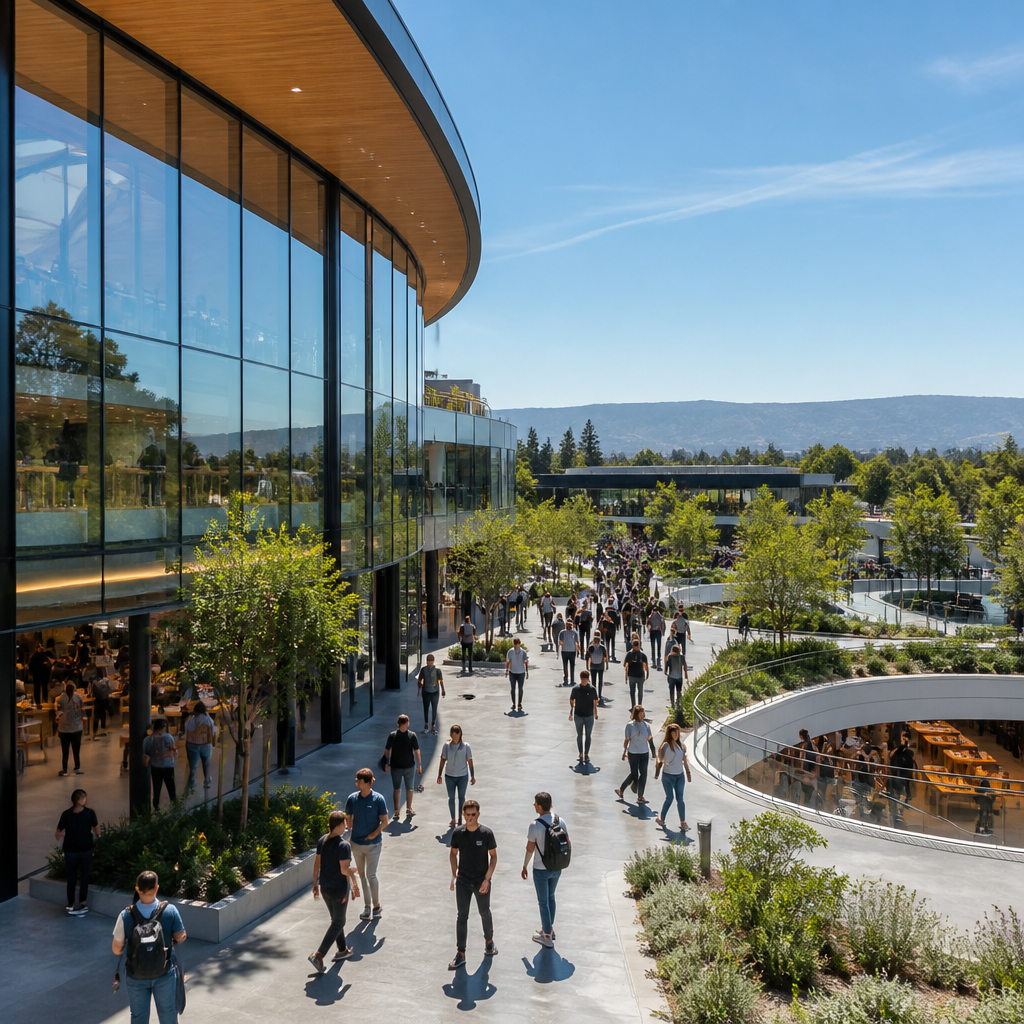
Silicon Valley has shaped next-generation e-commerce by turning new technologies into mainstream retail infrastructure, from cloud computing and digital payments to artificial intelligence, logistics software, and mobile-first product design. In this context, next-generation e-commerce means online buying and selling systems that are personalized, automated, data-driven, and deeply integrated across apps, marketplaces, social platforms, and physical operations. The region matters because it concentrates venture capital, engineering talent, research universities, and a culture of rapid experimentation that repeatedly changes how products are discovered, purchased, delivered, and supported. I have worked with commerce teams adopting Valley-built tools, and the pattern is clear: ideas that begin as startup experiments often become standard operating models for global retailers within a few years. Understanding that pipeline helps founders, operators, and investors separate durable innovation from short-lived hype.
The impact is broader than storefront design. Silicon Valley companies influence customer acquisition through ad technology, conversion optimization through recommendation engines, fulfillment through robotics and route software, and retention through subscription management and customer data platforms. They also shape expectations. Consumers now assume one-click checkout, real-time order tracking, personalized search results, and immediate support because companies such as Amazon, Shopify, Stripe, Google, Meta, and countless startups normalized those experiences. For any business covering tech innovations and startups, this topic serves as a hub because nearly every emerging commerce trend connects back to infrastructure, capital, or operating practices refined in Silicon Valley. To understand where online retail is heading, you need to examine the technologies, business models, and constraints coming out of that ecosystem.
Platform Infrastructure Turned E-Commerce into a Software Stack
One of Silicon Valley’s most important contributions is the shift from custom-built online stores to modular commerce stacks. Early retailers often commissioned expensive, rigid systems. Today, startups and enterprise brands assemble storefronts, payment gateways, tax engines, inventory services, search tools, analytics platforms, and customer relationship systems through APIs. Shopify lowered the barrier to launch; Stripe simplified payments; Twilio improved messaging; Segment organized customer data; and Snowflake made large-scale analysis accessible. This unbundling allowed merchants to move faster and swap vendors without rebuilding everything.
In practice, that flexibility changed competition. A niche beauty brand can launch with Shopify, use Stripe for checkout, Klaviyo for lifecycle messaging, Gorgias for support, and ShipBob for fulfillment, then compete with incumbents on experience rather than headcount. Headless commerce, popularized through platforms such as Commerce Layer, commercetools, and Contentful integrations, lets brands separate the front end from the transactional engine. That matters for omnichannel retail because a single commerce back end can support websites, mobile apps, kiosks, and social storefronts. The result is not merely better code architecture; it is faster experimentation, lower operational friction, and a wider path for startup-led retail innovation.
Artificial Intelligence Is Rewriting Discovery, Merchandising, and Support
Artificial intelligence has become the defining layer of next-generation e-commerce, and Silicon Valley has supplied both the models and the tooling. Recommendation systems, visual search, dynamic pricing, demand forecasting, fraud detection, and conversational support now sit inside the revenue engine. Amazon’s recommendation architecture taught the industry that personalization materially lifts conversion and average order value. Google’s advances in search and ranking influenced site search expectations. More recently, generative AI has accelerated content production, product tagging, support automation, and shopping assistance.
Retailers use AI because it directly addresses costly friction points. Search relevance reduces bounce rates. Personalized merchandising improves product discovery when catalogs are large. Computer vision helps shoppers find similar items from photos, a capability used by Pinterest and Google Lens. Customer service copilots handle routine questions about sizing, returns, and shipment status, freeing agents for edge cases. McKinsey has reported that personalization leaders can drive materially higher revenue than slower adopters, although gains depend on clean data and disciplined testing. My experience is that merchants overestimate model sophistication and underestimate taxonomy quality. If attributes are inconsistent or product feeds are incomplete, even strong models perform poorly. Silicon Valley’s real contribution is not just smarter algorithms; it is the surrounding ecosystem of data pipelines, experimentation frameworks, and infrastructure that makes AI usable in everyday commerce.
Payments, Trust, and Checkout Innovation Removed Purchase Friction
Checkout remains the point where interest turns into revenue, so Valley-led payment innovation has had outsized influence. Stripe, PayPal, Block, Apple Pay, and numerous risk-tech startups made secure transactions simpler for merchants and faster for customers. Tokenization, device authentication, and fraud scoring reduced the need for clunky forms. One-click checkout, network token support, and wallet adoption lowered abandonment. The Baymard Institute has consistently found that complicated checkout is a major reason shoppers leave carts, which is why payment UX improvements can produce measurable revenue gains without increasing traffic.
Trust is inseparable from payments. Modern e-commerce depends on PCI compliance, dispute workflows, Know Your Customer controls for some sellers, and increasingly strong identity checks in high-risk categories. Silicon Valley firms invested heavily in these hidden layers because trust compounds. If a platform reliably prevents fraud while preserving conversion, merchants stay and consumers return. Buy now, pay later providers also changed basket economics by spreading costs, though they introduced credit and regulatory concerns that responsible operators must monitor. The lesson is straightforward: payment innovation is not a cosmetic upgrade. It is foundational infrastructure that influences conversion, risk, cash flow, and customer confidence at scale.
Logistics Technology Made Speed a Competitive Feature
Fast delivery is often treated as an operations issue, but in next-generation e-commerce it is a product feature shaped by software. Silicon Valley helped bring warehouse robotics, route optimization, inventory placement algorithms, and real-time tracking into mainstream retail. Amazon set the standard by investing in fulfillment centers, predictive inventory systems, and last-mile orchestration. Startups then extended the model with micro-fulfillment, on-demand delivery, returns software, and warehouse management tools built for midmarket brands.
What changed is visibility and decision quality. Retailers can now forecast demand by region, position stock closer to likely buyers, and automate pick-pack-ship workflows. That reduces stockouts and expensive split shipments. Platforms such as Flexport digitized freight management, while companies like Shippo and EasyPost simplified carrier integrations. During supply chain disruptions, merchants with better data infrastructure adapted faster because they could reroute inventory, update promise dates, and communicate clearly with customers. Speed alone is not enough, however. Free shipping can destroy margin if unit economics are weak. The strongest operators use logistics technology to balance service levels, return rates, and contribution profit rather than simply racing to same-day delivery.
| Technology Area | Silicon Valley Influence | Practical E-Commerce Effect |
|---|---|---|
| Cloud commerce platforms | API-first tools like Shopify and Stripe | Faster store launches and modular operations |
| Artificial intelligence | Recommendation engines and generative tools | Better discovery, higher conversion, lower support costs |
| Payments and fraud | Wallets, tokenization, risk scoring | Less checkout friction and stronger trust |
| Logistics software | Warehouse automation and route optimization | Faster delivery with improved inventory decisions |
| Growth technology | Ad platforms, analytics, testing frameworks | Sharper acquisition, retention, and merchandising strategy |
Growth Loops, Data Culture, and Startup Economics Changed Retail Strategy
Silicon Valley did not just provide tools; it imported a way of operating. Modern e-commerce teams borrow startup disciplines such as rapid iteration, cohort analysis, A/B testing, product-led growth, and obsessive instrumentation. Google Analytics, Mixpanel, Optimizely, Amplitude, and Looker became standard because leaders wanted precise answers to practical questions: Which channel acquires the highest lifetime value customers? Which landing page increases add-to-cart rate? Which onboarding flow reduces first-order drop-off? This data culture made retail decisions more scientific.
It also changed how commerce businesses are financed and scaled. Venture-backed direct-to-consumer brands pursued fast growth using Meta and Google ads, influencer partnerships, and subscription models. Some built strong franchises; others learned that paid acquisition can become fragile when privacy changes reduce targeting efficiency. Apple’s App Tracking Transparency framework exposed that weakness clearly. The next phase of e-commerce strategy is more balanced. Brands now focus more on first-party data, retention, community, content, and profitable repeat purchase behavior. Silicon Valley’s influence remains strong here because the best tools for attribution, customer data unification, and experimentation still emerge from that ecosystem. The difference is that operators have become more disciplined about margins, not just top-line growth.
What Comes Next: Immersive Commerce, Agents, and Responsible Innovation
The next wave of e-commerce innovation is already visible. Augmented reality helps customers preview furniture, cosmetics, and eyewear before buying. Voice interfaces and shopping assistants can guide product selection. Autonomous agents will increasingly compare options, manage replenishment, and complete transactions on behalf of users within approved limits. Blockchain has had mixed results in mainstream retail, but digital identity and provenance tools remain relevant in luxury, collectibles, and cross-border trade. Meanwhile, enterprise retailers are exploring unified commerce systems that connect point-of-sale, online inventory, loyalty, and service interactions into a single customer record.
Still, not every Valley trend deserves adoption. I advise teams to evaluate technologies against concrete metrics: conversion lift, return-rate reduction, customer acquisition cost, fulfillment expense, and payback period. Privacy law, model bias, security exposure, and vendor lock-in are real constraints. A chatbot that answers quickly but inaccurately can damage trust. A recommendation engine that amplifies only high-margin products may hurt long-term loyalty. A same-day delivery promise can backfire if operations cannot support it profitably. The best next-generation e-commerce strategies pair Silicon Valley innovation with rigorous governance, customer empathy, and sober financial analysis.
Silicon Valley’s impact on next-generation e-commerce is best understood as a chain reaction. The region funds experiments, builds scalable tools, attracts talent, and spreads new operating models across the global retail economy. That process gave merchants cloud platforms, seamless payments, AI-driven merchandising, data-led growth systems, and logistics software that once belonged only to the largest companies. It also raised the baseline for customer expectations, making convenience, personalization, and transparency standard rather than premium features.
For readers following tech innovations and startups, this subject works as a hub because it connects every major commerce theme: artificial intelligence, fintech, cloud infrastructure, logistics automation, consumer apps, analytics, and digital trust. The practical takeaway is simple. Do not chase every trend. Identify the Valley-born technologies that solve real bottlenecks in your business, test them against clear metrics, and build on infrastructure that can evolve as channels and customer behavior change. If you want to stay competitive in modern retail, start by auditing your commerce stack, data quality, checkout flow, and fulfillment model, then prioritize the upgrades with the clearest customer and margin impact.
Frequently Asked Questions
How has Silicon Valley influenced the evolution of next-generation e-commerce?
Silicon Valley has played a foundational role in turning e-commerce from a basic online storefront model into a highly connected, intelligent, and scalable commercial ecosystem. Its influence comes from a unique combination of software innovation, venture capital, engineering talent, and a culture focused on rapid experimentation. Many of the technologies that now define modern online retail—cloud infrastructure, mobile apps, recommendation engines, digital wallets, API-based integrations, and AI-driven automation—were either pioneered, accelerated, or commercialized by companies rooted in the region.
In practical terms, Silicon Valley helped move e-commerce beyond simply listing products online. It introduced the infrastructure that allows retailers to personalize shopping experiences, manage inventory in real time, automate customer service, optimize fulfillment, and unify operations across websites, marketplaces, social media, and physical stores. This shift created what is now considered next-generation e-commerce: systems that are data-driven, always-on, customer-centric, and deeply integrated across channels.
The region’s impact is also visible in how quickly new retail technologies become mainstream. Startups often develop tools for payments, logistics, analytics, or marketing automation, and larger platforms then scale those tools across the broader market. As a result, businesses of all sizes can now access capabilities that were once available only to major enterprises. That democratization of technology is one of Silicon Valley’s most important contributions to the modern e-commerce landscape.
What technologies from Silicon Valley have had the biggest impact on modern e-commerce?
Several major technologies associated with Silicon Valley have fundamentally reshaped how e-commerce operates. Cloud computing is one of the most important. It gave retailers flexible, scalable infrastructure for hosting websites, processing transactions, storing customer data, and managing peak traffic without building expensive in-house systems. This made it possible for fast-growing online businesses to expand quickly while maintaining performance and reliability.
Digital payments are another major area of impact. Silicon Valley helped normalize frictionless checkout experiences through payment gateways, mobile wallets, subscription billing systems, fraud detection tools, and one-click payment technologies. These innovations reduced cart abandonment, increased consumer trust, and supported cross-border commerce by making online transactions faster and more secure.
Artificial intelligence and machine learning have also become central to next-generation e-commerce. These technologies power recommendation engines, dynamic pricing, predictive inventory planning, search relevance, chatbots, and personalized marketing. Instead of offering the same shopping journey to every visitor, retailers can now tailor content, offers, and product suggestions based on browsing behavior, purchase history, and intent signals.
Silicon Valley has also had a major impact on logistics software and mobile-first product design. Advanced delivery management systems, warehouse optimization platforms, route-planning tools, and real-time shipment tracking have improved fulfillment speed and visibility. At the same time, mobile-first design thinking changed how consumers interact with online stores, making shopping more intuitive across smartphones, apps, social platforms, and embedded commerce experiences. Together, these technologies have made e-commerce more efficient, personalized, and accessible.
Why is Silicon Valley especially important in the context of personalized and data-driven online retail?
Silicon Valley is especially important because it has been a leading force in building the software and data infrastructure that make personalization possible at scale. Next-generation e-commerce depends on the ability to collect, process, and act on large volumes of information in real time. That includes customer behavior, product performance, ad attribution, inventory movement, supply chain signals, and engagement across channels. Silicon Valley companies have helped create the analytics platforms, cloud environments, customer data systems, and AI models that convert this raw data into practical retail decisions.
Personalization is no longer limited to showing “related products” on a product page. Today, it can shape the entire customer journey—from how shoppers discover products and what order they see items in, to which promotions they receive, how customer support is delivered, and when replenishment reminders are triggered. This level of customization depends on seamless data integration, strong experimentation frameworks, and machine learning systems that improve continuously. Those capabilities are closely tied to the technology ecosystem Silicon Valley has cultivated.
The region also helped establish the product mindset behind modern retail software: measure everything, test constantly, iterate quickly, and optimize around customer behavior. That approach made e-commerce more scientific and performance-oriented. Instead of relying heavily on broad assumptions, brands can make decisions based on conversion data, retention metrics, cohort analysis, and predictive modeling. For businesses trying to compete in crowded digital markets, this data-driven operating model is often the difference between generic online selling and truly intelligent commerce.
How has Silicon Valley changed the relationship between e-commerce, marketplaces, social platforms, and physical retail?
One of Silicon Valley’s biggest contributions has been breaking down the boundaries between different commerce environments. In the past, e-commerce was often treated as a separate sales channel. Today, it functions as part of a larger commercial network that includes direct-to-consumer websites, online marketplaces, social commerce, mobile apps, customer loyalty platforms, and brick-and-mortar operations. Silicon Valley helped enable this convergence through APIs, cloud-based commerce platforms, automation tools, and software that synchronizes data across systems.
This has allowed retailers to create more unified customer experiences. A shopper might discover a product on a social platform, compare options on a marketplace, complete the purchase through a mobile app, choose in-store pickup, and later receive personalized follow-up offers by email or SMS. Behind the scenes, integrated systems connect payments, inventory, customer profiles, order management, and fulfillment workflows. That kind of omnichannel coordination is a defining feature of next-generation e-commerce.
Physical retail has also been transformed by technologies that originated or scaled through Silicon Valley’s innovation ecosystem. Point-of-sale systems now connect directly with e-commerce back ends. In-store operations can reflect online inventory data in real time. Retailers can use location-aware marketing, digital receipts, clienteling tools, and buy-online-pick-up-in-store models to bridge digital and physical shopping. Rather than replacing physical retail, next-generation e-commerce has made it more connected, measurable, and responsive.
Marketplaces and social platforms have become especially important because Silicon Valley accelerated the idea that commerce should happen wherever customer attention already exists. That means shopping is no longer confined to standalone web stores. It can happen inside content feeds, creator communities, messaging platforms, search experiences, and app ecosystems. This expanded definition of where and how transactions occur is central to the modern retail environment.
What does Silicon Valley’s influence mean for the future of e-commerce businesses?
For e-commerce businesses, Silicon Valley’s influence means the future will be shaped by greater automation, tighter system integration, faster innovation cycles, and rising customer expectations. Consumers now expect seamless checkout, personalized recommendations, rapid delivery, transparent tracking, responsive support, and consistent experiences across every digital touchpoint. Those expectations were heavily shaped by technology platforms and commerce tools that emerged from Silicon Valley’s ecosystem.
Businesses that want to stay competitive will likely need to adopt more intelligent and connected operating models. That includes using AI for merchandising and service, leveraging real-time analytics for decision-making, integrating front-end and back-end systems, and investing in tools that connect commerce with marketing, fulfillment, and customer retention. The emphasis is moving away from isolated software stacks and toward flexible, interoperable systems that can adapt quickly to changing customer behavior and market conditions.
Silicon Valley’s continued influence also suggests that e-commerce will become more embedded into everyday digital activity. Shopping experiences will likely appear more naturally within content, communities, search interfaces, voice assistants, and automated replenishment flows. At the same time, operational innovation will continue behind the scenes, with smarter inventory forecasting, better fraud prevention, more efficient logistics, and stronger customer lifetime value modeling.
Perhaps most importantly, Silicon Valley has shown that e-commerce is no longer just about selling products online. It is about building adaptive commercial systems that learn, personalize, and scale. For brands, retailers, and technology providers, the long-term takeaway is clear: success in next-generation e-commerce will depend on how effectively they use technology not only to transact, but to create more relevant, efficient, and integrated customer experiences.