Silicon Valley has long been the epicenter of technological advancements and a beacon of innovation. Nestled within this groundbreaking landscape is an education system that thrives on cutting-edge technologies, striving to provide students with unparalleled learning experiences. Among the myriad of technological frontiers explored, Augmented Reality (AR) stands out as a particularly transformative force. AR overlays digital information onto the real world, allowing users to interact with their environment in enriched and novel ways.
In the realm of education, AR’s potential is nothing short of revolutionary. It transforms traditional learning mediums into dynamic, interactive experiences. Imagine exploring the intricate details of ancient architecture in a history class by projecting a virtual coliseum in the middle of the classroom. Or consider the excitement of biology students who can virtually dissect organisms without the mess and ethical concerns of traditional methods. In this light, AR is not just a novelty but a profound tool to enhance learning, making abstract or complex concepts accessible and engaging.
This article aims to delve deep into the role of AR in Silicon Valley education, examining its impacts, benefits, challenges, and the future it holds. By understanding the current landscape and potential further applications of AR, educators, policymakers, and technologists can better harness its capabilities to shape the future of learning.
Transforming Learning Environments
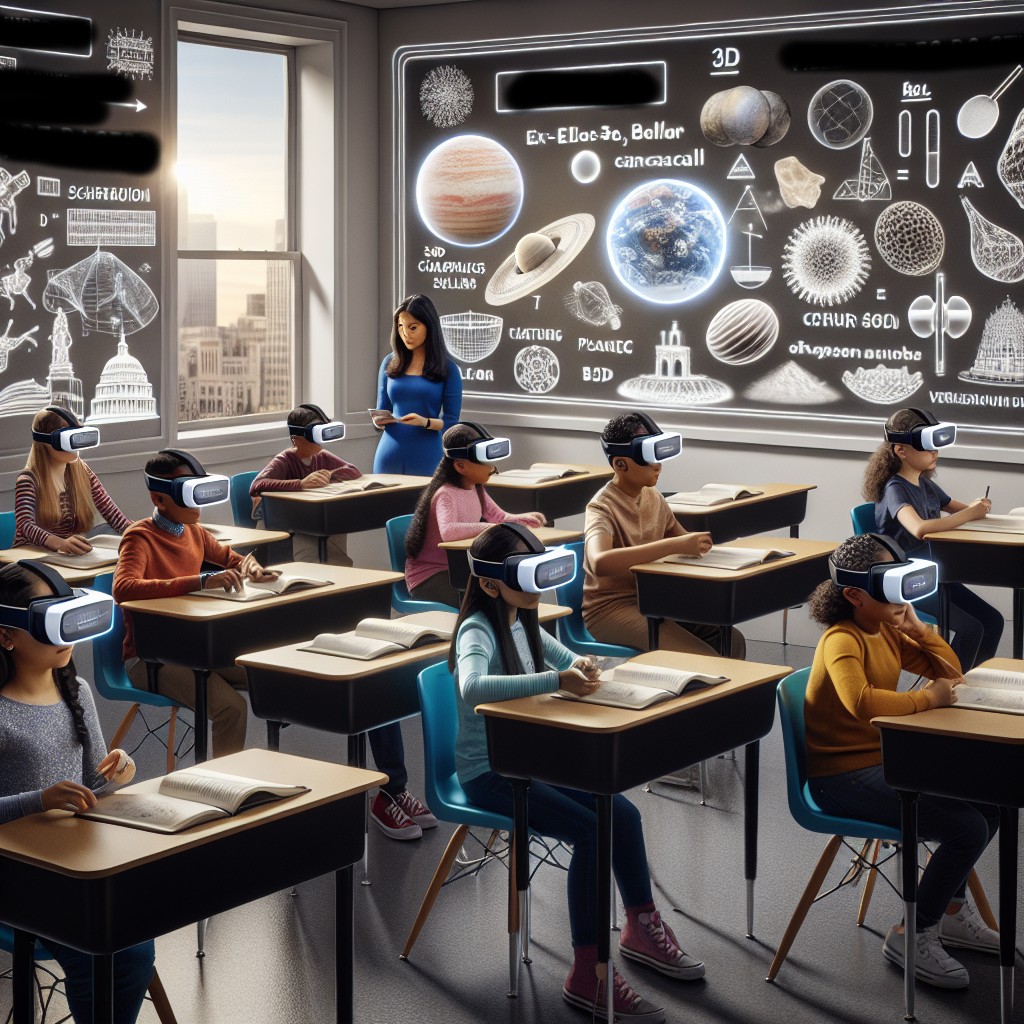
One of the most significant impacts of AR in education is its ability to transform traditional learning environments. Classrooms can become interactive ecosystems where students are not mere recipients of information but active participants. AR can turn flat images into 3D experiences, allowing students to explore and interact with educational content in ways previously unimaginable.
For example, geography classes can be revolutionized by AR-enhanced maps that provide real-time data, including climate changes, population movements, and historical events. Art students can walk through virtual galleries and view masterpieces up close, observing fine details down to the brushstroke. This immersive learning is not only more engaging but helps in improving retention rates as students can associate information with vivid experiences.
Furthermore, AR’s ability to create simulated real-world environments is particularly invaluable for vocational training. Aspiring engineers, doctors, and architects can practice their skills in a risk-free virtual environment before transitioning to real-world applications. This hands-on learning model fosters a deeper understanding and a higher level of proficiency, preparing students more effectively for their future careers.
Enhanced Accessibility and Inclusivity
AR technologies also promote greater accessibility and inclusivity in education. Traditional learning resources can sometimes fall short in addressing the diverse needs of all students, particularly those with disabilities or learning challenges. AR can bridge these gaps by providing tailored learning experiences that cater to individual needs.
For students with hearing impairments, AR can provide real-time subtitles and translations, ensuring they can follow along with lessons without missing critical information. Those with visual impairments can benefit from AR applications that use haptic feedback and auditory cues to describe visual content. Additionally, AR can simplify complex concepts for students with learning disabilities, breaking them down into more understandable and engaging parts.
By making education more accessible, AR ensures that all students have the opportunity to succeed, fostering an equitable learning environment where everyone can thrive. This inclusivity is not only beneficial for students but enriches the learning experience for the entire classroom, fostering a more diverse and understanding community.
Boosting Student Engagement
One of the fundamental challenges in education is maintaining student engagement. Traditional teaching methods often struggle to capture the interest of digital-native students who are accustomed to interactive and dynamic content. AR addresses this challenge by making learning an exciting and immersive experience.
Interactive AR applications can gamify educational content, turning lessons into engaging adventures. For example, math problems can become interactive puzzles in a virtual world, and history lessons can transform into time-travel experiences where students witness events firsthand. This gamification of learning not only makes education more enjoyable but also fosters a deeper connection to the subject matter.
Furthermore, AR can facilitate collaborative learning experiences. Students can work together on AR projects, such as constructing virtual structures or conducting virtual science experiments. This collaborative aspect of AR not only enhances learning but also develops important social and teamwork skills.
Implementation and Adoption Challenges
While the benefits of AR in education are clear, implementing this technology presents its own set of challenges. One primary concern is the financial investment required. Developing and integrating AR applications into the educational curriculum can be costly, and not all schools have the resources to afford these advancements.
Additionally, there is a learning curve associated with using AR technologies. Educators need to be trained to effectively incorporate AR into their teaching methods, which requires time and effort. Without proper training and support, there is a risk that AR could be underutilized or misapplied, failing to achieve its full potential in enhancing education.
Furthermore, there are concerns regarding the digital divide. While AR has the potential to make education more accessible and inclusive, there is a risk that it could exacerbate existing inequalities if not implemented thoughtfully. Students in underfunded schools or those without access to necessary technology at home may be left behind, widening the educational gap.
The Future of AR in Silicon Valley Education
Looking ahead, the future of AR in Silicon Valley education is promising. As technology continues to advance and become more accessible, the potential applications of AR in education will only expand. Key stakeholders, including educators, policymakers, and technologists, must collaborate to ensure that AR is integrated effectively and equitably into the educational landscape.
One anticipated development is the integration of AR with other emerging technologies, such as artificial intelligence and machine learning. This convergence could lead to even more personalized and adaptive learning experiences, where AR applications adjust to the individual needs and learning styles of each student in real time.
Moreover, continued research and development in AR technology will likely result in more affordable and accessible solutions, making it feasible for schools of all economic backgrounds to leverage this technology. As AR becomes more mainstream, it has the potential to reshape the traditional educational paradigm, fostering a generation of learners who are more engaged, knowledgeable, and prepared for the challenges of the future.
Conclusion
In conclusion, the role of augmented reality in Silicon Valley education is both transformative and promising. By creating interactive and immersive learning environments, AR has the potential to revolutionize the educational experience, making it more engaging, accessible, and effective. However, to fully harness the benefits of AR, it is crucial to address the challenges associated with its implementation, ensuring that all students have the opportunity to benefit from this technology.
As we look to the future, the continued development and integration of AR into education will require collaboration and innovation from all stakeholders. By embracing this technology and leveraging its potential, Silicon Valley can continue to lead the way in educational advancements, preparing students for the complexities and opportunities of the 21st century.