Vision-language-action models are the software core turning today’s robots from scripted machines into adaptable assistants that can see a scene, understand instructions, and choose useful physical actions. In robotics, “vision” means camera-based perception of objects, people, depth, and motion; “language” means the ability to interpret natural-language commands, labels, and plans; and “action” means low-level motor outputs such as grasping, moving, opening, placing, or navigating. Put together, a vision-language-action model links what a robot observes, what a human asks, and what the robot does next. That matters because general-purpose robots cannot rely on fixed rules alone. Homes, warehouses, hospitals, and construction sites are variable environments full of unfamiliar objects, changing layouts, and ambiguous requests. I have worked on robotic perception pipelines where separate vision and control modules broke down the moment lighting changed or a user phrased a task differently. VLA systems matter because they reduce that brittleness by learning shared representations across images, text, and behavior. As a hub topic within physical AI and robotics, they sit at the intersection of embodied intelligence, foundation models, multimodal learning, simulation, safety engineering, and edge deployment.
What a vision-language-action model actually does
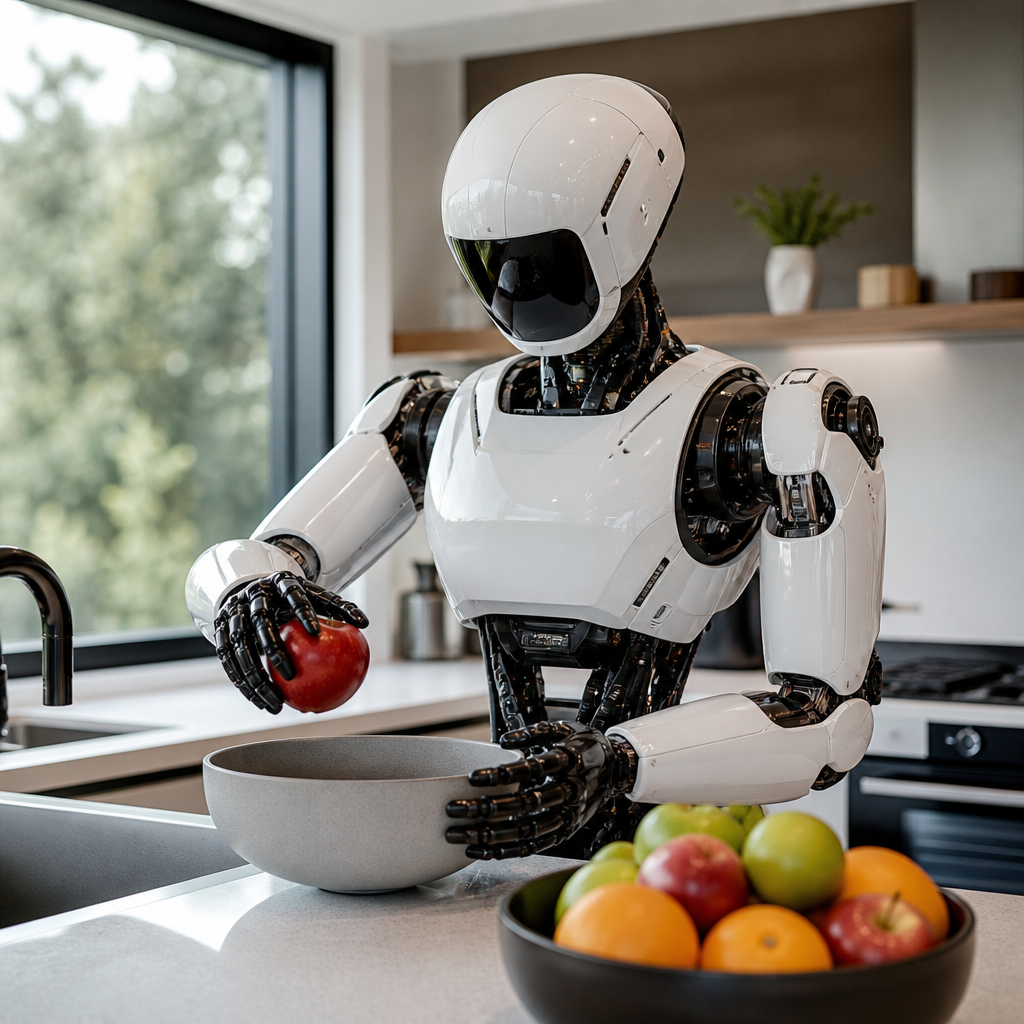
A vision-language-action model predicts actions from combined sensory and language inputs. In practical terms, a robot camera captures a cluttered countertop, a user says “put the red mug in the sink,” and the model maps pixels plus words into a sequence of motor decisions. Those decisions may be continuous control signals for joints, discrete tokens representing skills such as reach or grasp, or a hybrid plan that calls tools from a policy library. The important point is that the model does not treat perception, instruction parsing, and action selection as isolated steps. It learns that the phrase “red mug” refers to a visual object category and that “in the sink” implies a target location, obstacle avoidance, and task completion criteria.
This unified behavior is a major shift from classic robotics stacks. Traditional systems often combine perception, state estimation, motion planning, and control in separate modules. That architecture remains useful, especially in safety-critical settings, but it is expensive to maintain across many tasks. A warehouse robot programmed only for tote picking struggles when asked to sort returns by written instructions or recover from a blocked path. A VLA model is designed to generalize across tasks because the same learned backbone can support identifying objects, following language, and producing action trajectories. That is why leading robotics labs describe these systems as a path toward broader robot competence rather than narrow automation.
How VLA models are trained for real-world robotics
Training a VLA model usually starts with large-scale multimodal pretraining and then narrows toward embodied data. The vision component may inherit features from image encoders trained on internet-scale image-text pairs. The language component often builds on a transformer trained to predict text. The action component is then aligned with robot demonstrations, teleoperation logs, simulation rollouts, and task-conditioned trajectories. In one common setup, a human operator controls a robot arm while cameras, proprioceptive state, and commands are recorded. The model learns behavioral cloning: given observations and instructions, imitate the expert’s next action.
The data challenge is enormous. Internet text and images are plentiful, but paired robot action data is scarce, costly, and noisy. Teams address that with simulation platforms such as NVIDIA Isaac, MuJoCo, and Habitat; shared datasets such as RT-1, Open X-Embodiment, and BridgeData; and cross-robot normalization schemes that convert different hardware actions into a common representation. Diffusion policies, tokenized action spaces, and transformer decoders are all used to improve long-horizon control. In my experience, the hardest part is not model architecture but dataset consistency: camera calibration errors, delayed timestamps, inconsistent gripper labels, and policy drift quietly damage performance. Strong robotics teams invest heavily in data curation, replay validation, and failure tagging before they scale training.
Why foundation-model ideas changed robot learning
The breakthrough behind current physical AI and robotics progress is not simply better robot arms. It is the transfer of foundation-model methods into embodied systems. A robot that has learned broad visual and linguistic concepts can recognize novel combinations such as “the small cardboard box next to the blue bin” without needing that exact phrase during training. That compositionality is what makes a general-purpose robot possible. Google’s RT series, for example, showed that web-scale vision-language knowledge can improve robotic task performance by grounding semantic understanding in action. PaLM-E demonstrated a related idea by injecting continuous sensor observations into a large language model so it could reason about embodied tasks.
This matters because language gives robots a flexible interface for task specification. Instead of writing a new planner for every scenario, operators can describe goals in ordinary terms. Vision gives situational awareness. Action grounds both in the physical world, where success depends on contact forces, timing, geometry, and uncertainty. The model must connect all three. That connection is also why robotics cannot be solved by chat alone. A language model can describe how to fold a shirt, but a robot needs a policy that handles deformable materials, occlusions, slippage, and real-time feedback. VLA models are valuable because they bridge abstract reasoning and physical execution.
Key applications across physical AI and robotics
General-purpose robots are still emerging, but VLA systems already point to clear commercial use cases. In warehouses, they support piece picking, sortation, palletizing, and exception handling when packaged goods arrive damaged or misplaced. In manufacturing, they help with kitting, machine tending, and mixed-model assembly where parts vary by shift. In healthcare, service robots can transport supplies, fetch items by verbal request, and operate in semistructured rooms. In agriculture, field robots can identify crops, tools, and terrain while adapting to spoken or tablet-based instructions. Domestic robotics remains difficult, yet cleaning, tidying, and assistive fetch-and-carry tasks are natural targets because they require combining visual recognition with language-guided action.
| Sector | Typical task | Why VLA helps | Main limitation |
|---|---|---|---|
| Warehousing | Pick the damaged box from lane 4 | Understands language and visual exceptions | Fast cycle-time requirements |
| Manufacturing | Place the silver bracket in station B | Handles mixed parts and changing instructions | Strict safety and precision tolerances |
| Healthcare | Bring gloves from the top drawer | Navigates clutter and follows natural commands | Privacy and reliability expectations |
| Home robotics | Put the toys back in the blue basket | Adapts to varied objects and layouts | Messy long-tail environments |
The same pattern appears everywhere: fixed automation works when tasks and environments are tightly controlled, while VLA-driven robots become attractive when variety is high. A startup building retail backroom robots, for instance, benefits from language-guided exception handling because product packaging, shelving layouts, and operator requests change constantly. That flexibility is the core business case for physical AI.
The engineering hurdles: safety, latency, and evaluation
Despite the promise, deploying a VLA robot outside the lab is difficult. Safety is the first constraint. A model that occasionally hallucinates an object label or misinterprets a command cannot be allowed to generate unrestricted motion near people. Mature systems therefore use layered safeguards: geofencing, force limits, emergency stops, collision checking, human-approval gates, and rule-based supervisors around the learned policy. In regulated industries, ISO 10218 and ISO/TS 15066 are important reference standards for industrial and collaborative robot safety. Functional safety still belongs to deterministic systems, even when a learned model handles task-level behavior.
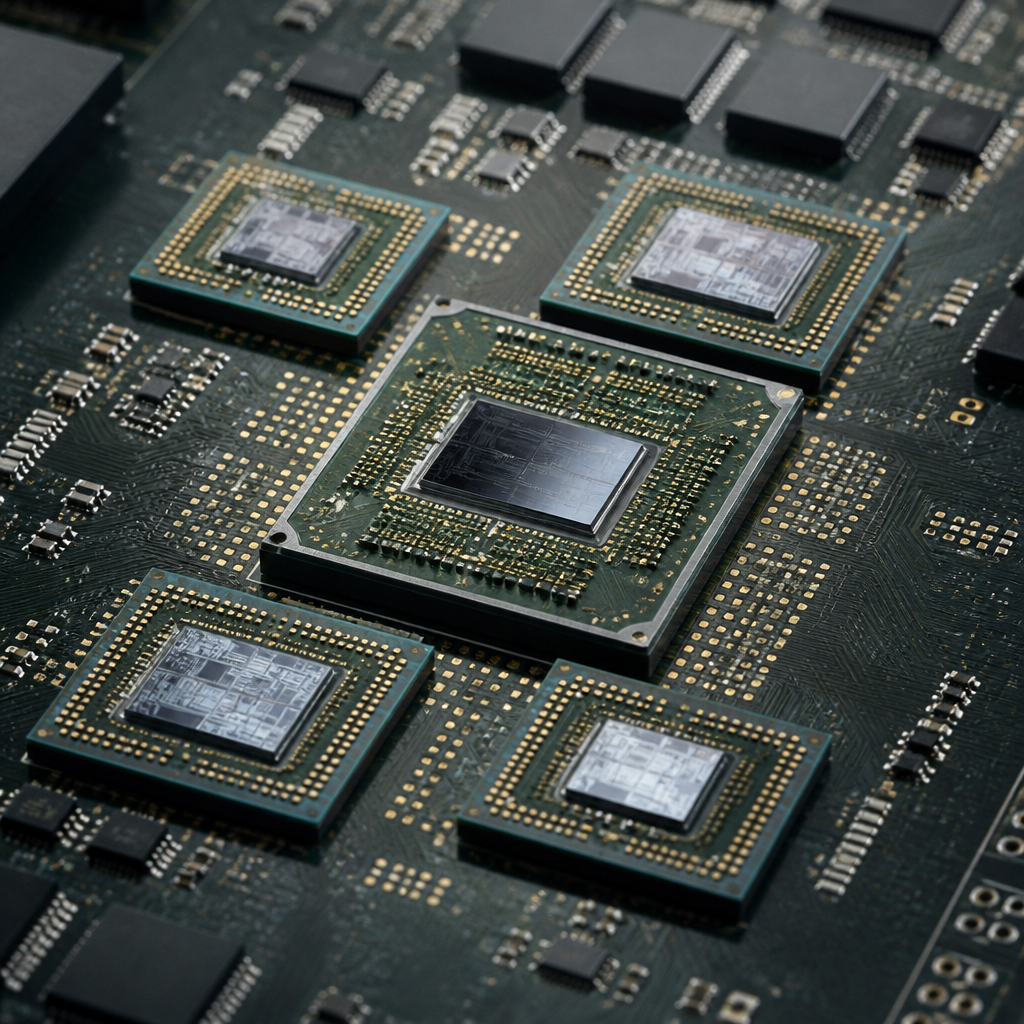
Latency is another barrier. A robot acting in the physical world cannot wait seconds for cloud inference on every control step. Teams solve this with quantization, distilled policies, edge accelerators such as NVIDIA Jetson or specialized inference chips, and hierarchical control where the model sets subgoals while a local controller runs at high frequency. Evaluation is equally challenging. Benchmarking a chatbot is easier than benchmarking a robot that must manipulate unseen objects in variable lighting. Serious teams measure task success rate, intervention rate, recovery ability, cycle time, near-miss frequency, and robustness to distribution shift. If a demo works ten times in a row but fails on reflective packaging or left-handed grasps, it is not production ready.
What startups, investors, and technical buyers should watch next
The next phase of vision-language-action models will be defined by data scale, hardware abstraction, and trustworthy deployment. Expect more shared robot datasets, stronger simulation-to-real transfer, and better action tokenization that lets one policy operate across different embodiments. Humanoid platforms get attention, but the near-term winners may be less glamorous mobile manipulators built for logistics, hospitals, and industrial service workflows. Buyers should ask specific questions: What data was the model trained on? How does it recover from failure? Can it be fine-tuned on site? What runs on edge hardware? What safety envelope surrounds the learned policy? Those answers reveal more than polished demos.
The central takeaway is simple. Vision-language-action models are the AI behind general-purpose robots because they combine perception, instruction understanding, and motor behavior in one trainable system. They will not replace classical robotics engineering, and they are not magic. But they do offer the most credible path yet toward robots that can handle open-ended, variable work. For anyone tracking tech innovations and startups, this is the hub concept to understand across physical AI and robotics. Explore adjacent topics such as embodied AI, robot learning datasets, simulation, humanoid robotics, and warehouse automation, then evaluate where flexible intelligence creates measurable operational value.
Frequently Asked Questions
What is a vision-language-action model, and why is it important for general-purpose robots?
A vision-language-action, or VLA, model is an AI system designed to connect three abilities that robots need in the real world: seeing what is around them, understanding human instructions, and turning that understanding into physical behavior. “Vision” refers to interpreting camera feeds and related sensor data so the robot can detect objects, estimate depth, recognize people, track motion, and understand the layout of a scene. “Language” refers to processing natural-language commands, labels, goals, and step-by-step instructions such as “pick up the red mug from the counter” or “put the package near the door.” “Action” refers to the robot’s motor decisions, including moving an arm, adjusting a gripper, changing direction, opening a drawer, or navigating around obstacles. A VLA model matters because it helps unify these capabilities into a single decision-making loop instead of treating them as isolated subsystems.
This is especially important for general-purpose robots because real environments are messy, variable, and unpredictable. Traditional robots often perform well only when their tasks, object positions, and surroundings are tightly controlled in advance. They may rely on fixed rules, preprogrammed motion scripts, or carefully engineered workflows. A VLA model allows a robot to be far more adaptable. Instead of needing a custom program for every variation of a task, it can interpret what it sees, relate that to a user’s request, and choose an appropriate physical response. That flexibility is what moves robotics closer to useful assistants that can work in homes, warehouses, hospitals, labs, and other changing environments where people expect machines to handle more than one narrow job.
How do vision, language, and action work together inside a robot?
In practice, a robot using a vision-language-action model runs a continuous perception-to-decision-to-movement cycle. First, its vision system captures the scene through cameras and sometimes depth sensors. The model identifies relevant objects, estimates distances, recognizes surfaces, notices motion, and builds a usable understanding of the environment. Next, the language component interprets the user’s instruction or the robot’s internal task description. It determines what the goal is, which objects are involved, what constraints matter, and often what sequence of sub-steps is likely required. The action component then translates that combined understanding into motor commands, such as reaching toward an object, rotating a wrist, applying a controlled grasp, or moving the base to a better position.
The important point is that these are not truly separate stages in the way older robotic pipelines often handled them. In a modern VLA approach, the model can reason across all three at once. If a user says, “Grab the bottle next to the blue box,” language helps identify the relationship, vision locates both items in the scene, and action selects a physically feasible path to reach the correct bottle. If the bottle shifts, the robot can update its interpretation in real time. If the command is ambiguous, the model may use visual context to infer the most likely target. This integrated behavior makes the robot more robust because perception, instruction-following, and movement are not disconnected modules passing brittle outputs to one another. They influence each other continuously.
How are vision-language-action models different from traditional scripted robotics systems?
Traditional scripted robotics systems are typically built around narrow tasks with well-defined conditions. Engineers specify exact object locations, motion paths, safety margins, and response rules. That works extremely well in repetitive industrial settings where the same actions happen over and over in highly structured environments. However, those systems usually struggle when something changes: an object is moved slightly, lighting is different, a new item appears, or a person gives a verbal instruction that was not anticipated by the original programming. In those cases, the robot may fail, stop, or require manual reconfiguration.
Vision-language-action models are different because they are designed for adaptability rather than only repetition. Instead of relying purely on fixed scripts, a VLA-powered robot can infer what to do from context. It can recognize objects it has seen in varied forms, map natural-language goals to observable items in the environment, and select actions that fit the current situation rather than a single hardcoded scenario. That does not mean scripted robotics becomes obsolete. In fact, many advanced systems still combine learned models with classical control, planning, and safety logic. But the shift is significant: the robot is no longer limited to executing predefined routines. It can generalize across related tasks, handle more open-ended instructions, and respond more intelligently to unexpected changes. That is a major reason VLA models are considered a foundational step toward general-purpose robotics.
What kinds of tasks can robots with vision-language-action models perform?
Robots powered by VLA models are especially promising for tasks that require both environmental awareness and flexible instruction-following. In manipulation, they may pick up, sort, place, stack, open, close, carry, or hand over objects while adapting to differences in object shape, position, and orientation. In navigation, they can move through spaces while avoiding obstacles and following commands such as “go to the kitchen,” “bring this bin to the loading area,” or “check the table near the window.” In service contexts, they may assist with restocking shelves, moving supplies, preparing workspaces, or supporting routine household actions like fetching common items. The key advantage is not that the robot does one impossible task, but that it can perform many related tasks without needing a brand-new software stack for each one.
That said, capability depends heavily on the robot’s hardware, training data, and operational constraints. A strong VLA model cannot overcome weak grippers, poor mobility, limited battery life, or inadequate sensors. It also may perform better in some tasks than others. For example, identifying a mug and placing it on a table is very different from folding laundry, loading a dishwasher, or manipulating fragile tools. Real-world deployment usually requires careful tuning, evaluation, and safety controls. Even so, the broad promise is clear: these models make robots more useful across a wider range of environments because they can connect human intent to visual understanding and practical physical execution in a more natural and scalable way.
What are the biggest challenges and limitations of vision-language-action models today?
Despite rapid progress, vision-language-action models still face serious technical and operational challenges. One major limitation is reliability in the physical world. Robot actions must be precise, safe, and repeatable, yet real environments contain glare, clutter, occlusions, moving people, reflective surfaces, deformable objects, and countless edge cases. A model may appear highly capable in demonstrations but perform inconsistently when conditions change. Another challenge is grounding: the robot must correctly link words to real objects and actions, not just generate plausible interpretations. Misunderstanding “the small white box behind the tray” is very different in robotics than in text-only AI, because a bad interpretation can lead to a failed grasp, a collision, or unsafe behavior.
Training data is another major issue. VLA models often need large amounts of visual, linguistic, and action-related data, and collecting high-quality robot interaction data is expensive and slow compared with gathering internet text or images. There are also concerns around safety, explainability, latency, and system integration. A robot cannot simply be “mostly right” when operating near people or handling real objects. It must react in real time, respect physical constraints, recover from uncertainty, and work within hard safety boundaries. For that reason, the most practical deployments usually combine VLA intelligence with additional layers such as motion planning, force control, environment mapping, rule-based safeguards, and human supervision. The field is advancing quickly, but fully dependable general-purpose robots still require major improvements in robustness, common-sense reasoning, data efficiency, and safe real-world execution.