
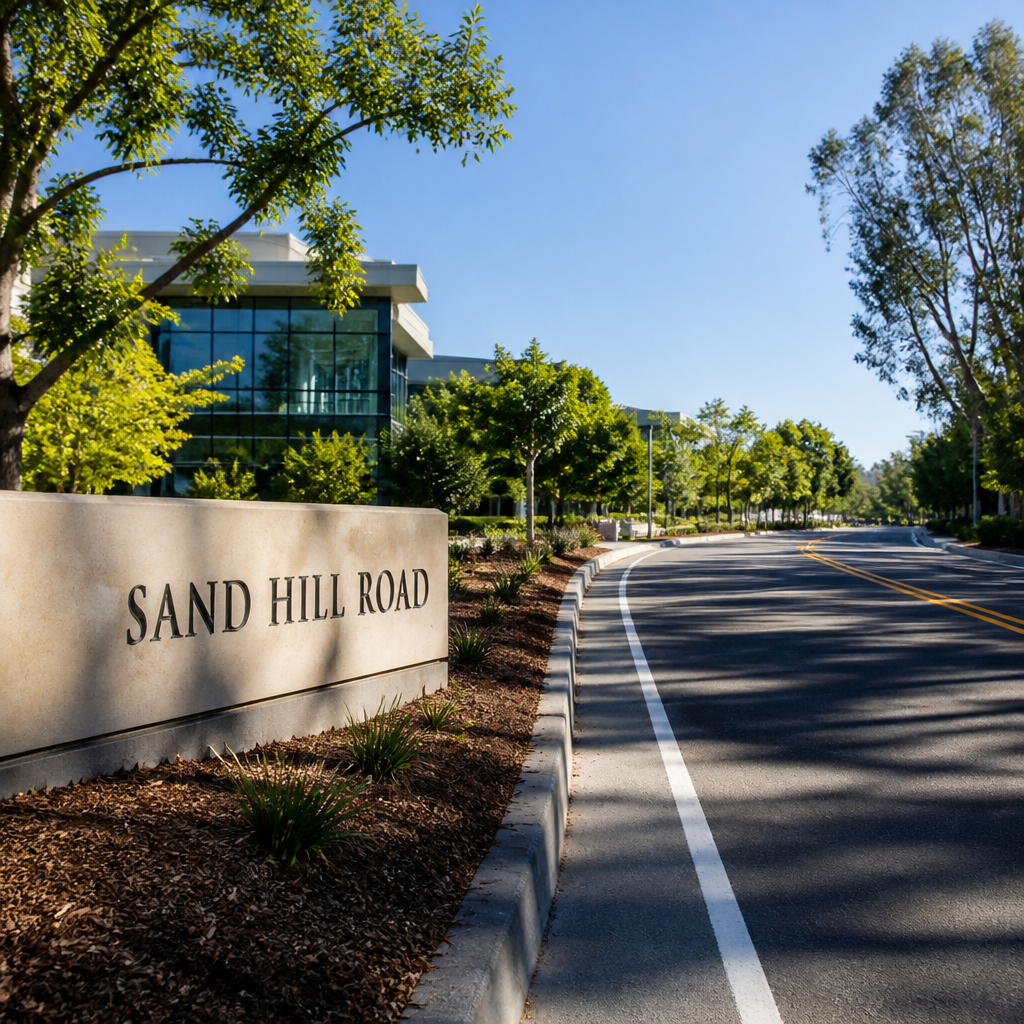
Sand Hill Road still matters because it remains the most concentrated symbol of venture capital, yet the startup funding landscape is no longer confined to a few office buildings in Menlo Park. Founders now raise from seed funds in Miami, corporate investors in New York, university-linked funds in Boston, and sector specialists in Austin, Los Angeles, London, Bengaluru, and beyond. To understand modern entrepreneurship and venture capital, it helps to start with a clear definition: Sand Hill Road refers to the short stretch near Menlo Park long associated with elite venture firms, while the broader startup ecosystem includes accelerators, angel networks, incubators, operator communities, research universities, cloud credits programs, and regional policy support. This distinction matters because many founders still optimize for old patterns even as capital formation, talent distribution, and company building have changed materially.
I have seen this shift directly in fundraising processes over the past decade. Founders once treated a Bay Area introduction as the gatekeeping event that determined whether a company could recruit talent, raise a Series A, or win press attention. Today, a startup can build early traction through a top accelerator, secure design partners through industry networks, use remote hiring to assemble a strong team, and raise from a distributed syndicate before ever taking a meeting on Sand Hill Road. Even so, the old center still carries signaling power. Large funds, dense advisor networks, and repeat founder communities continue to influence pricing, terms, and follow-on access. That is why Sand Hill Road still matters—and why understanding the wider accelerators and ecosystem landscape is now essential for founders, investors, and policy leaders.
Why Sand Hill Road Still Holds Power
Sand Hill Road matters for three practical reasons: capital concentration, network density, and institutional memory. Firms such as Sequoia Capital, Andreessen Horowitz nearby in Menlo Park, Benchmark, and others built a durable feedback loop between successful founders, experienced operators, specialist recruiters, and later-stage investors. In venture capital, pattern recognition and access compound over time. A partner who has backed multiple category leaders can quickly evaluate hiring plans, pricing models, gross margin assumptions, and go-to-market motion in ways less experienced capital cannot. That expertise often translates into faster conviction and stronger support after the term sheet, not just a larger check.
The proximity effect still matters even in remote-first venture. When founders can meet product leaders, growth advisors, executive recruiters, and potential acquirers within a compact geography, problem solving accelerates. A cybersecurity startup, for example, may need introductions to CISOs, channel partners, and later-stage specialists. On Sand Hill Road and the surrounding corridor, those introductions can happen in days rather than months. The result is not magic; it is infrastructure. Decades of exits also created a recycled talent pool: employees from PayPal, Google, Meta, Stripe, Snowflake, and Nvidia have founded or joined new ventures, bringing operational discipline that improves execution at the earliest stages.
Another reason Sand Hill Road remains influential is signaling. A lead investor from a known firm can help a company hire executives, attract media coverage, and line up follow-on financing. This does not guarantee success, and plenty of overfunded startups fail. Still, markets respond to trusted intermediaries. Institutional investors, limited partners, and later-stage funds often interpret certain cap tables as evidence that a startup has passed a quality filter. In plain terms, brand still lowers friction. That benefit is real, especially in difficult markets when capital becomes selective and due diligence deepens.
Why Venture Capital Is Spreading Beyond Menlo Park
Venture capital is spreading because startups no longer need to cluster in one place to build credible, venture-scale businesses. Cloud infrastructure from Amazon Web Services, Google Cloud, and Microsoft Azure reduced the cost of launching software. Remote collaboration tools such as Slack, Zoom, Notion, Figma, and GitHub made distributed product development normal. Online communities, demo days, and warm introductions on platforms like LinkedIn changed how relationships form. At the same time, the talent base widened. Strong engineers, commercial leaders, and domain experts increasingly choose cities with lower costs, different lifestyles, or closer access to customers in sectors like healthcare, logistics, climate, defense, and fintech.
Regional specialization also explains the spread. New York became a deep market for fintech, media, commerce infrastructure, and enterprise software. Boston retained strength in biotech, robotics, and university spinouts linked to MIT and Harvard. Los Angeles built momentum in creator tools, gaming, aerospace, and consumer brands. Austin attracted infrastructure software, mobility, and defense-adjacent startups. Miami marketed itself around fintech, crypto communities, and founder migration. Outside the United States, London, Paris, Berlin, Tel Aviv, Singapore, and Bengaluru developed mature startup ecosystems with local funds and global investor participation. Venture follows opportunity, and opportunity now emerges from many industry clusters rather than one zip code.
Market structure has changed as well. Seed investing is more fragmented, with microfunds, rolling funds, syndicates, and scout programs broadening access to early capital. AngelList helped normalize pooled early-stage investing. University-affiliated funds support spinouts. Corporate venture capital, from firms such as Salesforce Ventures, Intel Capital, GV, and Qualcomm Ventures, backs startups aligned with strategic roadmaps. State and national economic development programs offer grants, tax incentives, or co-investment structures. The practical implication is clear: a founder can build a financing stack from multiple nodes in the ecosystem instead of relying on a single California-centered pathway.
How Accelerators and Ecosystem Builders Fit the Hub
Accelerators matter because they compress time. The best programs help founders refine positioning, sharpen metrics, connect with early customers, and prepare for fundraising with far more rigor than most first-time teams could create alone. Y Combinator is the obvious example, with a long track record of producing companies that later raised from top firms. Techstars built a broad city-based and corporate-partner network. 500 Global expanded access internationally. Sector-specific programs such as IndieBio for biotech or HF0 for technical founders show how accelerator models evolve around founder needs. A strong accelerator does not simply provide capital; it creates repeated exposure to mentors, peers, and investors who can pressure-test assumptions quickly.
Incubators and ecosystem organizations play a different role. Incubators often support startups earlier than accelerators, sometimes before a product exists, by offering space, university links, legal workshops, and technical resources. University ecosystems are especially important in life sciences, deep tech, semiconductors, and robotics, where commercialization timelines are longer and IP strategy matters. Research parks, translational labs, and technology transfer offices can be frustratingly bureaucratic, but they also unlock inventions that would never emerge from a standard consumer app playbook. Founder communities, chambers of commerce, startup weeks, and operator networks round out the ecosystem by creating trust and repeat interaction at a local level.
| Entity | Primary Role | Best For | Typical Limitation |
|---|---|---|---|
| Accelerator | Fast mentorship, demo day, investor access | Seed-stage teams needing speed and visibility | Short timeline, variable post-program support |
| Incubator | Early validation, workspace, university or local support | Pre-seed founders and technical spinouts | Less fundraising signal than top accelerators |
| Angel Network | Initial capital and operator introductions | Founders raising first outside money | Check sizes and conviction can be inconsistent |
| Corporate Venture | Strategic capital, distribution, industry insight | Startups selling into regulated or complex sectors | Strategic priorities may change |
| Regional Fund | Local knowledge and ecosystem commitment | Companies building near customers or universities | May have limited reserves for later rounds |
What Founders Should Do in a Distributed Venture Market
Founders should stop asking whether they must be in Silicon Valley and start asking what network their company actually needs. The answer depends on sector, stage, and ambition. If you are building developer tools, AI infrastructure, or a product that depends on a dense Bay Area talent market, time in Northern California may still be highly valuable. If you are building healthcare workflow software in Nashville, manufacturing technology in Pittsburgh, logistics software in Chicago, or energy software in Houston, proximity to customers can matter more than proximity to famous investors. The best ecosystem is the one that improves customer access, hiring quality, and follow-on financing at the same time.
A practical fundraising strategy usually blends local strength with national reach. Start with the highest-fit communities: accelerators, industry events, alumni networks, operators in your sector, and regional seed funds that can move quickly. Then build outward to specialists and larger multistage firms once traction is clear. Use metrics that travel well across geographies: revenue growth, retention, net dollar retention when applicable, customer acquisition efficiency, payback period, burn multiple, and evidence of a repeatable go-to-market motion. In my experience, location becomes less important when the company can tell a crisp story with hard numbers and credible references from customers or technical experts.
Founders should also evaluate ecosystem quality beyond capital. Ask whether a city or program offers recruitable talent, experienced finance and legal counsel, peer founders, cloud credits, design partners, and realistic downstream funding. A healthy ecosystem is not defined by press buzz or one marquee fund announcement. It is defined by whether startups can survive from idea to seed, seed to Series A, and beyond without falling into capability gaps. Sand Hill Road still sets many standards, but the strongest new venture regions succeed by building complete support systems rather than imitating Bay Area mythology.
What This Means for the Future of Entrepreneurship and Venture Capital
The future is not a winner-take-all contest between Menlo Park and everywhere else. It is a networked market in which flagship firms remain influential while specialized ecosystems create new centers of gravity. Sand Hill Road will continue to matter because concentrated expertise, brand, and capital still shape outcomes. But venture capital is spreading because startup creation now follows talent, research, customers, and digital infrastructure across many geographies. Accelerators, incubators, angel communities, corporate partners, universities, and regional funds are no longer side characters in entrepreneurship and venture capital; they are core market infrastructure.
For founders, the lesson is straightforward: build where your company gains the strongest operational advantage, then connect deliberately to the investors and programs that match your stage and sector. For investors and ecosystem builders, the opportunity is to deepen local strengths rather than chase generic startup branding. Study the subtopics within accelerators and ecosystem development, map the resources your company or region lacks, and make decisions based on access, expertise, and execution. That is how startups raise smarter, scale faster, and benefit from a venture market that is finally broader than one famous road.
Frequently Asked Questions
What is Sand Hill Road, and why has it become so closely associated with venture capital?
Sand Hill Road is a short but globally recognized road in Menlo Park, California, near Stanford University and the broader Silicon Valley ecosystem. Its importance comes less from geography alone and more from what it came to represent over several decades: a dense concentration of influential venture capital firms, startup advisors, repeat founders, and institutional networks that helped shape the modern technology industry. Many of the firms that funded category-defining companies established offices there, which turned Sand Hill Road into both a physical destination and a symbolic shorthand for elite startup financing.
Historically, proximity mattered. Founders wanted to be close to investors, investors wanted to be close to talent and technical research, and everyone benefited from being close to legal, recruiting, and banking partners who understood high-growth startups. That clustering effect created a powerful feedback loop. When more capital, expertise, and ambition gathered in one place, it became easier for new companies to get noticed, raise money, recruit early employees, and learn from previous generations of builders. As a result, Sand Hill Road became synonymous with venture capital itself, even though venture investing has always extended beyond any single street or zip code.
Today, the phrase “Sand Hill Road” often functions as a metonym for the traditional center of startup finance. Even people who have never been to Menlo Park understand it as a reference point for institutional venture capital, especially large funds that back companies aiming for outsized growth. That symbolic power still matters because it reflects reputation, access, and a legacy of successful investing. But understanding what Sand Hill Road is also helps clarify the larger story: venture capital may have been concentrated there for years, yet it is no longer limited to that corridor.
Why does Sand Hill Road still matter if venture capital is spreading to other cities and regions?
Sand Hill Road still matters because concentration creates influence. Even as venture capital expands into cities like Miami, New York, Boston, Austin, Los Angeles, and international hubs such as London and Bengaluru, the Menlo Park corridor remains one of the most visible concentrations of venture firms, experienced partners, and long-standing startup networks in the world. Many of the industry’s biggest funds, most connected investors, and strongest founder referral networks still have roots there. That gives Sand Hill Road continued relevance in major rounds, board formation, follow-on financing, and introductions that can materially shape a company’s trajectory.
It also matters because venture capital is not just about money. Founders often seek pattern recognition, strategic guidance, hiring help, customer introductions, and credibility with later-stage investors. Established firms associated with Sand Hill Road can still provide these advantages at scale, especially for startups pursuing hypergrowth in competitive markets. For many companies, being backed by a recognized Silicon Valley investor can still influence recruiting, press attention, and future fundraising. In that sense, Sand Hill Road remains a signaling mechanism as much as a physical location.
At the same time, its importance has changed. It is no longer the only gateway to serious funding, nor is it the sole center of innovation. The modern venture landscape is more distributed, specialized, and accessible than it was a generation ago. Sand Hill Road still matters because it remains a powerful node in the network, but it is now one important node among many rather than the entire map. That distinction is essential for founders: the center of gravity in venture still exists, but the ecosystem around it has become much broader.
What factors are driving venture capital beyond Menlo Park and Silicon Valley?
Several structural shifts have pushed venture capital beyond its traditional concentration in Menlo Park. One major factor is the normalization of remote relationship-building. Founders and investors can now meet, diligence deals, and maintain ongoing communication without sharing the same local geography. Video calls, distributed teams, and digital fundraising workflows have made it easier for investors to back companies in markets they might once have overlooked. Geography still matters, but it matters less rigidly than it did when frequent in-person meetings were a baseline requirement.
Another major driver is the rise of regional startup ecosystems with their own distinct strengths. Miami has attracted fintech and crypto energy, New York has long been strong in media, finance, and enterprise software, Boston benefits from deep university and biotech linkages, Austin continues to grow in software and talent migration, Los Angeles has built a strong identity around creator businesses, gaming, aerospace, and consumer startups, and cities like London and Bengaluru have become major global innovation centers in their own right. As these ecosystems mature, local capital tends to follow, and in many cases it leads.
Sector specialization is also reshaping the map. Venture capital today is increasingly organized around expertise, not just location. Some funds focus on health tech, climate, AI, enterprise infrastructure, robotics, defense, fintech, or consumer brands. That means founders often look for investors who understand their specific market better than they look for investors on a specific road in California. Corporate venture groups, university-linked funds, family offices, micro-funds, and emerging managers have all added more diversity to the capital base. Together, these changes have made the venture landscape more decentralized, more competitive, and often more founder-friendly than the old model of needing to be physically near Sand Hill Road to access meaningful capital.
How should founders think about fundraising in a world where venture capital is more distributed?
Founders should start by recognizing that modern fundraising is less about chasing a famous address and more about identifying the right capital partners for their stage, sector, and strategy. A seed-stage founder may be better served by a highly engaged micro-fund in Miami, a thematic specialist in New York, or a university-connected investor in Boston than by a generalist firm with a prestigious Silicon Valley location but limited hands-on interest in the company’s market. The most useful question is no longer “How do I get on Sand Hill Road?” but “Which investors can most effectively help this specific business grow?”
That requires founders to do targeted homework. They should evaluate investors based on check size, stage fit, decision speed, portfolio overlap, geographic flexibility, and domain expertise. It is also important to understand what an investor brings after the wire transfer. Do they help with recruiting? Can they make introductions to customers or later-stage funds? Have they supported companies through downturns as well as boom cycles? A distributed VC market gives founders more options, but it also requires more discernment. Not all capital is equally helpful, and brand name alone should not be the deciding factor.
At the same time, founders should avoid assuming that traditional hubs are irrelevant. In many cases, the strongest fundraising strategy combines local momentum with broader outreach. A company might raise initial support from regional investors, then bring in coastal or global funds for additional scale, sector credibility, or follow-on capacity. Distributed venture capital has expanded access, but it has not eliminated the value of elite networks. The smartest fundraising approach is usually hybrid: build traction where you are, identify who truly understands your business, and treat geography as one variable among many rather than the single determinant of opportunity.
Does the spread of venture capital beyond Sand Hill Road mean Silicon Valley is losing its importance?
Not exactly. The spread of venture capital means the startup ecosystem is becoming more plural, not that Silicon Valley has become irrelevant. Silicon Valley still offers a rare density of experienced founders, operators, engineers, product leaders, attorneys, acquirers, and investors who have built and scaled major technology companies. That concentration continues to matter, especially in fields where speed, technical talent, and access to ambitious risk capital are crucial. Many global founders still look to the Valley for partnerships, validation, and later-stage financing, even if they build their companies elsewhere.
What has changed is the idea of exclusivity. Silicon Valley no longer has a monopoly on startup ambition, innovation, or investable companies. Strong founders are emerging from many regions, and strong investors are following them. In practical terms, this means companies can increasingly build where they have talent, cost advantages, customer proximity, or personal ties, rather than relocating solely to be near traditional VC offices. It also means venture firms must compete harder for deals outside their historical backyard.
So the better conclusion is not that Silicon Valley is fading, but that the venture ecosystem is maturing into a more distributed global network. Sand Hill Road still matters because it remains one of the most influential symbols and centers of venture capital. But the future of entrepreneurship is clearly broader than Menlo Park. Founders now have more pathways, more investor types, and more credible startup geographies than ever before. That shift does not erase the legacy of Sand Hill Road; it puts it in context.