Silicon Valley’s defining habit is not simply invention but recombination: engineers leave one company, carry hard-won knowledge into a new venture, and create the next platform business. In the semiconductor era, that pattern became so common it turned into a regional operating system. The story from Fairchild Semiconductor to Intel explains why employee spinouts became a Silicon Valley tradition, and why the valley’s culture of mobility, technical ambition, and venture funding still traces back to chipmaking.
In this context, a spinout is a new company founded by employees who depart an existing firm to pursue a technology, market, or management vision their employer will not support. Spinouts differ from ordinary startups because they inherit tacit knowledge, supplier relationships, process discipline, and often an identifiable engineering lineage. In semiconductors, that lineage mattered enormously. Making transistors and integrated circuits required deep process expertise in diffusion, photolithography, materials purity, yield management, and device physics. Teams that learned those skills together could move faster together when they struck out on their own.
I have worked with founders and operators who still map company histories through these lineages, because in chip businesses the pedigree is often strategic information. It signals what a team knows how to fabricate, what kind of manufacturing problems it can solve, and which customers will take its calls. Understanding the semiconductor roots of Silicon Valley is therefore not an exercise in nostalgia. It clarifies how talent networks formed, why capital clustered around certain technical communities, and how a local norm of leaving to build something better became accepted, then celebrated.
The Fairchild Blueprint: Talent, Technology, and a Break with the East Coast
The tradition begins with Shockley Semiconductor Laboratory in Mountain View. William Shockley, co-inventor of the transistor and Nobel Prize winner, returned to California in 1956 to commercialize semiconductor devices. He recruited exceptional young scientists and engineers, including Robert Noyce, Gordon Moore, Jean Hoerni, Julius Blank, Victor Grinich, Jay Last, Sheldon Roberts, Eugene Kleiner, and physicist-turned-executive leader. These employees became known as the “Traitorous Eight” after leaving Shockley in 1957. The nickname says as much about the era as the event: in much of American industry, employee departure was seen as disloyal. In Silicon Valley, it became foundational.
The Eight left because Shockley’s management was erratic and because he insisted on pursuing the four-layer diode instead of the transistor opportunities his team considered commercially promising. With financing arranged by Sherman Fairchild of Fairchild Camera and Instrument, they founded Fairchild Semiconductor in 1957. This move established a repeatable model: elite technical employees leave a dysfunctional or strategically constrained employer, attract outside capital on the strength of their expertise, and build a company around a clearer product vision.
Fairchild’s impact was immense because the company solved both technical and organizational problems. Jean Hoerni developed the planar process in 1959, using a silicon dioxide layer to protect junctions and allow reliable manufacturing. Robert Noyce then recognized that this process enabled practical monolithic integrated circuits by connecting components directly on the silicon wafer with deposited metal interconnects. These advances were not incremental. They changed chips from fragile laboratory devices into manufacturable products and gave Fairchild a lead in military, aerospace, and eventually commercial electronics markets.
Just as important, Fairchild trained people in the disciplines that later spinouts would reuse: process control, yield improvement, device design, applications engineering, and rapid productization. It also exposed a tension that would keep producing new firms. As divisions grew inside larger corporations, ambitious technologists often felt slowed by bureaucracy, compensation limits, or strategic caution. When that happened in a region with mobile talent and receptive investors, spinouts were not accidents. They were the market’s way of reallocating capability.
Why Semiconductor Spinouts Multiplied
Employee spinouts multiplied in semiconductors for structural reasons, not merely because engineers were restless. First, the industry rewarded learning by doing. The most valuable knowledge was tacit: how to improve yields on a new process node, how to diagnose contamination, how to package devices for reliability, or how to translate customer requirements into manufacturable specifications. Teams who had solved these problems together had an advantage difficult for outsiders to copy.
Second, semiconductor demand was broadening quickly in the 1960s. Defense contracts had supported early transistor and integrated circuit development, but computers, instrumentation, and industrial electronics opened new markets. That market expansion created room for specialist companies. A group that understood memory, logic, analog, or process equipment could target a niche with confidence that demand would justify independence.
Third, California’s legal and cultural environment lowered the cost of mobility. The state’s hostility to enforcing noncompete agreements meant engineers could change employers and start companies more freely than peers in many other regions. That did not eliminate trade secret law or confidentiality obligations, but it did reduce the lock-in that keeps talent immobile. When paired with stock options, mobility gave employees a credible path from technical contributor to founder.
Fourth, financiers learned to back teams rather than only patents. Arthur Rock, one of the earliest venture capital figures in the valley, helped finance both Fairchild and later Intel. Investors noticed that proven semiconductor teams were repeatable assets. If a process engineer, device physicist, manufacturing lead, and sales executive had already built one successful operation, they were better bets for the next one than isolated inventors.
| Driver | How it worked in semiconductors | Resulting spinout effect |
|---|---|---|
| Tacit process knowledge | Yield, contamination control, lithography, and packaging skills were learned inside fabs | Experienced teams could launch credible new firms quickly |
| Expanding markets | Military, computing, and industrial demand created multiple profitable niches | Specialized startups could survive outside large diversified companies |
| Labor mobility | Engineers could move between firms with fewer contractual barriers | Leaving to found a company became normal rather than exceptional |
| Venture funding | Investors recognized technical lineages and backed known operators | Capital followed people, accelerating the spinout cycle |
From Fairchild to Intel: The Most Influential Spinout
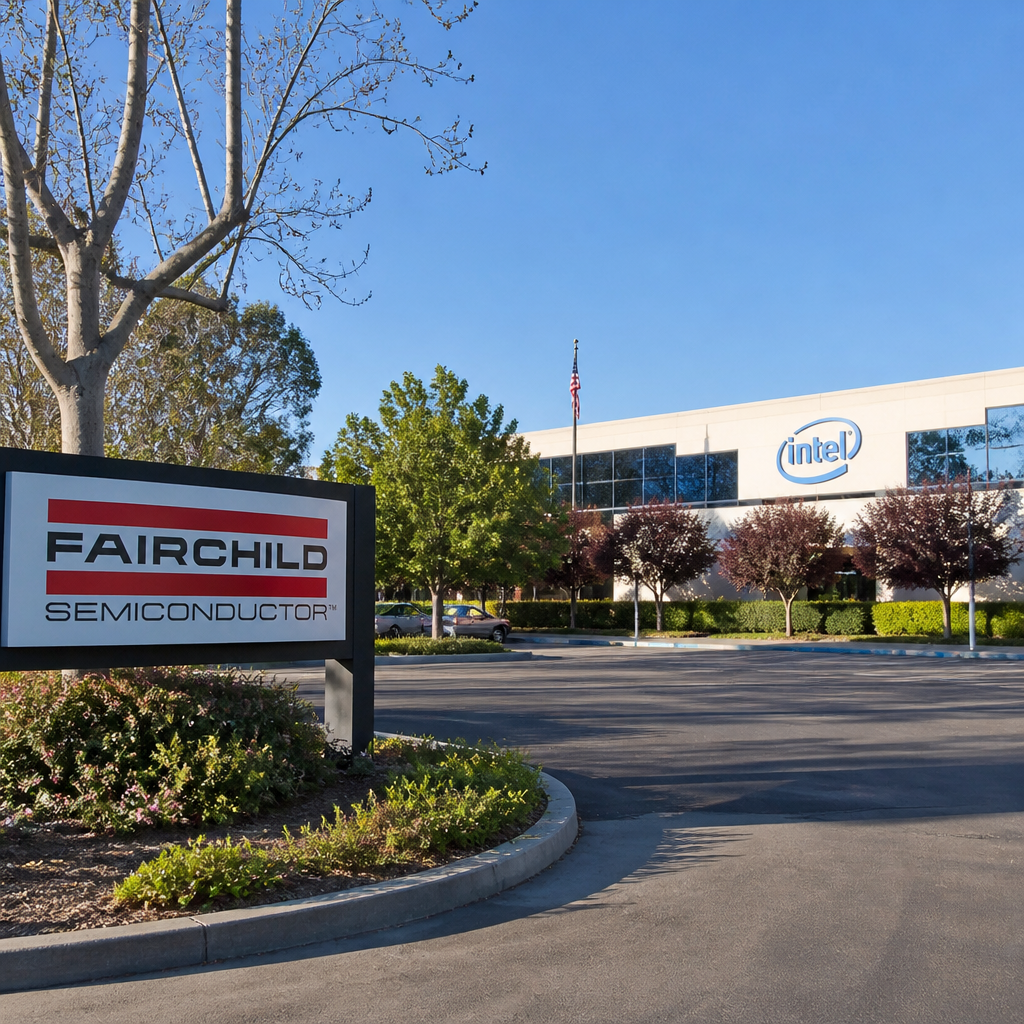
The most famous Fairchild spinout was Intel, founded in 1968 by Robert Noyce and Gordon Moore, with Andy Grove joining as an early employee and soon a central operating force. Their departure reflected familiar friction. Fairchild’s parent structure and internal complexity limited agility just as the semiconductor market was shifting fast. Noyce and Moore wanted a company built for speed, technical excellence, and managerial discipline. Arthur Rock raised roughly $2.5 million for Intel before the company had a product, a remarkable vote of confidence in founder reputation and market timing.
Intel began with semiconductor memory, not microprocessors. Its early successes included the 3101 Schottky bipolar RAM and, more importantly, the 1103 DRAM, introduced in 1970, which became the first commercially successful dynamic random-access memory chip. This matters because it shows how spinouts win: not by generic disruption rhetoric but by focusing on a clear product category where superior execution can overcome incumbents. Intel’s process and design capabilities let it scale memory products at a moment when demand from computer manufacturers was growing rapidly.
The company’s later release of the 4004 microprocessor in 1971, developed for Busicom, broadened Intel’s legacy, but the firm was already proving the power of the spinout model. It combined Fairchild-trained technical depth with a tighter culture and cleaner incentives. Andy Grove’s management systems, especially around operational rigor, helped transform expert engineering into repeatable business performance. Intel then became a training ground of its own, sending alumni into venture firms, startups, software companies, and adjacent hardware businesses. The lineage did not stop at one generation; it compounded.
The Fairchildren and the Network Effect of Expertise
Fairchild spawned so many descendants that industry observers began calling them the “Fairchildren.” These included National Semiconductor, Advanced Micro Devices, Signetics, Intersil, and many others, founded or staffed by Fairchild veterans. Each new company carried fragments of Fairchild’s technical DNA while adapting to a specific market need. AMD, founded in 1969 by Jerry Sanders and colleagues from Fairchild, focused on logic and later became one of Intel’s most consequential rivals. Signetics, founded in 1961 by former Fairchild employees, became a major integrated circuit producer and pushed the merchant semiconductor model forward.
This proliferation created a network effect. As more firms emerged, the region gained denser pools of specialized lawyers, recruiters, equipment vendors, test houses, and executives who understood semiconductor cycles. New founders no longer had to invent the organizational playbook from scratch. They could hire a plant manager who had scaled production before, retain counsel familiar with licensing and IP, and raise money from investors who understood wafer yields and capital intensity. That ecosystem advantage is a core reason Silicon Valley outpaced many rivals.
The pattern also normalized a specific career path: join a leading technical company, learn under pressure, accumulate credibility, then leave when your market insight outruns your employer’s priorities. Not every departure succeeded. Semiconductor startups faced brutal capital requirements, cyclical demand, and fierce price competition. Many failed on yield problems, customer concentration, or timing. Yet even failure reinforced the tradition, because expertise usually stayed in the region and reappeared in another venture. Silicon Valley became resilient through recycling talent, not preserving corporate permanence.
Why This History Still Matters
The semiconductor roots of Silicon Valley still explain modern startup behavior in software, artificial intelligence, and systems infrastructure. Founders continue to emerge from dominant firms because the underlying logic remains the same: concentrated expertise, ambitious employees, accessible capital, and a legal environment that supports movement. The tools have changed, but the template from Fairchild to Intel endures. When observers describe Silicon Valley as an ecosystem, this is what they mean in practical terms: a place where knowledge circulates through people faster than institutions can contain it.
For readers exploring historical perspectives, semiconductor roots should be the central hub because they connect the valley’s most important themes: immigration, defense spending, university research, venture capital, stock options, and managerial culture. Fairchild did not merely produce chips. It produced a repeatable mechanism for company creation. Intel did not simply become a giant. It proved that a spinout could surpass its parent and set the standard for the next generation.
The key takeaway is straightforward. Employee spinouts became a Silicon Valley tradition because semiconductors rewarded team-based know-how, market timing, and mobility, and Fairchild demonstrated that leaving to build a better company could create extraordinary value. If you want to understand why the valley still renews itself through departures, start with the chip pioneers, trace the Fairchildren, and follow the line from Shockley to Fairchild to Intel. That lineage remains the clearest map of how Silicon Valley learned to grow by letting its best people leave.
Frequently Asked Questions
Why is the Fairchild-to-Intel story so important to understanding Silicon Valley?
The path from Fairchild Semiconductor to Intel captures one of the core dynamics that made Silicon Valley different from other industrial regions: talent did not stay locked inside a single company. Instead, engineers, scientists, and managers moved on, took what they had learned, and built new firms around emerging technical and market opportunities. Fairchild became famous not only for its role in advancing semiconductor manufacturing, but also for producing a generation of founders and executives who seeded the next wave of companies. Intel, founded by Fairchild alumni Robert Noyce and Gordon Moore, is one of the clearest examples of that pattern in action.
What makes this story so significant is that it shows innovation as a chain reaction rather than a one-time breakthrough. Fairchild helped develop critical expertise in transistor design, silicon processing, manufacturing discipline, and product commercialization. When employees left, they did not simply replicate the original company. They recombined knowledge, relationships, and ambition in new ways. That process accelerated the spread of know-how across the region and made Silicon Valley less dependent on any one employer. In that sense, the Fairchild-to-Intel lineage helps explain why the valley became an ecosystem, not just a collection of firms.
What exactly is an employee spinout, and why did it become so common in Silicon Valley?
An employee spinout is a new company started by former employees of an existing company, usually by people who have gained technical knowledge, market insight, management experience, or industry relationships inside the earlier firm. In Silicon Valley, spinouts became common because the region rewarded movement, experimentation, and speed. Engineers and founders were often less interested in lifelong corporate loyalty than in pursuing the next technical challenge. If they saw an unserved market, a superior manufacturing approach, or a new product category, starting a company felt like a normal next step rather than a radical departure.
Several conditions reinforced that pattern. First, the semiconductor business created highly transferable expertise. Knowledge about fabrication, device physics, process control, and product development could be applied in many adjacent ventures. Second, venture capital was becoming more available, which meant promising teams could actually get funded. Third, the culture of the region treated entrepreneurial departure as a sign of ambition, not betrayal. That social acceptance mattered. Finally, the pace of technological change made established firms vulnerable to being outflanked by smaller, focused startups. Together, those forces turned employee spinouts into a recurring mechanism for renewal and growth across the valley.
How did Fairchild Semiconductor create so many future founders and company builders?
Fairchild was unusually fertile because it sat at the intersection of breakthrough technology, strong technical talent, and intense internal pressure. It attracted exceptional engineers and scientists who were working on some of the most important challenges in the emerging semiconductor industry. Inside the company, employees learned not only how to design and manufacture advanced components, but also how to scale production, solve reliability problems, work with customers, and compete in a fast-changing market. That combination gave people a rare education in both science and business execution.
Just as important, Fairchild exposed employees to the realities and frustrations of a growing technology company. Ambitious people often saw opportunities that the existing organization could not or would not pursue quickly enough. Some wanted more autonomy, more ownership, or a different strategic direction. When they left, they took with them deep practical knowledge and a network of highly capable colleagues, suppliers, investors, and customers. This is one reason Fairchild has been called the source of so many “Fairchildren” companies. It was not merely a successful firm; it was a training ground that normalized the idea that today’s employee might become tomorrow’s founder.
Why were venture capital and regional culture so critical to the spinout tradition?
Employee spinouts do not become a tradition unless people can leave established firms with a realistic chance of success. Venture capital made that possible in Silicon Valley by supplying early funding to technically credible teams before they had mature businesses. Investors in the region learned that backing experienced operators from companies like Fairchild could be a powerful strategy. These founders already understood the technology, the production challenges, and the customer landscape. That reduced some of the uncertainty and made spinout teams especially attractive investment candidates.
Culture mattered just as much as capital. In many business environments, leaving a company to start a competitor carries heavy social or professional stigma. Silicon Valley developed a different norm. Mobility was expected, and in many circles it was admired. Former colleagues often became future co-founders, investors, advisors, or early hires. Networks remained active even after people changed employers. That fluidity allowed ideas and expertise to circulate rapidly throughout the region. Over time, the combination of financing, trust networks, and tolerance for risk created a self-reinforcing system: successful startups produced experienced employees, those employees launched new ventures, and investors funded the next cycle.
What lasting impact did the Fairchild-to-Intel model have on Silicon Valley today?
The lasting impact is enormous because the pattern established in the semiconductor era became a template for later generations of technology entrepreneurship. The same logic that carried talent from Fairchild to Intel can be seen in software, networking, internet platforms, social media, cloud infrastructure, artificial intelligence, and beyond. People join fast-moving companies, learn how products are built and markets are won, identify gaps or new opportunities, and then leave to create the next firm. In other words, Silicon Valley’s growth model has long depended on the circulation of experienced talent rather than on the dominance of a few static giants.
This model also shaped the valley’s broader identity. It encouraged a culture that values technical ambition, tolerates failure, and sees company formation as a natural outcome of expertise. It strengthened dense professional networks, accelerated the spread of specialized knowledge, and helped create clusters of suppliers, investors, lawyers, recruiters, and executives who understand how to support young technology firms. The Fairchild-to-Intel story therefore is not just a historical episode from the chip industry. It is one of the clearest early examples of the regional operating system that still defines Silicon Valley: learn fast, move fast, build something new, and let each generation of companies become the launching pad for the next.