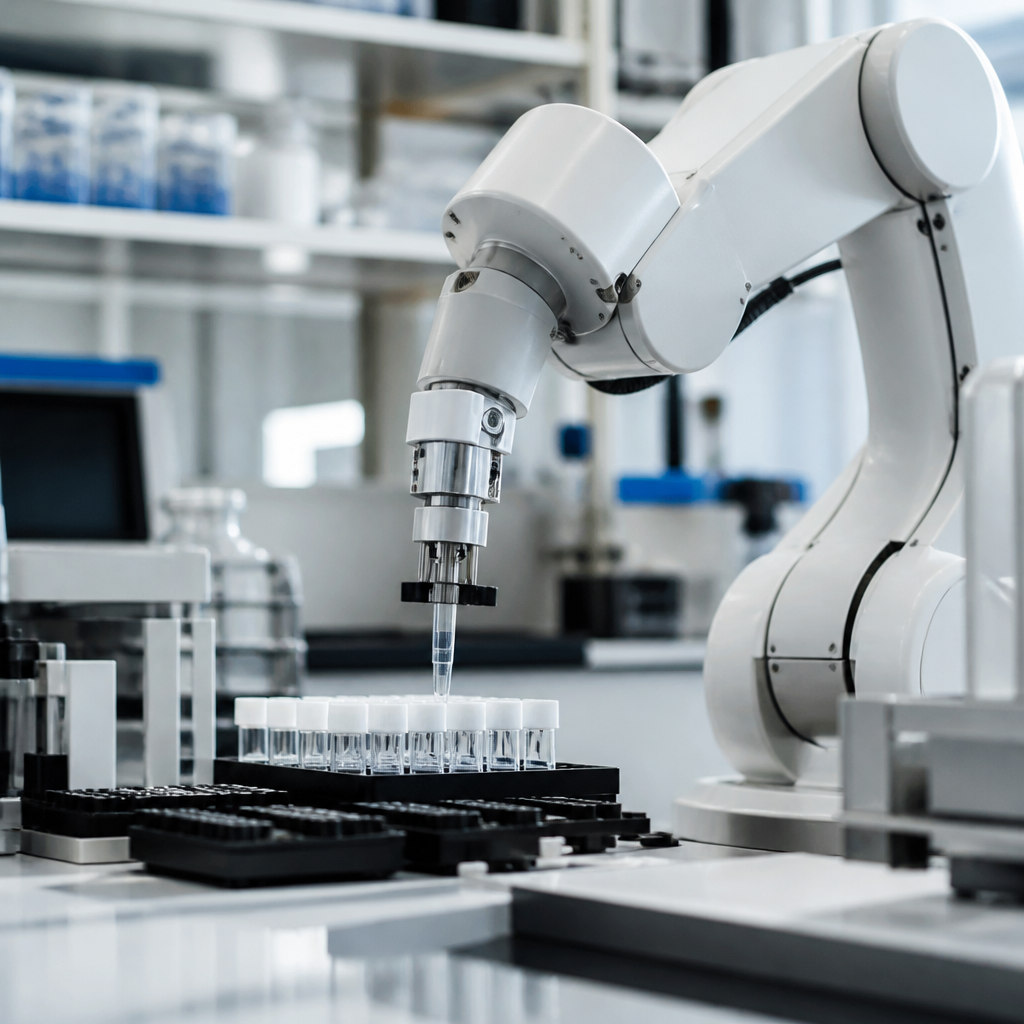
Autonomous lab robots are reshaping modern research by combining artificial intelligence, precision automation, and scientific instrumentation to run experiments faster, safer, and with greater reproducibility than manual workflows. In practical terms, an autonomous lab robot is a system that can plan, execute, monitor, and refine experimental work with limited human intervention. It may include robotic arms, liquid handlers, mobile platforms, machine vision, scheduling software, and machine learning models that decide what to test next. Physical AI and robotics, the broader field behind these systems, refers to software-driven machines that perceive the physical world, manipulate objects, and act toward defined goals. In laboratories, that means moving beyond simple automation toward closed-loop discovery systems that learn from each result. This matters because research bottlenecks are rarely just about ideas; they are about throughput, error rates, documentation quality, and the time skilled scientists spend on repetitive work instead of interpretation. I have seen teams wait weeks for assay batches that a coordinated robotic workflow can finish over a weekend. As biotech, materials science, energy storage, and chemistry become more data intensive, autonomous lab robots are turning experimental science into a faster, more scalable, and more traceable process.
What autonomous lab robots actually do in modern laboratories
Autonomous lab robots automate physical tasks, but their real value comes from integrating hardware, software, and decision logic into one operating system for experimentation. In a typical setup, a robotic arm transfers plates, tubes, or vials between devices. A liquid handling robot dispenses microliter volumes with high precision. Cameras and sensors verify sample identity, liquid levels, and instrument state. Laboratory information management systems record every action, while scheduling software coordinates incubators, plate readers, centrifuges, and freezers. Artificial intelligence then analyzes output data and recommends the next experiment. That closed loop is what separates autonomy from traditional lab automation.
For example, in drug discovery, a robot may prepare assay plates, run cell-based tests, feed fluorescence or imaging data into a machine learning model, and prioritize the next compound set based on activity patterns. In synthetic chemistry, autonomous platforms can vary temperature, catalyst loading, solvent choice, and reaction time across hundreds of runs, then use optimization algorithms to converge on better yields. In genomics labs, robotic workflows already handle nucleic acid extraction, PCR setup, library preparation, and sequencing handoffs. The direct benefit is not simply speed. It is consistency, complete digital traceability, and the ability to test larger design spaces than human technicians can realistically manage.
How AI turns robotics into a discovery engine
Artificial intelligence accelerates scientific discovery when it is tied to experimental feedback, not treated as a standalone prediction layer. In autonomous labs, machine learning models score outcomes, estimate uncertainty, and choose the most informative next action. Common methods include Bayesian optimization for experimental design, computer vision for sample inspection, anomaly detection for quality control, and reinforcement learning for adaptive control in complex systems. Scientists still set constraints and objectives, but the robot can navigate the search space more efficiently than manual trial and error.
This is especially powerful in domains with expensive experiments and many variables. Battery researchers, for instance, must balance electrode composition, electrolyte formulation, coating thickness, formation protocols, and cycling conditions. A human team can test only a fraction of possible combinations. An autonomous platform can generate hypotheses, run controlled batches, analyze electrochemical performance, and focus the next cycle on promising regions of the parameter space. Similar approaches are now used in protein engineering, photonics, catalysts, and polymer design. The result is a practical shift from sequential experimentation to iterative, data-driven exploration at machine speed.
Core technologies behind physical AI and robotics in the lab
Several technology layers make autonomous lab robots reliable enough for real scientific work. The first is mechatronics: robotic arms, gantries, grippers, pipetting heads, pumps, and sample transport systems designed for repeatable motion and contamination control. The second is perception: barcode readers, lid detection, force sensing, and machine vision models that confirm identity and placement before an operation proceeds. The third is orchestration software, which manages workflows across instruments from vendors such as Hamilton, Tecan, Beckman Coulter, Thermo Fisher Scientific, and Agilent. Without orchestration, automation stays fragmented and brittle.
The fourth layer is data infrastructure. High-performing autonomous labs standardize metadata, instrument logs, file naming, and sample lineage. Formats such as AnIML and integration with LIMS or ELN platforms matter because AI models are only as useful as the data they can trust. The fifth layer is decision intelligence, including active learning, design of experiments, and statistical process control. Finally, safety systems are essential: enclosures, interlocks, contamination management, and exception handling routines that pause the workflow when assumptions fail. In my experience, labs that invest only in the robot and ignore metadata standards or process engineering rarely achieve meaningful autonomy.
Where autonomous lab robots are delivering results today
The strongest use cases are in high-throughput, repetitive, and data-rich environments where reproducibility is critical. Pharmaceutical screening is the most visible example. Robotic platforms can process thousands of compounds, maintain exact timing across wells, and reduce plate-to-plate variation that complicates downstream analysis. Materials science is another major area, especially for discovering new catalysts, semiconductors, coatings, and battery materials. Closed-loop systems can synthesize samples, characterize them with spectroscopy or imaging, and update selection models automatically.
Clinical and diagnostic labs also benefit, though autonomy there is more regulated and tightly constrained. During the COVID-19 testing surge, automated sample preparation and PCR setup were essential for scaling throughput. Academic research groups are adopting smaller autonomous systems for protein crystallization, microbiology, and formulation science. Even agriculture uses robotic experimentation for plant phenotyping and soil analysis. The common pattern is simple: whenever scientific progress depends on running many controlled experiments and learning from small differences, autonomous lab robots provide leverage that manual workflows cannot match.
Benefits, tradeoffs, and implementation realities
The headline benefits are faster cycle times, lower variability, safer handling of hazardous materials, and better use of expert labor. A robot does not get fatigued during a 2 a.m. plate transfer or misread a handwritten label. It documents every parameter consistently, which improves reproducibility and supports audit trails. That matters in regulated environments and in collaborative research where teams need confidence that a result can be repeated. Autonomous systems also unlock twenty-four-hour utilization, which can dramatically improve return on expensive instruments.
The tradeoffs are equally real. Upfront costs are significant, integration is harder than many vendors imply, and workflows often need to be redesigned around automation constraints. Edge cases remain a challenge: viscous liquids, irregular labware, unstable samples, and legacy instruments can break assumptions quickly. Scientists also need new skills in workflow engineering, data quality management, and model validation. The right question is not whether robots replace scientists. They do not. They shift scientists toward experimental design, exception management, and interpretation, while machines handle execution and optimization.
| Application area | Typical robotic tasks | Main AI methods | Primary benefit |
|---|---|---|---|
| Drug discovery | Compound handling, assay setup, imaging | Active learning, computer vision | Faster hit identification |
| Synthetic chemistry | Reaction setup, sampling, analysis routing | Bayesian optimization | Higher yields with fewer runs |
| Genomics | Extraction, PCR prep, library construction | Anomaly detection, scheduling | Scalable reproducible workflows |
| Battery research | Formulation, cell assembly, cycling | Surrogate modeling | Broader search of design space |
How organizations adopt autonomous labs successfully
Successful adoption usually starts with one bounded workflow, not a full lights-out laboratory. Teams map each step, identify failure modes, standardize consumables, and define what data must be captured at each handoff. A pilot often begins with a liquid handler or robotic arm integrated to one analytics instrument, then expands after reliability is proven. Clear success metrics matter: throughput per day, coefficient of variation, error rate, sample turnaround time, and scientist hours redirected to higher-value tasks.
Governance is just as important as hardware. Validation protocols, calibration schedules, cybersecurity controls, and change management processes prevent expensive drift over time. In regulated settings, software validation and electronic records compliance are nonnegotiable. Interoperability also deserves attention. Labs that choose open APIs and modular architectures preserve flexibility as instruments change. For a hub page on physical AI and robotics, this is the key takeaway: the best autonomous lab programs treat robotics as an operating model, not a gadget purchase. They connect sensors, scheduling, data standards, and machine learning into a disciplined experimental system.
The future of physical AI and robotics in scientific discovery
Over the next decade, autonomous lab robots will become more capable, more modular, and more collaborative with human researchers. Foundation models for science will help translate literature, protocols, and historical results into machine-readable plans, while improved robot control will make manipulation less rigid and more adaptive. Expect stronger integration between simulation and experimentation, where computational models propose candidates and lab robots validate them in rapid cycles. Cloud-connected orchestration will also let distributed labs share methods, benchmark performance, and reproduce workflows across sites.
The most important change, however, is cultural. Scientific organizations will increasingly design research programs around continuous experimentation, standardized data capture, and machine-assisted decision making. Teams that adopt autonomous lab robots thoughtfully can test more ideas, learn faster from failure, and move scarce expert attention to the questions that require judgment. If you are building a roadmap in physical AI and robotics, start by identifying one repetitive, data-rich workflow and instrument it end to end. That first deployment often becomes the foundation for a broader autonomous research platform.
Frequently Asked Questions
What is an autonomous lab robot, and how does it differ from traditional laboratory automation?
An autonomous lab robot is a research system that combines robotics, artificial intelligence, software control, and scientific instruments to carry out experimental work with minimal hands-on supervision. Unlike traditional laboratory automation, which usually follows a fixed, pre-programmed set of instructions, autonomous systems can do much more than repeat the same workflow. They can plan experimental sequences, execute protocols, monitor results in real time, detect anomalies, and adjust next steps based on incoming data. In many cases, they are designed to operate as part of a closed-loop research process, where the outcome of one experiment directly informs the design of the next.
Traditional automation has long been useful for repetitive tasks such as pipetting, sample transport, plate handling, and instrument scheduling. However, those systems typically depend on humans to define every parameter in advance. An autonomous lab robot extends that capability by adding decision-making layers through machine learning models, computer vision, digital lab scheduling, and feedback from sensors or analytical instruments. This means the system is not just automating labor; it is assisting with scientific optimization and experimental iteration.
In practical research environments, an autonomous lab robot may include robotic arms for handling materials, liquid handlers for precise dispensing, mobile platforms that move samples between stations, and machine vision systems that verify setup quality or track reactions. The biggest difference is intelligence and adaptability. Instead of only doing what it was explicitly told to do once, the system can help researchers explore wider experimental spaces faster, reduce human error, and improve reproducibility across runs.
How are AI and robotics accelerating scientific discovery in modern laboratories?
AI and robotics accelerate scientific discovery by increasing speed, consistency, and the ability to explore complex experimental questions at a scale that would be difficult for human teams alone. In a traditional lab workflow, researchers often spend a large portion of their time on setup, repetitive execution, documentation, and troubleshooting. Autonomous lab robots take over many of those operational steps, allowing scientists to focus more on hypothesis generation, interpretation, and strategic decision-making.
One of the most important advantages is throughput. Robotic systems can run experiments continuously, including overnight or across weekends, while maintaining highly precise execution. That alone can compress research timelines dramatically. When AI is added, the impact becomes even greater because the system can analyze results as they are generated, identify promising directions, and propose the next round of experiments without waiting for a full manual review cycle. This creates a much faster learn-test-refine loop.
These capabilities are especially valuable in areas such as drug discovery, synthetic biology, materials science, and chemistry, where researchers may need to test thousands of variable combinations. AI models can help prioritize the most informative experiments, while robots perform them with consistent technique and exact timing. This not only saves time but also improves data quality by reducing variability introduced by manual handling. As a result, laboratories can reach validated findings sooner, make better use of resources, and uncover patterns that might otherwise remain hidden in slower, lower-volume workflows.
What are the main benefits of autonomous lab robots for safety, accuracy, and reproducibility?
Autonomous lab robots offer major benefits in three areas that matter deeply to scientific research: safety, accuracy, and reproducibility. From a safety perspective, robots can handle hazardous chemicals, biological samples, radioactive materials, and high-temperature or high-pressure processes while limiting direct human exposure. They can also perform physically repetitive tasks that may lead to strain or fatigue in human operators. In controlled environments, this reduces the risk of accidents and helps labs maintain stricter compliance with safety protocols.
Accuracy is another key advantage. Robotic systems are built to execute highly precise motions, dispense exact liquid volumes, maintain consistent timing, and follow protocol steps with very little deviation. That level of precision is especially important in experiments where small differences in sample handling can change outcomes. Machine vision and sensor feedback can further improve quality control by confirming sample placement, detecting contamination risks, or verifying whether an operation was completed correctly before the workflow proceeds.
Reproducibility may be the most transformative benefit of all. Scientific progress depends on the ability to repeat experiments and obtain consistent results, yet manual workflows can introduce variation through technique differences, missed steps, incomplete logging, or environmental inconsistencies. Autonomous lab robots reduce those issues by standardizing execution and recording every action digitally. This creates a more traceable and repeatable process, which is critical for validating findings, sharing methods across teams, and scaling discoveries from early research into broader development or manufacturing settings.
What technologies are typically included in an autonomous lab robotics system?
An autonomous lab robotics system is usually made up of several integrated technologies that work together as a coordinated research platform. At the physical level, many systems include robotic arms, automated pipetting or liquid handling units, plate handlers, grippers, conveyors, and mobile robotic platforms for transporting materials between instruments or workstations. These hardware components provide the mechanical ability to carry out experimental tasks reliably and at high speed.
On the sensing and monitoring side, machine vision cameras, barcode scanners, environmental sensors, and analytical instrument interfaces allow the system to observe what is happening during an experiment. Vision systems can confirm sample identity, detect placement errors, or inspect reaction progress visually. Instrument data from spectrometers, microscopes, incubators, chromatographs, or sequencing systems can feed into the software layer in real time, giving the platform a richer understanding of ongoing results.
The software stack is what turns automation into autonomy. Scheduling software coordinates instruments, manages timing, and avoids bottlenecks across multiple workflows. Laboratory information management systems, electronic lab notebooks, and data pipelines help track samples, store results, and preserve audit trails. AI and machine learning models support experimental design, parameter optimization, anomaly detection, and adaptive decision-making. In more advanced systems, these tools operate within a closed-loop framework where the robot executes experiments, collects data, analyzes outcomes, and selects the next best experiment automatically. The real power of autonomous lab robotics comes from this integration, where hardware precision and software intelligence reinforce each other to create a more capable scientific workflow.
What challenges should laboratories consider before adopting autonomous lab robots?
Although the benefits are compelling, laboratories should carefully evaluate several practical challenges before adopting autonomous lab robots. One of the first considerations is integration. Many labs already rely on a mix of instruments, data systems, and legacy workflows that were not originally designed to communicate with one another. Bringing robotics, AI software, and analytical equipment into a unified platform may require custom interfaces, workflow redesign, and substantial validation to ensure reliable operation.
Cost is another important factor. Initial investment can include robotic hardware, sensors, software licenses, infrastructure upgrades, and staff training. There are also ongoing costs related to maintenance, calibration, technical support, and system updates. For some organizations, the strongest return on investment comes not simply from labor reduction but from faster discovery timelines, higher data quality, and improved reproducibility. That means adoption decisions should be tied to clear scientific and operational goals rather than viewed as a technology purchase alone.
Labs also need to consider human factors. Researchers, technicians, and data scientists must be able to trust the system, understand its outputs, and intervene when needed. Successful deployment often depends on cross-functional collaboration between scientists, automation engineers, software teams, and compliance stakeholders. In regulated or sensitive environments, data integrity, auditability, cybersecurity, and protocol validation become especially important. Finally, not every experiment is equally suited for autonomy. The best implementations usually begin with workflows that are repetitive, data-rich, and high value, then expand as the organization gains experience. With thoughtful planning, autonomous lab robots can become a powerful extension of the scientific team rather than a standalone tool.