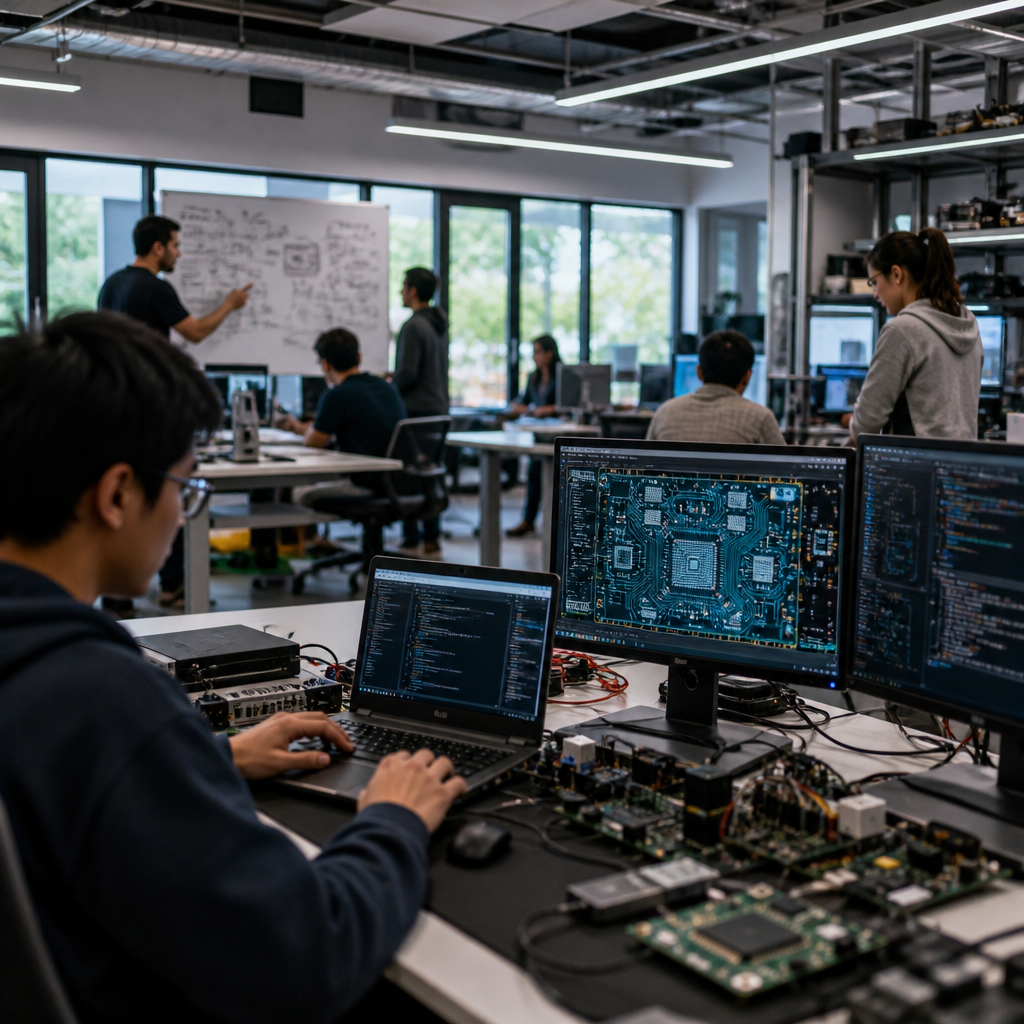
Silicon Valley is reshaping customized education technology by combining startup speed, venture capital, and advances in artificial intelligence to make learning more adaptive, measurable, and accessible. In this context, customized education tech means digital tools that adjust content, pacing, feedback, and learning pathways to the needs of individual students rather than treating every learner the same. The topic matters because schools, universities, employers, and families all face the same pressure: learners need stronger outcomes, teachers need better support, and institutions need proof that technology investments actually improve achievement. After working with founders, district buyers, and product teams in this space, I have seen the same pattern repeatedly: the companies that last do not just add flashy features, they solve concrete instructional problems, integrate with existing systems, and earn trust through data privacy, efficacy evidence, and teacher usability. Silicon Valley remains the most visible launchpad for these companies because it concentrates engineering talent, cloud infrastructure expertise, and investors willing to fund risky bets on long-term change. Yet the future of customized education tech will not be determined by code alone. It will be shaped by learning science, procurement realities, regulation, and whether startups can prove they help real classrooms, not just demo environments. As a hub topic under tech innovations and startups, advancements and startup success sit at the center of this story.
Why Silicon Valley Leads Education Technology Innovation
Silicon Valley leads education technology innovation because it has a rare mix of capital, technical infrastructure, and a culture that rewards rapid iteration. Startups can move from prototype to pilot quickly using mature cloud platforms such as AWS, Google Cloud, and Microsoft Azure, while application layers like OpenAI, Anthropic, and speech recognition APIs reduce development time for tutoring, assessment, and accessibility features. That speed matters in customized education tech, where products often need recommendation engines, real-time analytics, and interoperable integrations with learning management systems such as Canvas, Moodle, Schoology, and Google Classroom.
The startup environment also encourages a product discipline that education historically lacked. Founders now track activation, retention, time on task, mastery progression, and renewal rates with the same rigor SaaS firms use for enterprise products. In practice, that means stronger feedback loops. If students abandon a personalized math pathway after lesson three, the team can inspect clickstream data, watch session recordings, and revise the sequence. If teachers do not trust automated writing feedback, product managers can test rubrics aligned with state standards and improve explainability. This operating model has helped companies such as Khan Academy, Coursera, Duolingo, Quizlet, and Outschool scale differentiated experiences for millions of learners, even though their audiences and business models differ significantly.
The Core Technologies Powering Customized Learning
The most important advancements in customized education tech are no longer hypothetical. They are already visible in production systems. Adaptive learning engines use diagnostic data and item response patterns to determine difficulty levels, remediation needs, and next-best activities. AI tutoring systems generate hints, worked examples, and Socratic prompts that keep students engaged without immediately giving away answers. Natural language processing supports automated essay scoring, multilingual translation, and conversational practice for language learners. Computer vision can assist with proctoring, handwriting recognition, and interactive science labs, though it raises serious privacy concerns that require strict governance.
Learning analytics has become equally important. Modern platforms combine assessment data, attendance patterns, assignment completion, and behavioral signals into dashboards that help teachers identify who needs intervention. Standards such as LTI, OneRoster, and xAPI make it easier to connect these tools across ecosystems, while privacy frameworks such as FERPA and COPPA shape how student data must be handled. The strongest products are not fully autonomous systems; they are decision-support tools that augment teachers. In district pilots I have reviewed, platforms performed best when educators could override recommendations, inspect reasoning, and adjust pathways for English learners, students with disabilities, and advanced students who were ready to accelerate.
Startup Success Factors in a Crowded Market
Startup success in education technology depends less on buzz and more on execution across five areas: product-market fit, evidence of efficacy, procurement readiness, implementation quality, and sustainable economics. Many founders enter the sector believing a superior app will spread organically. In reality, education sales cycles are long, budgets are fragmented, and adoption depends on administrators, teachers, parents, and students. A startup that sells to districts needs security reviews, rostering integrations, accessibility compliance, professional development plans, and often proof of alignment with state standards. A startup selling directly to consumers needs clear learning outcomes, low churn, and pricing that families can justify monthly.
| Success factor | What strong startups do | Common failure point |
|---|---|---|
| Product-market fit | Target a specific pain point such as reading intervention or workforce reskilling | Building a broad platform without a clear primary user |
| Efficacy | Run pilots, compare outcomes, and publish transparent results | Relying only on testimonials or engagement metrics |
| Integration | Support LMS, SIS, rostering, and single sign-on from the start | Creating workflow friction for teachers and IT teams |
| Trust | Meet privacy, security, and accessibility expectations | Ignoring compliance until late-stage procurement |
| Economics | Balance acquisition costs with renewals and expansion revenue | Growing users without a durable revenue model |
These factors explain why some startups secure lasting traction while others stall after early excitement. Newsela succeeded by fitting classroom workflows and curriculum needs. Instructure built durable value through system-level adoption. Guild and Coursera grew by linking education directly to employment outcomes. The lesson is simple: customized education tech wins when it helps institutions achieve measurable goals, not when it merely personalizes interface elements.
Real-World Applications Across K-12, Higher Education, and Workforce Learning
In K-12 education, customized learning tools are most effective when they support formative assessment, targeted intervention, and differentiated instruction. A reading platform can diagnose phonemic awareness gaps and assign short exercises tailored to a student’s decoding level. A math system can identify persistent errors with fractions and recommend scaffolded practice before moving on to algebraic concepts. Teachers save time because they no longer have to manually sort every student into intervention groups, yet they still control pacing and can add offline activities.
In higher education, the value shifts toward persistence, course completion, and advising. Universities use predictive analytics to flag students who miss assignments, log in irregularly, or struggle in gateway courses. Adaptive courseware in subjects such as statistics, chemistry, and economics can personalize review materials and reduce failure rates when designed well. Arizona State University and Georgia State University are often cited because they have used data-informed student support systems to improve retention at scale. The takeaway is not that algorithms replace advising; it is that they help institutions focus scarce human support where it matters most.
In workforce learning, customization is tightly tied to skills and employability. Platforms map learner progress to competency frameworks, certification paths, and job roles. A cybersecurity learner might receive a different sequence than a marketing analyst because prerequisite knowledge, pacing, and assessment models vary. Companies such as Udacity, Coursera, and Degreed built traction by aligning content with employer demand, while enterprise learning systems increasingly use skills graphs to recommend micro-courses, projects, and coaching. This connection between personalized instruction and labor market outcomes is one reason investors remain interested in the category.
The Challenges: Equity, Privacy, Evidence, and Teacher Adoption
Despite the momentum, the future of customized education tech depends on how well startups address four persistent challenges. First is equity. Personalized tools can widen gaps if students lack broadband, devices, quiet study spaces, or accessible design. A product that works beautifully for fluent readers on new laptops may fail students using older devices, assistive technologies, or shared family internet. Universal Design for Learning principles, offline functionality, captioning, translation, and mobile optimization are not optional features; they are baseline requirements.
Second is privacy and security. Student data is uniquely sensitive, especially when platforms capture writing samples, voice recordings, behavioral metrics, or biometric signals. Strong vendors minimize data collection, define retention limits, encrypt information in transit and at rest, and give institutions clear administrative controls. Third is evidence. Engagement is not the same as learning. Schools increasingly ask for third-party studies, quasi-experimental results, or at minimum a transparent logic model that connects features to outcomes. Finally, teacher adoption remains decisive. Even powerful tools fail when setup is cumbersome, recommendations are opaque, or training is superficial. In every successful deployment I have seen, implementation leaders treated teachers as co-design partners, not end-stage recipients.
What the Future Looks Like for Advancements and Startup Success
The next phase of customized education technology will be defined by multimodal AI, verified outcomes, and tighter links between learning and opportunity. Multimodal systems will combine text, audio, image, and video inputs so students can ask questions naturally, submit diverse work products, and receive richer feedback. AI agents will help teachers assemble lesson variations, intervention groups, parent communication drafts, and standards-aligned assessments in minutes. At the same time, institutions will demand stronger guardrails, human review, and auditability so generated content remains accurate, age-appropriate, and pedagogically sound.
Startup success will increasingly favor companies that build narrow, defensible value before expanding into platforms. Investors have become more disciplined after years of aggressive edtech funding, and buyers are more skeptical of unsupported claims. The winners will show learning gains, efficient implementation, compliance maturity, and clear return on investment. Silicon Valley will remain influential, but the best ideas will come from deeper collaboration with educators, researchers, and employers across regions. For leaders tracking tech innovations and startups, customized education tech is a category worth following closely because it sits at the intersection of AI, human capital, and social mobility. The opportunity is substantial, but lasting progress will come from products that respect how learning actually works. If you are evaluating this market, focus on evidence, usability, and outcomes, then explore the connected articles in this hub to go deeper on the startups and breakthroughs shaping the field.
Frequently Asked Questions
1. What does customized education technology actually mean in the context of Silicon Valley?
Customized education technology refers to digital learning tools that tailor instruction to the individual learner instead of delivering the same lesson, pace, and feedback to everyone. In Silicon Valley, this idea is being pushed forward by a mix of startup experimentation, strong venture capital backing, cloud infrastructure, and rapid advances in artificial intelligence. The result is a new generation of platforms that can adjust reading levels, recommend next lessons, identify skill gaps, personalize practice, and give learners feedback based on their own performance patterns.
What makes this especially important is that personalization is no longer limited to simple branching quizzes or static learning tracks. Modern systems can use data from student responses, time on task, confidence signals, and engagement trends to create more flexible learning pathways. For example, a student who excels in algebra but struggles with word problems may receive different content, pacing, and support than a classmate with the opposite profile. In higher education and workplace learning, the same principle can be used to recommend modules, credentials, or practice exercises aligned with career goals and demonstrated competencies.
Silicon Valley’s influence matters because it tends to accelerate product development at scale. Companies in this ecosystem often build with the assumption that software should be iterative, measurable, and responsive to user behavior. Applied to education, that mindset is helping move customized learning from a niche concept to a mainstream expectation. The bigger goal is not just convenience, but better outcomes: helping each learner progress in a way that is more efficient, more motivating, and more relevant to their needs.
2. How is artificial intelligence changing the future of personalized learning?
Artificial intelligence is becoming one of the most powerful engines behind customized education technology because it can process large amounts of learner data and translate that information into actionable teaching support. At a practical level, AI can analyze how a student answers questions, detect recurring mistakes, estimate mastery of a concept, and recommend what to study next. This allows platforms to go beyond one-size-fits-all instruction and offer learning experiences that adapt in near real time.
One major shift is the rise of intelligent tutoring features. These tools can provide hints, explanations, step-by-step guidance, and targeted review materials based on the student’s exact point of confusion. Instead of waiting for a scheduled intervention, learners can receive support immediately. AI can also help teachers by automating tasks such as grading short responses, summarizing student progress, flagging at-risk learners, and suggesting differentiated assignments. That does not replace educators; it gives them more time and better insight so they can focus on human-centered teaching, mentoring, and decision-making.
Looking ahead, AI is likely to make education tech even more responsive and multimodal. Students may interact through text, voice, video, simulations, and project-based assessments, while systems continuously adapt based on performance and preferences. However, the future will depend on quality design. AI works best when it is transparent, aligned to sound pedagogy, and used to support learning rather than simply automate it. In other words, the promise of AI in education is not just smarter software, but more precise, timely, and meaningful learning support.
3. Why is Silicon Valley such a major force in the development of customized education tech?
Silicon Valley plays an outsized role because it brings together several ingredients that are difficult to replicate in one place: technical talent, capital, startup culture, research networks, and a strong belief in scaling digital products quickly. Education technology companies in this environment can move from idea to prototype to market faster than many traditional institutions. That speed matters in a field where learner expectations, workforce demands, and AI capabilities are changing rapidly.
Venture capital is another big factor. Personalized learning platforms often require substantial investment in product development, data systems, content design, machine learning models, and user testing before they can serve schools or enterprise clients effectively. Silicon Valley investors are often willing to fund companies that aim to transform large systems, including K-12 education, higher education, tutoring, upskilling, and corporate learning. That financial support can help promising tools grow quickly, integrate advanced technologies, and expand across large user bases.
Just as important is the region’s product mindset. Silicon Valley companies tend to prioritize user analytics, experimentation, and continuous improvement. In education, that means learning tools are increasingly designed to measure engagement, track progress, and refine the user experience over time. At its best, this produces software that becomes more effective as it learns from real-world use. At the same time, the education sector has unique needs around equity, privacy, trust, and instructional quality. So while Silicon Valley drives innovation, long-term success depends on working closely with educators, institutions, and communities rather than assuming that speed alone can solve educational challenges.
4. What are the biggest benefits and risks of customized education technology for students, teachers, and institutions?
The benefits are significant. For students, customized education tech can make learning more engaging and less frustrating by matching instruction to current skill level, pace, and goals. Learners who need more repetition can get it without stigma, while advanced students can move ahead instead of waiting for the rest of the class. Personalized tools can also improve accessibility by offering multiple formats, translation support, text-to-speech features, and flexible pathways that serve diverse learning needs. In higher education and workforce training, customization can help learners focus on the exact competencies they need, making education more efficient and career-relevant.
For teachers and institutions, the advantage is often visibility. Good platforms provide data dashboards, mastery insights, intervention alerts, and evidence of progress that can be difficult to gather manually. This can support differentiated instruction, early intervention, and better allocation of support resources. Schools and universities may also benefit from improved retention, stronger student support systems, and more measurable outcomes. Employers can use similar tools to personalize onboarding, compliance training, and skills development across different employee profiles.
But the risks are just as important to acknowledge. Privacy is a central concern because personalized systems rely on substantial amounts of learner data. If data governance is weak, schools and families may lose visibility into how information is collected, stored, shared, or used for algorithmic decisions. There is also the risk of bias: if an AI model is trained on incomplete or skewed data, it may make inaccurate recommendations or reinforce inequities. Another challenge is overreliance on automation. Education is not only about efficiency; it also involves relationships, motivation, judgment, and context. If institutions treat personalized tech as a replacement for educators rather than a support tool, learning quality can suffer. The strongest implementations are the ones that combine adaptive technology with strong teaching, ethical safeguards, and clear educational goals.
5. What should schools, universities, and families look for when choosing customized education technology?
The first thing to evaluate is educational value. A platform should do more than look innovative; it should clearly explain how it supports learning. Decision-makers should ask whether the tool adapts content in meaningful ways, whether its recommendations are tied to evidence of mastery, and whether it aligns with curriculum standards or learning objectives. A strong product should also make it easy for educators and learners to understand why certain recommendations are being made, rather than operating as a complete black box.
Usability is equally important. Even the most advanced personalized system will struggle if students find it confusing or teachers cannot integrate it into daily instruction. Schools and families should look for intuitive design, clear reporting, accessibility features, mobile compatibility, and flexible implementation options. Teacher controls matter as well. The best systems allow educators to override recommendations, assign targeted work, monitor progress, and use platform insights as part of broader instructional planning. For universities and employers, interoperability with learning management systems and credentialing tools can also be a major factor.
Finally, buyers should take privacy, equity, and long-term sustainability seriously. Ask how learner data is protected, who owns it, and whether it is used to train models or support third-party services. Review whether the platform has been tested across different student populations and whether it supports diverse languages, abilities, and learning contexts. It is also smart to assess the company behind the product: its track record, financial stability, customer support, and willingness to collaborate with educators. In a fast-moving market shaped by Silicon Valley innovation, the best choice is not always the newest or most heavily funded tool. It is the one that delivers measurable learning benefits, respects learners, and fits the real needs of the people who will use it every day.