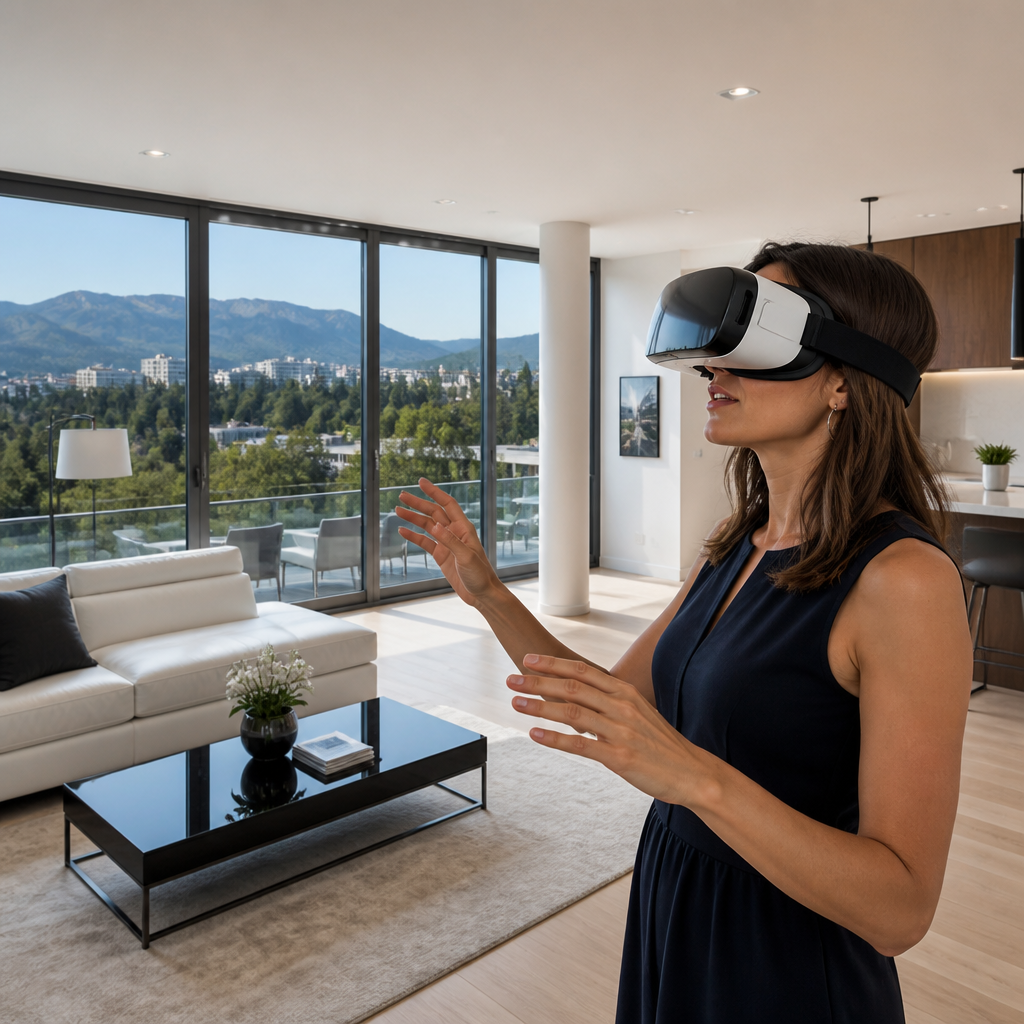
Virtual reality in real estate is moving from novelty to infrastructure, and nowhere is that shift more visible than in Silicon Valley. In practical terms, virtual reality, or VR, places a buyer, renter, investor, or developer inside a computer-generated version of a property through a headset, phone, or browser-based immersive tour. Related tools such as augmented reality, digital twins, lidar scanning, and 3D rendering support the experience, but VR is the centerpiece because it changes how people evaluate space before they ever arrive on site. For a region defined by startup speed, remote work, expensive land, and global capital, that matters.
I have worked with property marketing teams and proptech founders who learned the same lesson quickly: in a market where schedules are tight and inventory is expensive, reducing wasted showings has real financial value. A buyer deciding between a Palo Alto townhouse, a Mountain View condo, and a San Jose office conversion can narrow options from anywhere in the world. A developer pitching an unbuilt mixed-use project in Sunnyvale can let lenders and prelease tenants walk through the future building months before construction finishes. That capability improves lead quality, shortens decision cycles, and gives startups a measurable edge.
This trend matters because Silicon Valley real estate is unusually complex. Residential buyers include local engineers, international executives, and first-time founders with limited time. Commercial transactions involve lab space, flexible offices, and redevelopment sites where built conditions do not tell the full story. Traditional photography and floor plans still matter, but they flatten the experience. VR adds spatial understanding: room scale, sight lines, circulation, ceiling height perception, and adjacency between spaces. In a market where one poor fit can cost millions, better prequalification is not just convenient; it is strategic.
Why Silicon Valley Adopted Virtual Reality Faster Than Most Markets
Silicon Valley has the conditions that help VR in real estate scale early. The audience is digitally comfortable, smartphone-first, and generally willing to test new interfaces. The local economy is also full of distributed decision-makers. A startup founder in Austin, an investor in Singapore, and a relocation candidate in Seattle may all need to evaluate Bay Area property without boarding a plane immediately. In that environment, immersive touring solves an obvious problem: it brings the asset to the decision-maker instead of forcing the decision-maker to the asset.
The region’s pricing structure also amplifies the value of better information. In lower-cost markets, an extra in-person tour may be a nuisance. In Silicon Valley, where homes regularly cross seven figures and tenant improvement budgets for commercial space can be substantial, every avoided mismatch saves meaningful time and money. Brokers use VR to pre-screen serious interest, developers use it to secure pre-sales, and property managers use it to reduce vacancy friction. This is one reason many Bay Area proptech startups position VR not as a gadget but as a conversion tool tied to leasing velocity, offer confidence, and lower acquisition cost.
Startup success has followed that logic. Matterport helped normalize digital twins by making space capture scalable, then expanding the output beyond real estate into facilities, insurance, and construction. Companies such as Cupix, Asteroom, and Zillow’s 3D Home ecosystem pushed easier capture and broader distribution. The lesson from these companies is consistent: the winning product is rarely the flashiest headset demo. It is the workflow that lets agents, marketers, and operations teams capture spaces quickly, publish across channels, and analyze engagement without specialized production crews.
How the Technology Stack Works in Real Estate
A modern VR property experience usually begins with capture. Teams use 360-degree cameras, lidar-enabled devices, DSLR photogrammetry, or dedicated scanners to record geometry and imagery. Software then stitches the data into a navigable model, often called a digital twin. That twin can support simple virtual tours, fully immersive headset viewing, measurement tools, dollhouse views, floor plan generation, and embedded information points. For preconstruction projects, architects and visualization studios build the environment from BIM models in Revit, SketchUp, Rhino, or Unreal Engine pipelines.
The next layer is distribution. In my experience, adoption rises when a tour works on multiple devices without friction. Browser-based tours remain the broadest channel because users can click from listing pages, email campaigns, or CRM follow-up sequences. Headset experiences, using devices such as Meta Quest or Apple Vision Pro, deliver stronger immersion but serve a narrower audience. The smart approach is hybrid distribution: publish a web tour for scale, then reserve higher-end VR sessions for serious buyers, investor presentations, design reviews, and commercial preleasing.
Analytics complete the stack. Strong platforms show where users spend time, which rooms attract the most attention, where drop-off occurs, and whether users interact with disclosures, amenities, or customization options. Those signals help marketers improve listing flow, and they help sales teams prioritize outreach. If multiple prospects repeatedly inspect a kitchen remodel, a balcony, or lab-ready infrastructure, that is actionable intelligence. The real advantage is not merely showing a space in 3D; it is learning how prospects evaluate it.
| Use case | Primary users | Business benefit |
|---|---|---|
| Residential resale tours | Agents, buyers, relocation clients | Fewer low-intent showings and faster shortlist creation |
| Preconstruction visualization | Developers, lenders, early buyers | Improved presales, financing support, clearer expectations |
| Commercial leasing | Brokers, tenants, workplace teams | Better remote qualification and shorter leasing cycles |
| Design review | Architects, contractors, owners | Earlier issue detection and fewer late-stage revisions |
Where Virtual Reality Delivers the Most Value
Residential resale is the most visible application, but not always the most transformative. VR helps consumers understand awkward layouts, split levels, accessory dwelling units, and views that photographs distort. In competitive neighborhoods like Los Altos or Menlo Park, that can increase confidence before a buyer submits an offer. Yet commercial and development use cases often generate higher operational value. When a startup needs office space with specific collaboration zones, storage, power, and transit access, an immersive tour can eliminate poor-fit options before any site visit happens.
Preconstruction is especially important in Silicon Valley because many deals depend on selling or leasing vision, not finished product. A life sciences building in South San Francisco or a mixed-use redevelopment near Diridon Station may not be complete for many months. VR allows stakeholders to evaluate future circulation, lobby feel, façade treatment, and unit mix in context. That helps investors understand the thesis, and it helps end users imagine occupancy. I have seen projects gain momentum when a static rendering failed, simply because decision-makers finally understood scale and flow inside an immersive walkthrough.
Property operations benefit too. Facilities teams use digital twins for maintenance planning, remote inspection support, and vendor coordination. Insurance documentation and post-loss claims can also improve when a precise historical record exists. These are less glamorous than headset demos, but they often support the strongest business case. A startup founder may buy VR for marketing, then realize the long-term return comes from standardized documentation, faster onboarding, and better communication across teams managing the asset.
Startup Success Factors and Common Barriers
The startups succeeding in this segment tend to solve for adoption, not just realism. They reduce capture time, automate model cleanup, integrate with listing systems, and price the product so brokerages can use it routinely. They also understand that real estate professionals are judged by speed. If publishing a tour takes too long, the workflow breaks. This is why simple mobile capture, automated floor plans, and one-click syndication have been more commercially important than visually perfect but labor-intensive production.
Barriers remain. Some users experience motion discomfort in fully immersive environments, especially if movement is not designed carefully. High-end visualizations can be expensive for smaller teams. There are also accuracy and disclosure concerns. A tour must represent the property faithfully; excessive staging, misleading dimensions, or omission of defects can create trust and compliance problems. Residential agents must treat VR as a supplement to disclosures and inspections, not a replacement. Commercial users face similar limits when mechanical systems, acoustics, or neighborhood conditions require in-person verification.
Privacy and data governance matter as well. Scanned properties can reveal floor plans, security devices, expensive belongings, or restricted areas. Teams need clear permissioning, asset redaction, retention policies, and platform security standards. For enterprise deployments, buyers increasingly ask about SOC 2 controls, user access management, and integration with systems such as Salesforce, HubSpot, Autodesk Construction Cloud, or Yardi. The market is maturing, and mature buyers expect operational discipline, not just visual appeal.
What Comes Next for Tech Innovations and Startups
The next phase of virtual reality in real estate will be shaped by artificial intelligence, lighter hardware, and stronger links between marketing, design, and operations data. AI already helps generate virtual staging variations, summarize engagement patterns, and accelerate model enhancement. As headsets become easier to use and web-based 3D grows more capable, the line between virtual tour, configurator, and digital twin platform will continue to blur. The strongest products will connect the whole lifecycle: concept, leasing, sale, management, and renovation.
For the broader Tech Innovations & Startups landscape, this makes VR real estate a hub topic because it touches computer vision, spatial computing, BIM, marketplace design, SaaS monetization, and go-to-market strategy. Founders entering the space should focus on a painful workflow, prove time savings, and build integrations early. Real estate leaders evaluating vendors should ask direct questions: How fast is capture? How accurate are measurements? What devices are supported? What analytics are included? How does the platform handle permissions and data export? Clear answers separate durable companies from impressive demos.
Virtual reality in real estate is no longer an experimental add-on in Silicon Valley. It is becoming a practical system for better qualification, stronger storytelling, and smarter asset management. The most successful startups are winning because they pair immersive experiences with reliable workflows, useful analytics, and enterprise-grade trust. For agents, developers, investors, and operators, the benefit is simple: better decisions earlier in the process. If you are building or buying within this market, start by auditing one property workflow where distance, complexity, or delay hurts results, and test a VR solution there.
Frequently Asked Questions
What does virtual reality in real estate actually mean, and why is it gaining traction in Silicon Valley?
Virtual reality in real estate refers to the use of immersive digital environments that allow buyers, renters, investors, architects, and developers to experience a property without being physically present. Instead of looking at static photos or even standard video walkthroughs, a user can step inside a computer-generated or scan-based version of a home, office, mixed-use building, or development site through a VR headset, mobile device, or browser-based tour. In many cases, these experiences are powered by supporting technologies such as 3D rendering, lidar scanning, photogrammetry, digital twins, and augmented reality overlays, but VR is the central feature because it creates a stronger sense of space, scale, layout, and movement.
In Silicon Valley, this technology is gaining traction because the region sits at the intersection of real estate, software, venture capital, and user-experience innovation. Buyers and investors in this market are often comfortable adopting new technology, and the local real estate environment is highly competitive, fast-moving, and expensive. That combination makes efficiency extremely valuable. VR can reduce unnecessary site visits, accelerate early decision-making, improve remote collaboration, and help stakeholders evaluate properties still under construction or even not yet built. For developers and brokerages, it also offers a way to market listings more effectively to international buyers, busy executives, and distributed teams.
What is changing now is that VR is no longer treated as a novelty or a flashy add-on. It is increasingly becoming part of the broader real estate infrastructure. In practical terms, that means immersive tours are being used not just for marketing, but for design review, pre-leasing, investor presentations, construction planning, and portfolio management. In a region where time, access, and precision matter, VR is appealing because it turns visualization into a decision-making tool.
How is VR changing the way homes and commercial properties are bought, sold, and leased?
VR is reshaping the real estate process by giving people a more complete understanding of a property before they ever arrive in person. Traditional listings rely heavily on photography, floor plans, and agent descriptions, all of which can be helpful but limited. A virtual reality experience allows a prospective buyer or tenant to move through rooms, evaluate layout flow, understand proportions, and get a more intuitive sense of the environment. That matters because many real estate decisions are emotional as well as financial, and immersion can bridge the gap between online browsing and real-world confidence.
For residential real estate, VR helps narrow choices earlier in the search process. Instead of scheduling multiple in-person tours that may not fit a buyer’s needs, clients can virtually walk through properties and identify the strongest candidates first. This is especially useful in Silicon Valley, where professionals often have demanding schedules and may be relocating from other cities or countries. For luxury real estate, VR also allows brokers to present unique architectural details, outdoor spaces, and design options in a much more compelling format than flat media alone.
In commercial real estate, the impact can be even broader. Office, lab, retail, and industrial users often need to assess circulation, usable space, adjacency, visibility, and configuration possibilities. VR allows landlords, brokers, and occupiers to visualize tenant improvements, staging scenarios, and floorplate functionality before lease negotiations are finalized. For projects under development, a virtual environment can help pre-lease space by showing what the finished asset will feel like long before completion. This can improve stakeholder alignment, reduce uncertainty, and support faster leasing decisions.
From a sales and leasing perspective, VR also extends market reach. Out-of-state investors, foreign buyers, corporate relocation clients, and institutional decision-makers can review properties remotely with fewer logistical barriers. That does not eliminate the need for in-person due diligence, but it can significantly streamline the path to that stage. In other words, VR is not replacing real estate transactions; it is making them more informed, targeted, and efficient.
What are the main benefits of virtual reality for buyers, sellers, agents, and developers?
The benefits of virtual reality vary by stakeholder, but the common theme is better decision-making through better visualization. For buyers and renters, the biggest advantage is clarity. VR provides a more realistic sense of room dimensions, layout relationships, ceiling height, and property flow than standard listing materials. That can help people avoid wasting time on properties that do not fit their needs while also increasing confidence in the ones that do. For remote clients, this benefit is even greater because VR makes the property search process more accessible and less dependent on travel.
For sellers and landlords, VR can improve presentation quality and increase engagement. A well-produced immersive tour can help a listing stand out in a crowded market, especially in technology-forward regions like Silicon Valley where user experience matters. It can also broaden the buyer pool by making a property easier to evaluate from anywhere. This is particularly useful for high-value homes, new developments, and commercial spaces where multiple stakeholders may need to review a property before moving forward.
Real estate agents and brokers benefit because VR can improve lead qualification and save time. Instead of conducting repeated showings for lightly interested prospects, agents can focus on clients who have already interacted deeply with a virtual tour and demonstrated stronger intent. VR can also enhance the advisory role of the agent. Rather than simply opening doors, brokers can use immersive tools to compare layouts, explain development potential, discuss renovation ideas, and guide clients through options with more context.
Developers gain perhaps the most strategic value. Virtual reality can be used before construction begins to communicate vision, test design assumptions, and attract pre-sales or pre-leasing interest. It allows internal teams, investors, city stakeholders, and future occupants to evaluate design choices in a more concrete way than blueprints or renderings alone. That can reveal issues earlier, support design iteration, and improve buy-in across the project lifecycle. In a region known for innovation and premium real estate values, even small improvements in planning accuracy or marketing performance can have significant financial impact.
How do technologies like digital twins, lidar scanning, augmented reality, and 3D rendering support VR in real estate?
Virtual reality does not operate in isolation. Its effectiveness depends heavily on the quality and accuracy of the data and visual assets behind it. Digital twins, lidar scanning, augmented reality, and 3D rendering each play a distinct role in making immersive real estate experiences more useful and reliable. Understanding how these technologies work together helps explain why VR is becoming more practical, not just more impressive.
Lidar scanning is often used to capture the physical dimensions and geometry of an existing property with a high level of accuracy. This creates detailed spatial data that can be converted into navigable 3D models. For real estate professionals, that means virtual tours can reflect actual proportions and layouts more faithfully than manually modeled approximations. This is especially important for commercial assets, historical properties, or renovation projects where precision matters.
3D rendering is what transforms raw spatial information into a visually coherent environment. It can recreate existing interiors, stage empty rooms, or show future designs that have not yet been built. In new development, renderings allow buyers and tenants to walk through future units, amenity spaces, lobbies, and office floors before construction is complete. The higher the rendering quality, the more persuasive and informative the VR experience becomes.
Digital twins go a step further by creating a dynamic digital representation of a real-world asset. Rather than serving only as a static model, a digital twin can connect to operational, structural, or maintenance data over time. In real estate, this opens up broader use cases beyond marketing, including facility management, asset monitoring, capital planning, and space optimization. When paired with VR, digital twins can support immersive analysis of how a property functions, not just how it looks.
Augmented reality complements VR by layering digital information onto the physical world rather than replacing it entirely. In practice, AR can help users view furniture placement, renovation concepts, finish options, or building systems while standing on-site. Together, AR and VR create a more complete toolkit for real estate professionals: VR is ideal for immersive off-site or pre-construction experiences, while AR adds context during physical visits and planning discussions. In Silicon Valley, where integrated technology ecosystems are common, the combination of these tools is helping move real estate workflows toward a more data-rich and interactive future.
What challenges or limitations should the real estate industry consider before adopting VR at scale?
Although virtual reality offers significant potential, it is not without limitations. One of the first considerations is cost and production quality. A basic immersive tour may be relatively affordable, but highly accurate, photorealistic, and interactive VR experiences require specialized hardware, software, modeling expertise, and ongoing updates. For some brokerages or smaller property owners, the return on investment may depend heavily on asset type, price point, and how often the content can be reused.
Another challenge is accessibility. Not every client owns a VR headset or wants to use one, which is why many real estate firms also offer browser-based and mobile-friendly alternatives. Even when the technology is available, user comfort can vary. Some people are highly receptive to immersive experiences, while others may prefer conventional tours, especially if they are less comfortable with new interfaces. That means VR works best when it expands the marketing and decision-making toolkit rather than trying to replace every traditional method outright.
Accuracy and representation are also