Silicon Valley, renowned as the global hub for innovation and technology, continues to push the boundaries of what’s possible. While much of the spotlight shines on advancements in AI, machine learning, and consumer electronics, a burgeoning area is making waves – underwater technology. Investigating the latest developments in this submerged domain unveils a fascinating world where cutting-edge solutions are transforming how we interact with and explore our planet’s oceans.
The oceans, covering over 70% of the Earth’s surface, remain some of the most unexplored regions. Yet they are critical to our understanding of climate change, marine biodiversity, and resource management. The challenges of underwater exploration have historically limited our ability to exploit these resources fully. However, the tide is turning, thanks to the entrepreneurial spirit and technical prowess emanating from Silicon Valley.
This article dives deep into the significant contributions Silicon Valley is making in underwater technology. From innovative startups to groundbreaking research and remarkable inventions, we will explore how the valley’s ecosystems are advancing underwater exploration and technology, ultimately impacting global industries and scientific progress.
The Pioneers of Underwater Technology in Silicon Valley
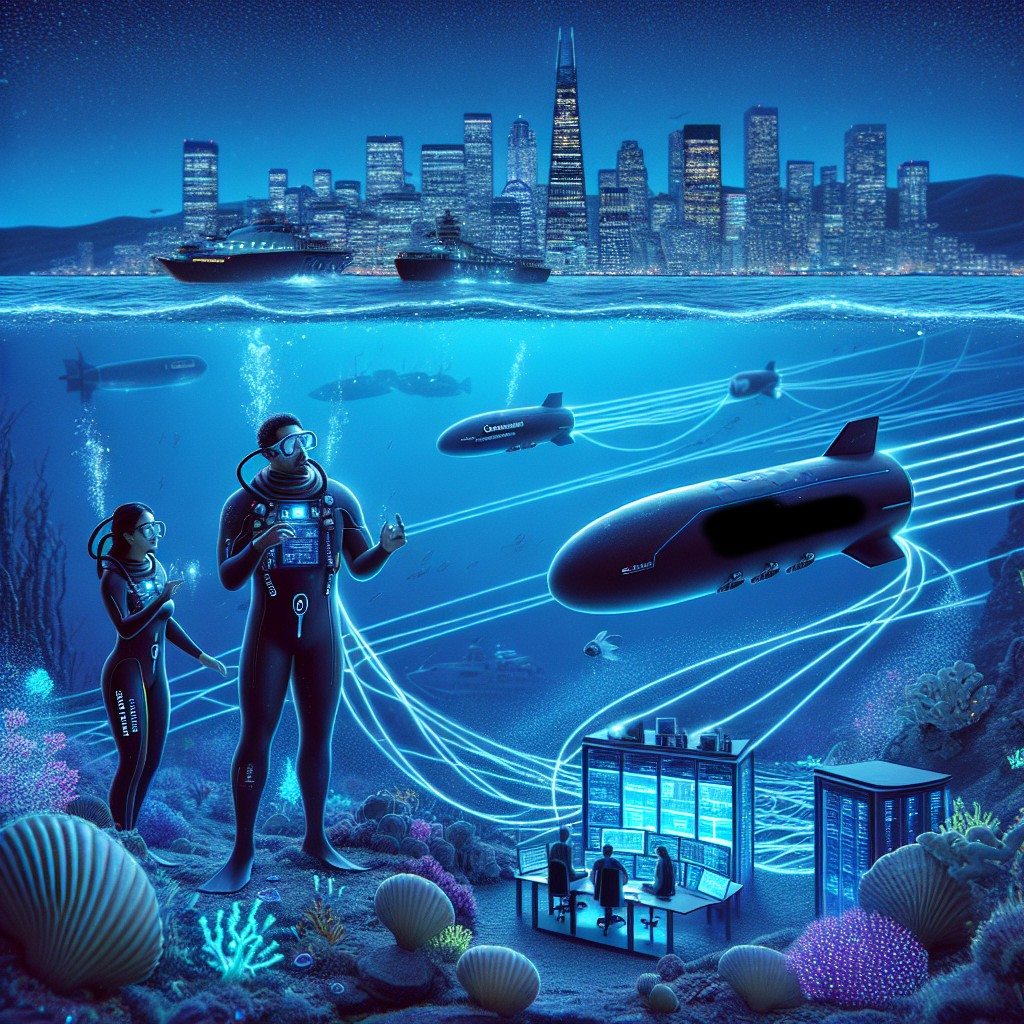
In Silicon Valley, several pioneering startups and established companies are leading the charge in underwater technology. These entities are focusing on diverse aspects, including underwater robotics, communication systems, and data collection. Among these are startups like OpenROV, now known as Sofar Ocean, which is democratizing underwater exploration with affordable, user-friendly remote-operated vehicles (ROVs).
Sofar Ocean is not only making waves with their durable and accessible ROVs but also with their Spotter buoys, designed to collect critical ocean data. This information is invaluable for climate modeling, fisheries management, and even surfing forecasts. The company epitomizes Silicon Valley’s ethos of leveraging technology to solve real-world issues, bridging the gap between sophisticated science and user accessibility.
On another front, companies like Aquabotix are revolutionizing underwater communication and connectivity. By developing high-performance underwater drones, Aquabotix is enhancing capabilities for commercial, defense, and research applications. These innovations allow for real-time data transmission and control, essential for tasks ranging from infrastructure inspection to environmental monitoring.
Robotics and Automation
Underwater robotics and automation stand at the pinnacle of Silicon Valley’s contributions to marine technology. Inspired by the advancements in terrestrial robotics, these underwater counterparts are designed to tackle the unique challenges posed by the aquatic environment. Companies like Blue Robotics are at the forefront, developing components that enable the assembly of powerful underwater drones and AUVs (Autonomous Underwater Vehicles).
Blue Robotics provides a suite of products, including thrusters, sensors, and frames, that facilitate customized underwater exploration solutions. Researchers and hobbyists can create tailored ROVs for specific tasks, furthering accessibility in this niche. The modularity and open-source nature of Blue Robotics products embody Silicon Valley’s spirit of innovation and collaboration.
Additionally, companies like Saildrone are integrating automation with sustainability, constructing autonomous surface vehicles powered by wind and solar energy. These drones can traverse the seas for months, collecting critical climate data without the carbon footprint associated with traditional marine research methods. This blend of cutting-edge automation and environmental consciousness is a testament to Silicon Valley’s forward-thinking approach.
Data Analytics and AI
The integration of data analytics and artificial intelligence (AI) is another significant facet of Silicon Valley’s impact on underwater technology. As underwater robots and sensors collect massive amounts of data, the ability to process and interpret this information efficiently becomes crucial. Companies like Ocean Infinity are leveraging AI and machine learning algorithms to enhance the capabilities of underwater exploration systems.
Ocean Infinity combines advanced robotics with AI-driven data analysis, allowing for more accurate mapping, surveying, and monitoring of the ocean floor. This technology is not only vital for scientific research but also has significant commercial implications, such as in the fields of underwater mining, pipeline inspection, and disaster response.
Furthermore, AI is being utilized to develop predictive models that can foresee environmental changes and their potential impact on marine ecosystems. For instance, machine learning algorithms can analyze historical data to predict patterns in ocean currents, temperature fluctuations, and marine life movement, aiding in the proactive management of marine resources.
Environmental Impact and Conservation
While underwater technology holds immense potential for commercial and industrial applications, there is a growing emphasis on its role in environmental conservation. Silicon Valley startups are increasingly focusing on technologies that promote the sustainable use of marine resources and the protection of marine ecosystems. One notable example is the use of underwater robotics for coral reef monitoring and restoration.
Companies like CoralVac are developing specialized drones that can assist in reef conservation efforts. These drones can be deployed to monitor the health of coral reefs, identifying areas affected by bleaching or disease. Additionally, they can aid in restoration efforts by planting coral fragments in damaged areas, promoting reef recovery and resilience.
This intersection of technology and environmental stewardship highlights Silicon Valley’s commitment to addressing global challenges. By leveraging their expertise in robotics and data analysis, these startups are making significant contributions to the preservation of our oceans and the diverse life they harbor.
Industry Collaboration and Research
Collaboration between industry, academia, and research institutions is pivotal in advancing underwater technology. Silicon Valley’s ecosystem fosters a culture of collaboration, creating opportunities for cross-disciplinary partnerships that drive innovation forward. Universities such as Stanford and UC Berkeley are actively engaged in cutting-edge research, often working in tandem with tech startups and established companies.
One example of such collaboration is the Monterey Bay Aquarium Research Institute (MBARI), which partners with Silicon Valley firms to develop and deploy state-of-the-art underwater tools. MBARI’s efforts in advancing oceanographic research are supported by technologies like autonomous underwater vehicles and advanced sensor systems.
Moreover, initiatives such as the Ocean Discovery XPRIZE have catalyzed innovation by offering substantial rewards for breakthroughs in underwater exploration. Silicon Valley teams, leveraging their technical prowess and entrepreneurial spirit, have been prominent participants in such competitions, driving the development of more efficient, cost-effective, and capable underwater technologies.
Conclusion
Silicon Valley’s foray into underwater technology showcases the region’s versatile innovation prowess, extending beyond traditional tech sectors into the depths of our oceans. The convergence of robotics, AI, environmental consciousness, and collaborative research is transforming how we explore, understand, and utilize marine environments. From accessible ROVs and autonomous surface vehicles to AI-driven data analysis and conservation-focused initiatives, the impact of Silicon Valley on underwater technology is profound and far-reaching.
As these advancements continue to evolve, the potential benefits are immense. Enhanced underwater exploration and data collection can lead to better informed climate models, improved resource management, and more effective conservation efforts. Additionally, the commercial applications, ranging from underwater infrastructure inspection to resource extraction, will drive economic growth and innovation.
Ultimately, the pioneering work being done in Silicon Valley is not just about technological advancement but also about fostering a deeper connection to our planet’s vast and mysterious oceans. By bridging the gap between advanced technology and environmental stewardship, Silicon Valley is playing a crucial role in ensuring the sustainable future of our marine ecosystems and the invaluable resources they provide.