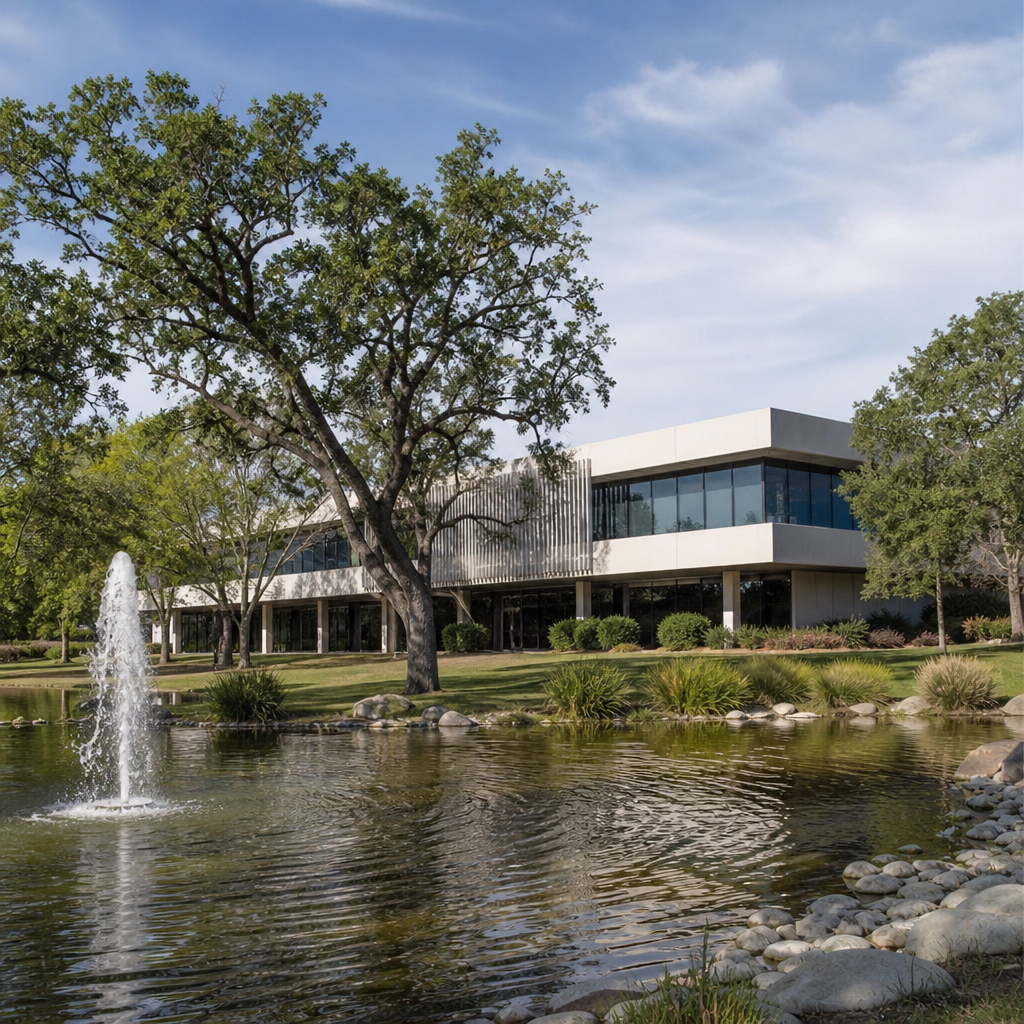
Silicon Valley did not emerge from startup mythology alone; it was built in research labs where computing, storage, and networking were treated as one connected system. No institution illustrates that better than SRI, formerly Stanford Research Institute, and no event captures the transition from batch processing to interactive computing better than the 1968 “Mother of All Demos.” Together, they predicted how people would work with information long before personal computers, cloud platforms, and the modern internet made those ideas ordinary.
In this historical perspectives hub, “computing” means the shift from centralized number-crunching machines to interactive systems for thinking, writing, designing, and collaborating. “Storage” means more than disks or tapes; it includes the methods used to structure, retrieve, and share knowledge, from early hypertext concepts to networked files and online document editing. “Internet” refers not simply to TCP/IP, which arrived later, but to the broader evolution of packet networking, remote collaboration, and connected information systems that made today’s web, messaging, and cloud services possible.
I have worked with archives, demo transcripts, and later commercial systems influenced by this era, and one lesson stands out: the breakthroughs were architectural, not cosmetic. Douglas Engelbart’s team did not merely build clever interface tricks. They combined pointing devices, windows, shared screens, versioned documents, teleconferencing, and linked text into a practical environment for knowledge work. SRI’s later role in ARPANET, networking research, and strategic technology development reinforced the same principle. Modern computing is best understood as the convergence of human-computer interaction, persistent storage, and network connectivity, and this page serves as the hub for that story.
SRI’s Role in the Origins of Modern Computing
SRI occupied a distinctive position in the history of computing because it connected government-funded research, academic ideas, and practical engineering. Founded in 1946 and later renamed SRI International, the organization became a major center for applied research across defense, information science, and emerging computer systems. In the postwar decades, major computing advances often came from places that could afford long time horizons. SRI was one of them.
Its importance to computing, storage, and the internet rests on breadth. SRI researchers worked on command-and-control systems, information processing, artificial intelligence, networking, and user interfaces. That mattered because real progress required integration. A computer without intuitive interaction remained a specialist tool. Storage without retrieval methods became a warehouse. Networking without useful collaborative applications stayed experimental. SRI repeatedly worked at the intersections.
One of the best examples is the Augmentation Research Center, led by Douglas Engelbart. The center’s goal was explicit: augment human intellect. That phrase deserves careful attention because it differs from automation. Engelbart was not mainly trying to replace people with machines. He was trying to help groups solve complex problems faster by improving how they created, linked, revised, displayed, and transmitted information. That framing anticipated knowledge work as we now understand it in offices, research organizations, and software teams.
The Mother of All Demos and Why It Still Matters
On December 9, 1968, at the Fall Joint Computer Conference in San Francisco, Engelbart and his colleagues presented the system known as NLS, short for oN-Line System. The demonstration lasted roughly 90 minutes and introduced capabilities that later became central to personal computing and the internet era. Historians called it the “Mother of All Demos” because so many future conventions appeared in one coherent live presentation.
The demo showed a mouse, chord keyset, multiple windows, hypertext linking, collaborative editing, outline processing, dynamic file linking, screen sharing, and video conferencing. Those were not isolated prototypes on separate benches. They functioned together inside a working environment. In practical terms, Engelbart showed that a person could point at on-screen text, rearrange structured information, jump between linked materials, and work with remote colleagues in real time. For an audience accustomed to punch cards and noninteractive mainframes, that was a conceptual shock.
The reason the demo still matters is simple: it defined the shape of modern knowledge systems. Today, users expect documents to be editable, searchable, linkable, and shareable across networks. They expect visual interfaces, direct manipulation, and remote collaboration. The demo did not create every later product line directly, but it established a convincing model of what computing could become when interface, storage, and networking were designed together.
How the Demo Predicted Personal Computing
Many people associate personal computing with the 1970s and 1980s, especially Xerox PARC, Apple, and Microsoft. That commercial wave was essential, but the intellectual blueprint appeared earlier. NLS treated the computer as an interactive workspace for individuals and teams rather than a distant calculator for scheduled jobs. That is the core idea behind personal computing.
Consider the mouse. Engelbart’s pointing device was not a gimmick; it solved a real interaction problem. If users are meant to navigate text, select items, move through windows, and manipulate on-screen structures quickly, direct pointing is more efficient than typing every command. Later graphical user interfaces refined that insight, but the underlying principle was already visible in 1968.
Consider windows and view control. Modern operating systems rely on users being able to switch context, compare documents, and manage visual complexity. NLS demonstrated that information work improves when the screen can represent structure instead of showing one static output stream. Structured outlines, jump links, and multiple views later reappeared in word processors, IDEs, note-taking tools, and project management platforms.
Even the now-familiar idea of collaborative software has roots here. Shared editing, remote sessions, and collaborative problem solving are not cloud-era inventions. They were early design goals at SRI because serious work was already understood as collective.
Storage, Hypertext, and the Management of Knowledge
Storage history is often told through hardware milestones: magnetic tape, hard disk drives, solid-state media, and cloud object stores. That story matters, but it is incomplete. The deeper question is how stored information becomes usable. Engelbart’s work addressed exactly that problem by treating documents as structured, revisable, linked knowledge objects.
Hypertext is the clearest example. In plain terms, hypertext allows one piece of information to reference another directly, so users can move through a web of related ideas instead of following a single linear path. NLS used linking to support reasoning and collaboration long before the World Wide Web popularized links for general publishing. This was not decorative navigation. It was a method for handling complexity.
Versioning and document structure also deserve attention. Modern teams rely on tracked revisions, shared repositories, and hierarchical organization because information changes constantly. The NLS environment recognized that reality. A useful storage system does not merely preserve bits; it preserves context, relationships, authorship, and retrievability. In today’s terms, that principle lives on in content management systems, Git repositories, enterprise search, and collaborative suites such as Google Workspace and Microsoft 365.
This subtopic hub therefore connects storage history to information architecture. The progression from early linked documents to networked file systems to cloud collaboration is not accidental. It reflects a continuous effort to make stored knowledge accessible and actionable.
From Research Networks to the Internet
SRI also matters because it sits near the early history of internetworked communication. The internet did not appear fully formed with browsers and websites. It emerged from research networks that proved remote machines could exchange data reliably and usefully. SRI was deeply involved in that transition, including work tied to the ARPANET era.
One notable milestone is that the first ARPANET message was sent in 1969 from UCLA to a computer at SRI. The system crashed after the first two letters of “LOGIN,” making “LO” the famous beginning of networked host-to-host communication. The anecdote is memorable, but the underlying significance is larger. It shows that networking was immediately connected to remote access and shared computational resources, not just message passing.
As packet switching matured and protocols evolved, the concept of geographically distributed computing became practical. That led eventually to email, file transfer, distributed applications, and the TCP/IP-based internet. SRI’s role illustrates a larger pattern: networking advances became transformative only when paired with useful applications and thoughtful user systems. The same pattern repeats today in debates about edge computing, AI infrastructure, and cloud-native platforms.
The Ideas and Their Modern Equivalents
The fastest way to understand the legacy of SRI and the Mother of All Demos is to compare core concepts with the tools people now use every day.
| 1960s concept | What it meant then | Modern equivalent |
|---|---|---|
| Mouse input | Direct on-screen selection and navigation | GUI interaction in Windows, macOS, and Linux desktops |
| Hypertext links | Jumping between connected information nodes | Web links, wikis, knowledge bases |
| Collaborative editing | Multiple users working on shared information | Google Docs, Microsoft 365, Notion |
| Video collaboration | Remote visual communication during work | Zoom, Teams, Meet |
| Structured knowledge | Outlines, references, and managed revisions | Git, CMS platforms, enterprise search |
These parallels are not superficial. They show that many current product categories are implementations of ideas proven conceptually decades earlier. Commercialization, miniaturization, and standardization came later, but the governing model was already visible.
Why This History Matters for Computing, Storage, and Internet Coverage
This historical perspective matters because it prevents a distorted view of innovation. Modern computing did not arise from isolated gadget releases. It developed through layered advances in interface design, data storage, networking, and collaborative workflows. When readers explore this subtopic hub, they should see those layers together: mainframes to personal computers, tapes to cloud storage, ARPANET to the consumer internet, and experimental collaboration systems to everyday digital workspaces.
It also matters because many current debates are old in new form. How should information be organized? What should live locally versus remotely? Which interface choices improve human judgment instead of distracting from it? How do open standards, proprietary platforms, and network effects shape adoption? SRI’s history is useful precisely because it puts those questions in long-term perspective.
The clearest takeaway is that the future of computing was predicted when researchers stopped treating computation, storage, and communication as separate domains. SRI and the Mother of All Demos showed that people needed integrated systems for thinking together. That insight still governs the best software today. Use this hub as the starting point for deeper reading across the full history of computing, storage, and the internet, and trace how one research vision became the foundation of modern digital life.
Frequently Asked Questions
What was SRI, and why does it matter in the history of modern computing?
SRI, originally the Stanford Research Institute, was one of the most important research institutions in the development of modern computing, even though it is less widely recognized than companies such as Intel, Apple, or Hewlett-Packard. Its importance comes from the fact that it approached computing as a complete information system rather than as a standalone machine. At a time when many organizations still treated computers as isolated, expensive devices used mainly for batch calculations, SRI researchers were exploring how people could interact with information in real time, share data across networks, and use digital tools to augment human thinking and collaboration.
That broader vision is exactly why SRI matters. It operated at the intersection of government-funded research, systems engineering, human-computer interaction, networking, and information management. The institution played a major role in ARPANET development, artificial intelligence research, and the design of interactive computing environments. In other words, SRI helped build the intellectual and technical foundations for ideas that later became personal computing, online collaboration, networked work, and eventually cloud-based information systems. Silicon Valley did not grow only through entrepreneurial risk-taking; it also grew through institutions like SRI that transformed computing from a calculation tool into a connected medium for work and knowledge.
Why is the 1968 “Mother of All Demos” considered such a landmark event?
The 1968 “Mother of All Demos,” presented by Douglas Engelbart and his team, is considered a landmark because it publicly revealed a future of computing that was decades ahead of mainstream practice. In a single live demonstration, Engelbart showed concepts and tools that would later define personal and networked computing: the computer mouse, on-screen windows, hypertext linking, real-time text editing, collaborative work, shared screens, and video communication. At the time, most people still associated computers with punch cards, delayed results, and highly specialized institutional use. The demo presented something radically different: computing as an interactive, visual, responsive environment built around human users.
What makes the event especially important is not just the list of inventions it previewed, but the system-level thinking behind it. Engelbart was not introducing isolated gadgets. He was demonstrating a new model of how people could work with information, communicate with one another, and solve problems collectively through digital systems. That is why the demo still resonates today. It anticipated office software, linked documents, remote meetings, collaborative editing, and interface conventions that later became standard across desktops, the web, and mobile platforms. Historians treat it as a turning point because it showed that the future of computing would be interactive, networked, and centered on human capability rather than machine efficiency alone.
How did SRI and the “Mother of All Demos” help predict personal computing, the internet, and cloud-era work?
SRI and the “Mother of All Demos” predicted personal computing, the internet, and cloud-era work by advancing a unified idea: information technology would become most powerful when individuals could interact with it directly and when systems could connect people, files, and services across distance. That may sound obvious now, but in the 1960s it was a profound departure from prevailing assumptions. Computing was still dominated by centralized mainframes and specialized operators. SRI-linked research efforts, along with Engelbart’s work, pointed toward a world in which users would manipulate text and data on screens, navigate linked information, collaborate remotely, and depend on networks as part of everyday work.
Many defining characteristics of modern digital life are visible in that vision. Personal computing is reflected in the assumption that an individual user should have a responsive interface and direct control over digital tools. The internet is foreshadowed by the emphasis on networking, shared information spaces, and communication between distributed users and systems. Cloud-era work appears in the idea that the value of computing lies not only in local processing power, but in access to remote information, collective knowledge, and collaborative workflows. Today, when people co-edit documents, join video calls, search linked information, and move seamlessly between local devices and remote platforms, they are operating inside a model that SRI-era research helped define long before commercial technology made it commonplace.
Was the “Mother of All Demos” mainly about inventing the mouse?
No. The mouse is the most famous artifact associated with the demo, but reducing the event to the invention of the mouse misses its real significance. The mouse was just one component in a much larger conceptual framework about augmenting human intellect through interactive computing. Engelbart and his colleagues were interested in how technology could help people manage complexity, collaborate on difficult problems, and navigate growing amounts of information. The demo showcased a complete working environment in which the mouse served as an efficient input tool, but the larger breakthrough was the integration of interface design, document structure, collaboration systems, and networking into a coherent whole.
In many ways, the mouse became iconic because it was easy to understand visually and easy to trace into later personal computers. But the deeper legacy of the demo lies in ideas such as hypertext, screen-based knowledge work, interactive editing, shared digital spaces, and real-time cooperation between users. Those ideas influenced the trajectory of modern computing far more broadly than any single device. So while the mouse deserves its place in the story, the true importance of the “Mother of All Demos” is that it revealed an entire computing paradigm that would shape software, workplace tools, and networked communication for generations.
Why should the history of SRI and the “Mother of All Demos” matter to readers today?
This history matters because it explains that many of the technologies people now treat as ordinary were once part of a deeply ambitious research vision about human intelligence, communication, and systems design. Understanding SRI and the “Mother of All Demos” helps readers see that modern computing did not simply evolve through faster processors or better consumer products. It emerged from a set of ideas about interaction, networking, shared information, and the relationship between humans and machines. Those ideas still shape how software is designed, how organizations work, and how society thinks about digital infrastructure.
It also matters because the story corrects a common misconception about Silicon Valley itself. The region was not built solely by startup founders chasing market opportunities. It was also built by research institutions, public funding, experimental labs, and long-term work on foundational systems. SRI stands as a reminder that breakthroughs often come from environments willing to think beyond immediate commercial payoff. For readers today, that perspective is useful not just as history, but as a way of understanding current debates around artificial intelligence, collaborative platforms, and digital productivity. Many of the biggest questions in computing still revolve around themes that SRI-era researchers were already exploring: how technology can extend human capability, how networks reorganize knowledge, and how tools should be designed to support collective problem-solving rather than mere automation.