
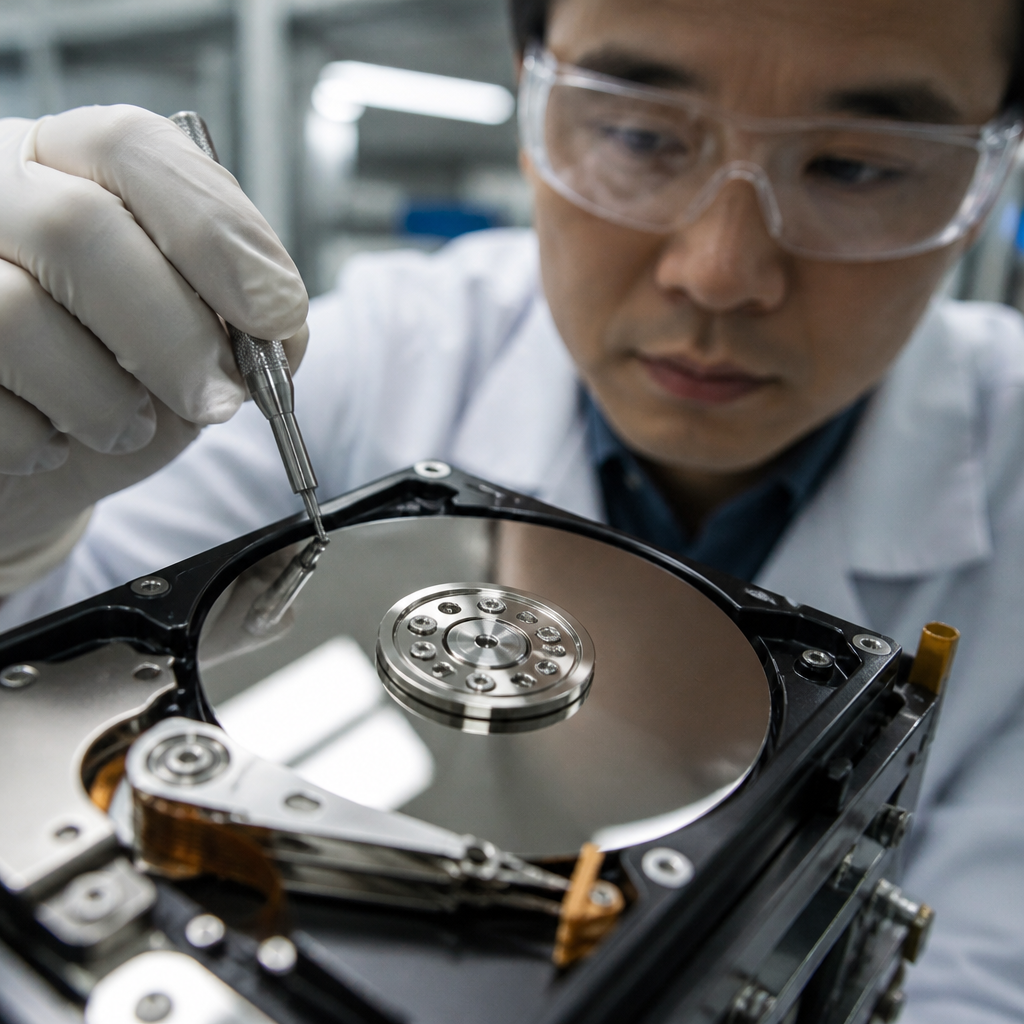
IBM’s magnetic storage breakthroughs turned abstract computing power into a practical information system, and San Jose became one of the places where that transformation took shape. In the history of computing, storage means the methods used to record, retain, and retrieve data; magnetic storage uses patterns written onto coated surfaces such as tape, drums, or disks. Those patterns sound simple today, yet they solved a foundational problem: computers are only useful at scale when information can be kept cheaply, accessed reliably, and updated quickly. That is why any serious history of computing, storage, and the internet must spend time in San Jose, where IBM researchers and engineers helped move data handling from paper files and punch cards into the modern age.
I have worked with archives, legacy infrastructure documentation, and storage migration projects long enough to see how often this history gets flattened into a single invention story. The reality is more consequential. IBM’s work around magnetic recording, disk drives, file access methods, and storage systems engineering created the operational backbone for banking, airline reservations, manufacturing, government records, and eventually networked services. San Jose mattered because it brought together research, product development, manufacturing discipline, and customer feedback in one ecosystem. The result was not just a faster machine, but a repeatable way to manage information at business scale.
This hub article covers the central arc of that story and connects the broader “Computing, Storage & Internet” landscape. It explains how magnetic storage evolved, why IBM’s San Jose operation became so influential, which products changed the industry, and how those changes fed directly into databases, enterprise computing, and online life. If you want the shortest answer, it is this: San Jose helped build the data age by turning magnetic storage into dependable infrastructure rather than experimental hardware.
Why Magnetic Storage Changed Computing
Before magnetic storage matured, information handling was constrained by sequential media, manual filing, and slow update cycles. Punch cards could represent data well enough for batch processing, but changing one customer record often meant recreating an entire set. Magnetic tape improved capacity and cost, and it became essential for backup and batch workloads, yet tape is inherently sequential. To reach the tenth record, a system may need to pass through the first nine. That is acceptable for archival jobs; it is poor for interactive business operations.
Magnetic disk storage changed that equation through direct access. Instead of scanning long sequences, a system could move a read/write head to a specific track and sector, then retrieve or update data far more quickly. This made random access practical for inventory systems, account lookups, reservations, and payroll corrections. In plain terms, disk storage allowed computers to answer operational questions during the workday instead of after it. The shift from batch to near-real-time business processing is one of the most important transitions in computing history.
IBM did not invent every magnetic concept alone, but it industrialized the full stack: media, heads, controllers, enclosures, reliability methods, and software integration. That systems view matters. A disk drive without dependable error handling, service procedures, and access software would remain a laboratory curiosity. IBM helped make storage a managed product category, and San Jose became one of the company’s most important centers for doing that work.
The San Jose Laboratory and the Rise of Disk Storage
IBM established the San Jose Research Laboratory in the 1950s, and the region quickly became a strategic site for storage innovation. Long before “Silicon Valley” became shorthand for startups and semiconductors, San Jose offered engineering talent, space for development and manufacturing, and proximity to customers adopting large-scale data processing. IBM used that environment to connect research with commercial product needs. The local culture rewarded practical engineering as much as scientific novelty.
The landmark achievement associated with San Jose is the IBM 350 Disk Storage Unit, announced in 1956 as part of the IBM 305 RAMAC system. RAMAC stands for Random Access Method of Accounting and Control, and the name itself captures the breakthrough. The IBM 350 stored roughly 5 million characters using fifty 24-inch platters. By current standards that capacity is tiny, but its significance lies elsewhere: it brought random access storage into business computing in a form customers could buy, operate, and integrate into workflows.
Engineers in San Jose were solving hard physical problems, not merely drawing product roadmaps. They had to improve head positioning, maintain tolerances across spinning media, reduce contamination risk, manage heat, and keep data readable despite wear and vibration. These are classic storage engineering challenges. When people casually say IBM “invented the hard drive,” what they usually mean is that IBM’s San Jose teams transformed magnetic disks into a viable commercial storage platform. That distinction is important because platform creation changes industries.
Key IBM Storage Milestones That Shaped the Data Age
Several IBM developments after RAMAC extended San Jose’s influence and helped define modern storage expectations. The first was the steady increase in areal density, the amount of data that can be stored on a given surface area. Better heads, media coatings, servo control, and signal processing raised capacity while lowering cost per bit. This economic trend is what made digital recordkeeping expand from elite institutions to ordinary enterprises.
A second milestone was the removable disk pack, introduced with the IBM 1311 Disk Storage Drive in the early 1960s. Removable media gave organizations flexibility for transport, backup rotation, and workload separation. It also reflected a period when physical media handling still mattered operationally. Later systems would move toward sealed units for reliability, but removable packs were a pragmatic bridge between manual records management and modern online storage.
A third milestone was the IBM 3340, announced in 1973 and widely known by its internal nickname, Winchester. Its design improvements, including low-mass heads and a more controlled head-disk environment, influenced later hard disk architecture across the industry. Storage historians debate oversimplified origin stories, but there is broad agreement that Winchester-class ideas helped set the pattern for future sealed disk drives.
| IBM system | Year | Why it mattered |
|---|---|---|
| IBM 350 RAMAC | 1956 | Commercialized random access disk storage for business data processing |
| IBM 1311 | 1962 | Popularized removable disk packs for flexible operations |
| IBM 3340 Winchester | 1973 | Advanced sealed-drive design concepts that influenced later hard disks |
These products mattered because they solved business problems at the right time. A bank could update account data more efficiently. An airline could support faster reservation lookups. A manufacturer could tie inventory records to production planning. Once storage became sufficiently fast, reliable, and affordable, software developers could design systems around immediate access instead of delayed reconciliation.
From Storage Hardware to Information Systems and Networks
Magnetic storage did more than improve hardware; it changed software architecture and institutional behavior. Database management depends on persistent, addressable storage. File systems, indexing methods, transaction processing monitors, and backup regimes all become more capable when direct access storage is available. IBM’s mainframe ecosystem, including operating systems and data management tools, evolved alongside these storage gains. In practice, storage and software co-developed.
This is where the broader “Computing, Storage & Internet” perspective becomes essential. The internet did not emerge from networking alone. Networked services required machines that could store user records, messages, logs, content, and transactions durably. Early online banking, airline systems such as SABRE, and large government databases all depended on storage principles refined during the magnetic era. Even today’s cloud systems retain the same core concerns: latency, throughput, fault tolerance, integrity, and cost per stored unit.
San Jose’s role also extends into standards of engineering discipline. Storage products require measurable reliability targets, serviceability, and error management. Techniques such as redundancy, bad block handling, channel control, and later RAID-style thinking all grow from the recognition that data is more valuable than the device holding it. In every enterprise migration I have seen, the real objective is not moving hardware; it is preserving information fidelity while maintaining acceptable recovery times. That mindset traces directly to the storage culture IBM helped establish.
The legacy remains visible across the modern stack. Personal computers adopted hard drives. Data centers scaled them by the thousands. Internet companies built search, email, retail, and streaming on storage layers designed for constant retrieval. Solid-state media now dominates many workloads, yet disk still underpins enormous archival and cloud environments because cost economics continue to matter. The data age was not built by processors alone. It was built when storage became systematic, affordable, and trusted.
Why This History Still Matters
Understanding IBM’s magnetic storage breakthroughs is not nostalgia; it is a practical way to understand how digital civilization was assembled. San Jose helped prove that information infrastructure advances through engineering ecosystems, not isolated inventions. The city’s contribution sits at the intersection of research, manufacturing, systems design, and customer adoption. That combination turned magnetic storage into the foundation for enterprise computing and, later, internet-scale services.
The main lesson is clear. When storage improves, entire categories of software and business process become possible. That was true for RAMAC-era accounting, true for reservation systems, and true for today’s cloud platforms and AI data pipelines. For readers exploring historical perspectives on computing, storage, and the internet, this article serves as the hub: start with magnetic storage, then follow the chain outward to databases, networking, personal computing, and the web. If you are building or studying modern systems, revisit San Jose’s storage history and use it as a guide to how foundational infrastructure creates lasting change.
Frequently Asked Questions
What were IBM’s most important magnetic storage breakthroughs, and why did they matter so much?
IBM’s magnetic storage breakthroughs mattered because they turned computing from a narrow, calculation-focused activity into a practical system for managing real information. Early computers could process numbers, but without reliable ways to store and retrieve growing volumes of data, their usefulness remained limited. Magnetic storage changed that by allowing information to be recorded as patterns on coated surfaces such as tape, drums, and later disks. That meant data could be saved, updated, accessed again, and organized in ways that supported actual business, scientific, and government needs.
Among the most important advances were improvements in magnetic tape systems, magnetic drum memory, and especially magnetic disk storage. Tape was valuable for sequential recordkeeping and large-scale archiving, while drums offered faster access than tape for certain computing tasks. The real leap came with disk storage, which made random access practical. Instead of reading through data in order from beginning to end, a computer could move much more directly to the needed information. That capability transformed how organizations handled payroll, inventory, reservations, accounting, and other data-heavy operations.
IBM helped make magnetic storage dependable, manufacturable, and commercially useful at scale. The breakthrough was not just inventing a storage medium, but refining it into a system: read/write heads, rotating media, control electronics, data organization methods, and production processes all had to work together. In that sense, IBM’s contribution was foundational. It helped establish the model for modern data storage: information recorded magnetically, retrieved efficiently, and managed as a living resource rather than a static record.
How did magnetic storage help create the modern “data age”?
The data age depends on one simple reality: information has to persist beyond a single calculation. Magnetic storage made that possible in a practical, scalable way. Before efficient storage, computing power alone was not enough. A machine might perform an impressive task, but if it could not reliably retain records, update them, and retrieve them when needed, it could not support the continuous information workflows that define modern society.
Magnetic storage changed that equation by allowing data to be captured, organized, and reused. Businesses could maintain customer records, banks could track transactions, airlines could manage reservations, manufacturers could monitor inventory, and governments could process vast administrative systems. In other words, magnetic storage gave institutions memory. It made information systems durable rather than temporary, and that durability is one of the core conditions of the data age.
Just as important, magnetic storage supported scale. As organizations grew, so did the amount of information they had to handle. Paper systems and limited machine memory could not keep up. Magnetic media provided higher capacity, better efficiency, and increasingly faster access. Over time, those gains helped normalize the expectation that data should be available, searchable, updateable, and useful in real time or near real time. That expectation now underlies everything from enterprise databases to cloud computing. IBM’s work in magnetic storage did not merely improve computers; it helped make information itself the central operational asset of the modern world.
Why was San Jose significant in IBM’s magnetic storage story?
San Jose was significant because it became one of the key places where magnetic storage moved from concept to industrial reality. The region gave IBM a setting in which research, engineering, manufacturing, and product development could reinforce one another. That matters because storage breakthroughs are rarely the result of theory alone. They require experimentation with materials, mechanics, electronics, precision fabrication, and system integration. San Jose became one of the environments where that demanding work could be done at a high level.
IBM’s presence in San Jose connected the company’s storage ambitions to a broader culture of technological innovation emerging in California. Long before Silicon Valley became synonymous with software platforms and venture capital, the region was already proving valuable for advanced electronics and engineering. In that setting, IBM teams were able to refine magnetic storage technologies into reliable products that businesses could actually use. The result was not just invention, but operational deployment—an essential distinction in the history of computing.
San Jose also symbolizes a wider shift in how computing developed in the United States. Innovation was no longer confined to a few traditional industrial centers. New regional hubs began shaping the future of technology, and San Jose was one of them. In IBM’s magnetic storage story, the city represents the local, hands-on engineering work that helped build the infrastructure of the information age. It was one of the places where abstract computing power was turned into a durable, scalable system for storing the world’s growing data.
What is magnetic storage, and how does it differ from other ways of storing information?
Magnetic storage is a method of recording data by altering the magnetic properties of a coated surface. That surface may take the form of tape, a drum, or a disk. Data is written as patterns that represent information, and those patterns can later be read back by the machine. While the idea may sound straightforward today, it was a profound technical achievement because it offered a practical way to preserve machine-readable information in large quantities.
What made magnetic storage especially powerful was its balance of capacity, reusability, and access speed. Compared with punched cards or paper records, magnetic media could hold far more information in a more compact and flexible form. Compared with purely temporary internal memory, magnetic storage allowed data to remain available after a task ended. And unlike some earlier storage methods, magnetic disks in particular enabled much faster retrieval of individual records, which was crucial for interactive and transactional systems.
The key difference between magnetic storage and other methods is that it supports repeated reading and writing on media designed for machine use at scale. Optical and solid-state storage would come later with their own advantages, but magnetic storage was one of the first technologies to make large-scale digital recordkeeping economically and operationally feasible. For decades, it formed the backbone of computing infrastructure because it offered a practical combination of permanence, flexibility, and performance. That is why it occupies such a central place in the history of information technology.
Why is IBM’s magnetic storage legacy still relevant today?
IBM’s magnetic storage legacy remains relevant because the basic challenge it addressed has never gone away: computing is only truly useful when information can be retained, organized, and retrieved efficiently. Modern systems may use cloud architectures, solid-state drives, distributed databases, and advanced software layers, but they still depend on principles that magnetic storage helped establish. Those principles include persistent data management, scalable access, reliable recording, and the idea that storage is not a peripheral feature but a core part of computing itself.
The legacy is also relevant because IBM’s work demonstrated how major technological progress often comes from integrating many disciplines rather than relying on a single invention. Magnetic storage required advances in materials science, mechanical engineering, electronics, manufacturing quality, and information system design. That pattern still defines modern infrastructure. Today’s data centers, for example, rely on similarly complex coordination across hardware, software, networking, and operations.
Finally, IBM’s storage breakthroughs matter historically because they helped shape the everyday expectations people now have about technology. We assume records can be saved, searched, updated, backed up, and made available across time and distance. Those assumptions are so ingrained that they feel natural, but they were built through decades of storage innovation. San Jose’s role in that process highlights how place, engineering talent, and industrial execution can combine to influence the future. IBM’s magnetic storage story is therefore not just about old hardware; it is about the creation of the practical information systems that made the modern digital world possible.