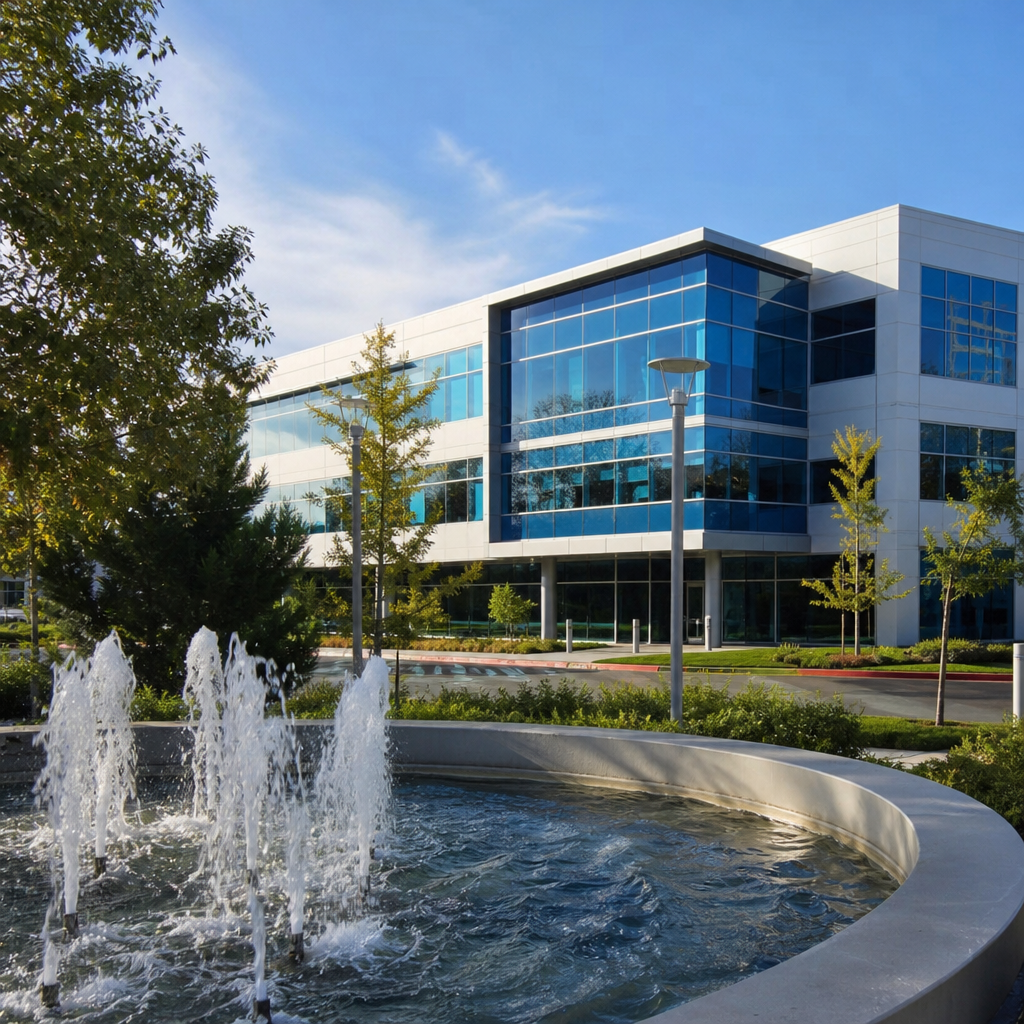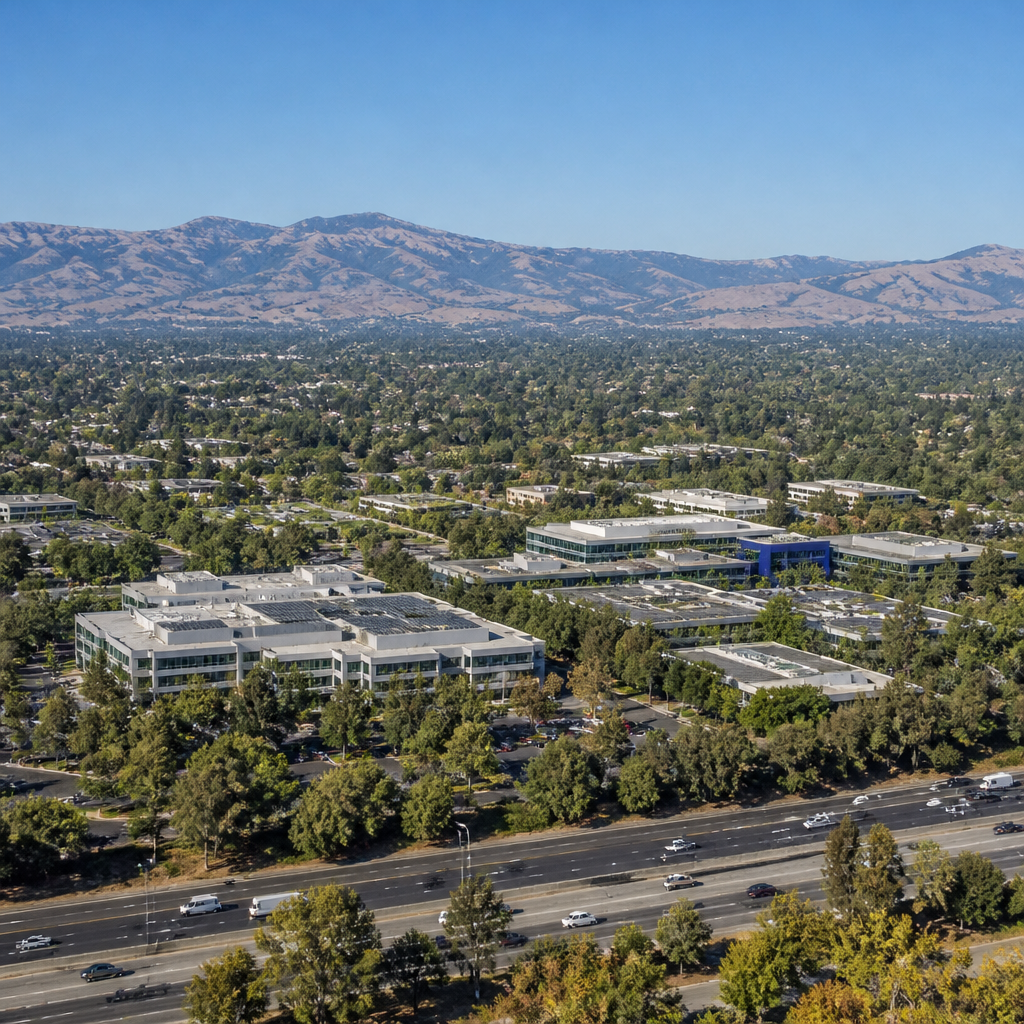
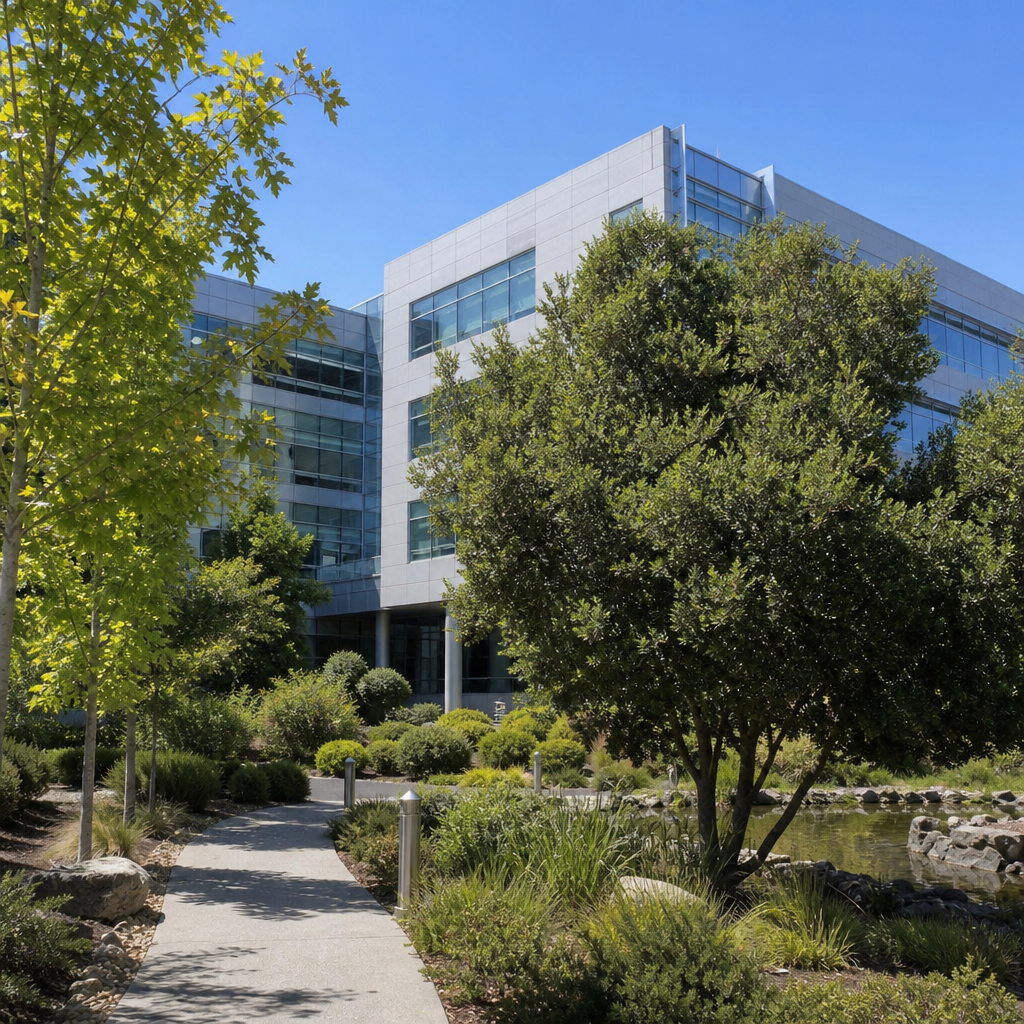
IBM Almaden Research Center stands as one of Silicon Valley’s most influential research institutions, shaping computing, storage, and internet technologies across several decades. Located in San Jose, California, Almaden has served as IBM’s West Coast research hub since 1986, when the company consolidated earlier San Jose laboratories into a new campus designed for long-horizon science and engineering. In practice, that means Almaden has done more than publish papers. It has created technologies that reached enterprise data centers, consumer devices, cloud infrastructure, and the broader architecture of the modern internet.
To understand why IBM Almaden Research Center matters, it helps to define the scope of its work. Computing research covers hardware, software, algorithms, artificial intelligence, databases, and human interaction with machines. Storage research includes magnetic disk technology, tape systems, data reliability, retrieval, and the physical science behind recording information at ever higher densities. Internet research spans networking, web search, security, distributed systems, and the management of information moving across global digital networks. Almaden is unusual because it has contributed meaningfully to all three domains rather than specializing in only one.
I have found that Almaden is easiest to explain as a bridge between basic science and deployed systems. Many laboratories excel at exploratory work; fewer can connect materials science, computer science, and commercial engineering in one place. Almaden repeatedly did that. Its researchers helped advance disk storage inherited from IBM’s earlier San Jose operations, pursued breakthroughs in data mining and search, and built systems thinking that supported enterprise computing at internet scale. For readers exploring historical perspectives on computing, storage, and internet development, Almaden offers a single institution through which many of the industry’s biggest transitions can be traced.
This hub article covers those transitions comprehensively. It explains how Almaden fits into the history of hard drives and magnetic storage, how its computing research influenced databases and artificial intelligence, and how its internet-era work supported search, information retrieval, and large-scale systems. It also highlights the wider significance of the lab’s interdisciplinary model. If you want a starting point for understanding how corporate research shaped the technical foundations of digital life, IBM Almaden Research Center is one of the strongest places to begin.
From San Jose Disk Labs to Almaden’s Interdisciplinary Mission
IBM Almaden did not emerge in a vacuum. Its roots run directly to IBM’s San Jose Research Laboratory, the site historically associated with the hard disk drive. IBM introduced the RAMAC 305 in 1956, and that earlier San Jose environment became central to storage innovation for decades. By the time Almaden opened in 1986, IBM already had deep expertise in magnetic recording, head design, servo control, and data access systems. Almaden inherited that lineage and expanded it into a broader mission suited to Silicon Valley’s changing landscape.
The timing mattered. During the 1980s and 1990s, computing was moving from centralized mainframe environments toward distributed enterprise systems, personal computing, and networked information access. A research center focused only on disk mechanics would have been too narrow. Almaden instead brought together physicists, chemists, materials scientists, computer scientists, and mathematicians. That mix allowed the lab to work simultaneously on the physical limits of storage and the software systems required to use rapidly growing data volumes effectively.
In practical terms, this interdisciplinary structure helped IBM stay relevant as technical bottlenecks shifted. When areal density in magnetic storage became the critical issue, Almaden had the materials and device expertise to respond. When organizations began drowning in digital information, the lab had database and retrieval specialists who could build tools for search, mining, and analytics. That flexibility is one reason Almaden remains important in historical analysis: it reflects how elite industrial research adapted when computing stopped being only about machines and became equally about information.
Storage Research: Extending the Economics of Digital Information
Storage is the most direct path to Almaden’s historical importance. The economics of modern computing depend on storing vastly more data at steadily lower cost per bit, while preserving reliability over years or decades. Almaden researchers contributed to that trajectory through work on magnetic recording physics, thin-film media, read-write technologies, signal processing, and archival systems. These advances mattered because better storage does not simply make disks larger; it changes what software developers, enterprises, and internet companies can afford to build.
A useful way to think about storage progress is through areal density, usually measured as the amount of data that can be stored per square inch of disk surface. Across the late twentieth century, hard drive capacity grew dramatically as labs like Almaden improved media coercivity, head sensitivity, track density, and error correction. Those terms are not marketing language. Coercivity affects how magnetic domains resist unwanted change. Head sensitivity influences how accurately tiny signals can be read. Track density determines how closely data paths can be placed without interference. Error correction raises usable reliability from raw physical signals that would otherwise be too noisy.
Almaden also worked on storage beyond conventional disks, including tape and archival technologies that remain crucial in enterprise and research environments. Large organizations still use tape because it offers favorable cost, energy efficiency, and long-term retention for backup and compliance workloads. In industry discussions, tape is often treated as old technology, but that is historically careless. Archive systems underpin cloud providers, scientific repositories, media libraries, and regulated industries. Almaden’s role in preserving and improving these systems demonstrates how serious research often focuses not on what is fashionable, but on what remains economically and operationally necessary.
Computing Research: Databases, Data Mining, and Intelligent Systems
As storage capacity expanded, raw data became less scarce than the ability to organize and interpret it. Almaden addressed that challenge through computing research in databases, information management, machine learning, and knowledge discovery. Within IBM, this work mattered for enterprise customers handling structured and unstructured information at scale. More broadly, it anticipated a world in which businesses would compete on how effectively they could search, analyze, and automate around massive data collections.
One of the strongest examples is data mining. Before “big data” became a widespread phrase, industrial researchers at labs including Almaden were developing methods to detect patterns, classify records, infer relationships, and surface useful information from very large datasets. Data mining is not magic; it combines statistical models, indexing strategies, efficient query execution, and domain-specific interpretation. In sectors such as banking, retail, telecommunications, and healthcare, these methods made it possible to identify fraud, predict churn, recommend actions, and improve operations from data that would have been unmanageable with manual analysis.
Almaden also became associated with advanced question answering and cognitive computing research through projects such as those feeding into IBM’s later Watson efforts. Although Watson itself drew from multiple IBM research sites, Almaden played a significant role in the broader ecosystem of natural language processing, information retrieval, and machine learning inside the company. Historically, this matters because modern AI systems did not appear fully formed with large language models. They emerged from decades of work on ranking, parsing, evidence scoring, knowledge representation, and probabilistic reasoning across institutions like Almaden.
Internet and Information Retrieval: Managing the Web-Scale Information Problem
When the internet shifted from academic network to commercial platform, a new bottleneck appeared: information abundance. The problem was no longer merely connecting computers. It was indexing, retrieving, securing, and managing an exploding quantity of digital content. Almaden researchers contributed to this layer of the stack through information retrieval, scalable systems, search technologies, and tools designed to help organizations find useful knowledge inside growing repositories.
In plain terms, search is a systems problem as much as an algorithm problem. Good retrieval requires crawling or ingesting content, extracting signals, building indexes, ranking results, and returning answers quickly enough to feel immediate. In enterprise settings, the challenge becomes harder because information is fragmented across email, databases, document stores, records systems, and internal web properties. Almaden’s work helped frame search as a knowledge access problem, not just a keyword match exercise. That perspective became foundational as both public web search and enterprise search matured.
| Domain | Key Almaden Contribution Area | Why It Mattered |
|---|---|---|
| Storage | Magnetic recording, tape, archival systems | Lower cost per bit and reliable long-term retention |
| Computing | Databases, data mining, AI methods | Turned large datasets into usable operational insight |
| Internet | Information retrieval, scalable knowledge access | Improved discovery of relevant content in growing networks |
Security and trust also became inseparable from internet-scale computing. Any useful system for digital information exchange must protect integrity, confidentiality, and availability. While Almaden is not defined solely by cybersecurity, its broader systems research operated in a world increasingly shaped by secure transactions, authenticated access, and dependable infrastructure. That context is important for historical readers because internet progress was never just about speed or scale. It depended on institutions capable of integrating reliability, governance, and information quality into technical design.
Why Almaden Matters as a Historical Hub for Computing, Storage, and Internet Research
IBM Almaden Research Center matters because it shows how major technological eras overlap rather than replace one another cleanly. The history of computing is not a straight line from hardware to software to the internet to AI. Those layers compound. Better storage enables larger databases. Better databases enable stronger search and analytics. Better retrieval and machine learning improve internet services and enterprise systems. Almaden’s record makes that interdependence visible in a single institution.
It also demonstrates the enduring value of industrial research labs. Universities generate foundational ideas, and startups commercialize focused products, but corporate labs like Almaden often solve the translation problem between science and deployment. They can test new materials, benchmark production workloads, and refine systems under real operational constraints. For historians and practitioners alike, that makes Almaden an essential lens on how innovation actually reaches the market.
As a hub for the broader “Computing, Storage & Internet” topic, Almaden provides a coherent anchor for related histories: hard disk development, tape archives, enterprise databases, information retrieval, AI question answering, and large-scale knowledge systems. The key takeaway is simple: decades of digital progress depended not only on famous consumer products, but on persistent research institutions that improved the hidden infrastructure underneath them. Explore the connected articles in this subtopic to see how those technical threads developed, intersected, and continue shaping modern computing.
Frequently Asked Questions
What is IBM Almaden Research Center, and why is it important in the history of computing?
IBM Almaden Research Center is IBM’s major West Coast research laboratory, located in San Jose, California, in the heart of Silicon Valley. Since opening in 1986, it has served as a central site for long-term scientific and engineering work spanning computer science, data storage, materials science, artificial intelligence, databases, and internet-era technologies. Its importance comes from the fact that it was not built merely to support short-term product development. Almaden was designed to explore ideas that could influence the future of computing over many years, and that mission helped the lab become one of the most respected industrial research centers in the world.
What makes Almaden especially significant is the way it bridged fundamental research and real-world impact. Many research institutions publish influential papers, but Almaden also became known for producing technologies and concepts that shaped IBM products, enterprise computing, and broader industry practices. Over the decades, the lab contributed to advances in magnetic storage, database systems, information retrieval, service computing, and data-centric research. In that sense, Almaden represents a classic Silicon Valley model at scale: deep technical research carried out with enough practical orientation to influence how businesses store information, analyze data, and build large computing systems.
Why did IBM establish Almaden in San Jose in 1986?
IBM established Almaden in 1986 as part of a broader effort to consolidate and strengthen its California-based research activities. The company had already maintained important technical operations in the San Jose area, particularly related to storage and advanced computing, but bringing those efforts together into a dedicated research campus created a stronger institutional base for long-horizon innovation. San Jose was a natural choice because it placed IBM directly inside Silicon Valley’s ecosystem of semiconductor firms, universities, startups, and engineering talent.
The timing also mattered. By the mid-1980s, computing was changing rapidly, with personal computers, networking, storage needs, and enterprise information systems all expanding at once. IBM needed a research center that could look beyond immediate market cycles and help define future technical directions. Almaden gave the company exactly that: a place where scientists and engineers could work on difficult problems in areas such as data management, advanced materials, automation, and knowledge systems. Its location in Silicon Valley also made collaboration easier, both formally and informally, allowing IBM to remain connected to emerging technical trends while preserving the depth and scale of a major corporate research operation.
What kinds of technologies and research areas has IBM Almaden contributed to over the years?
Almaden’s contributions span an unusually wide set of disciplines, which is one reason the lab has maintained such a strong reputation. One of its most visible areas of influence has been storage technology. IBM’s long legacy in disk drive innovation is closely tied to its San Jose and Almaden research presence, and the lab played a major role in advancing the science and engineering behind high-density magnetic storage. Those efforts helped improve the way information could be stored reliably, compactly, and economically at a time when data volumes were growing dramatically.
Beyond storage, Almaden became a major center for database research, information management, and analytics. Researchers there worked on methods for organizing large volumes of data, improving query performance, extracting useful knowledge from complex information systems, and making enterprise data more accessible. As the internet and digital business expanded, Almaden also contributed to fields such as search, web-scale information processing, machine learning, and service-oriented computing. The lab’s work frequently sat at the intersection of theory and application, meaning its advances were often influential not just in academic circles but also in the architecture of commercial systems and enterprise platforms.
Almaden has also been known for interdisciplinary science, including work in materials, nanotechnology, and novel computing concepts. That broad portfolio reflects IBM’s historical view that important breakthroughs often happen when researchers from different backgrounds tackle common problems together. Instead of focusing on a single product category, Almaden helped address the larger technical foundations of modern computing infrastructure.
How has IBM Almaden Research Center influenced Silicon Valley and the broader tech industry?
IBM Almaden’s influence extends well beyond IBM itself. As one of Silicon Valley’s major industrial research institutions, it helped demonstrate that sustained, basic and applied research could coexist with commercial technology development. In a region often associated with fast-moving startups and short product cycles, Almaden offered a different but equally important model: patient, high-level scientific work aimed at solving foundational problems. That approach contributed to the technical maturity of the Valley by reinforcing the idea that breakthrough innovation often depends on years of experimentation, publication, and refinement.
The lab also influenced the broader industry through talent, collaboration, and technology transfer. Researchers at Almaden published widely, participated in leading conferences, worked with universities, and helped shape professional communities in areas such as data management, storage systems, and AI-related research. Many ideas developed or advanced there informed enterprise software, hardware architectures, and data-handling techniques used across industries. Even when Almaden’s work did not become a standalone consumer-facing product, it often affected the underlying tools and systems that businesses relied on.
In practical terms, Almaden mattered because it helped move advanced research into operational environments. Its work contributed to the technical backbone behind how organizations store information, process transactions, analyze large datasets, and deploy intelligent systems. That kind of behind-the-scenes influence is easy to overlook, but it is precisely what makes institutions like Almaden so important in the long history of computing.
What is the legacy of IBM Almaden Research Center today?
The legacy of IBM Almaden Research Center is best understood as a combination of scientific excellence, technical depth, and long-term influence on computing infrastructure. Over several decades, the lab helped shape critical areas of modern technology, from data storage and databases to search, analytics, and intelligent information systems. It stands as a reminder that some of the most important advances in technology come not from a single famous product launch, but from years of disciplined research that gradually changes what computers can do and how organizations use them.
Today, Almaden’s legacy also reflects a broader historical role within IBM Research and within Silicon Valley itself. It represents IBM’s commitment to maintaining a serious presence in frontier science while staying connected to one of the world’s most dynamic technology regions. For historians of computing, enterprise technology professionals, and anyone interested in how innovation actually happens, Almaden is a compelling example of how research labs shape industries from the inside out. Its story is not just about one campus in San Jose; it is about the power of sustained inquiry to influence decades of technological progress.