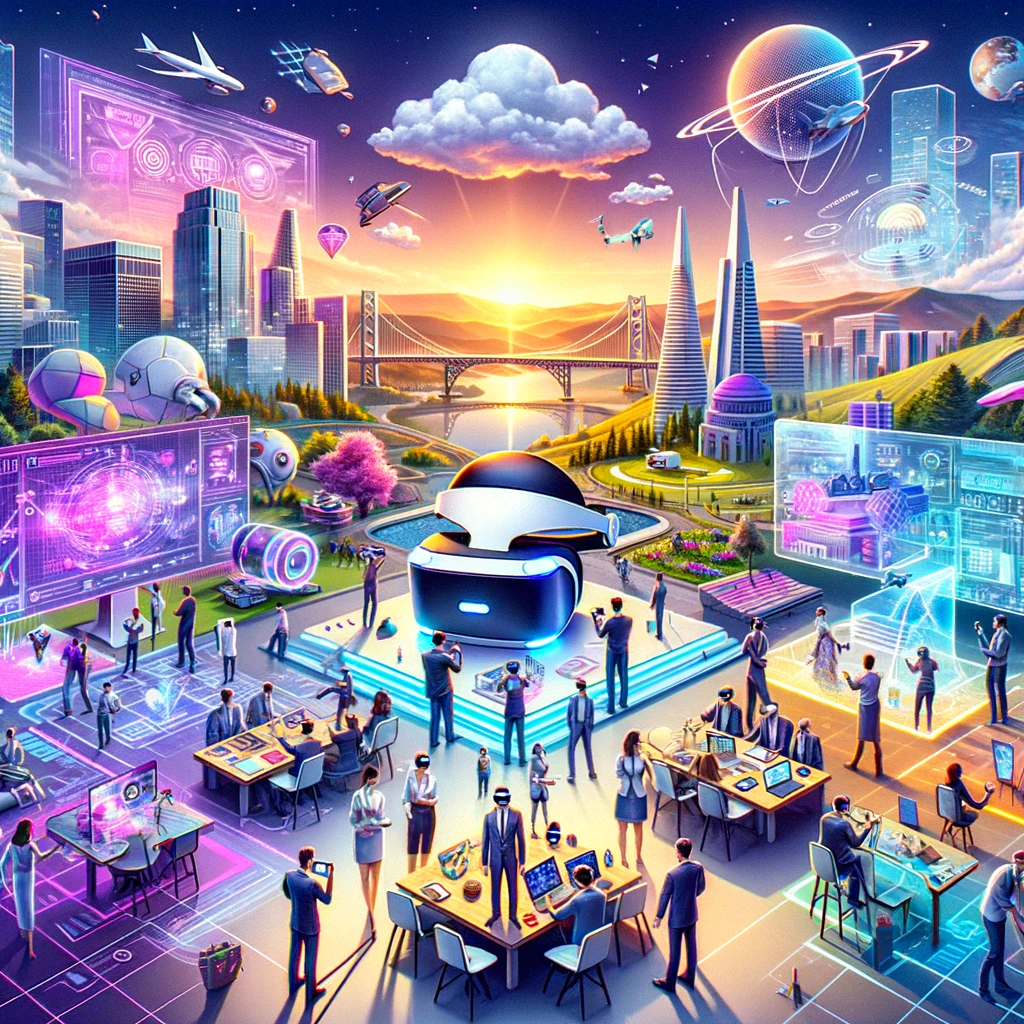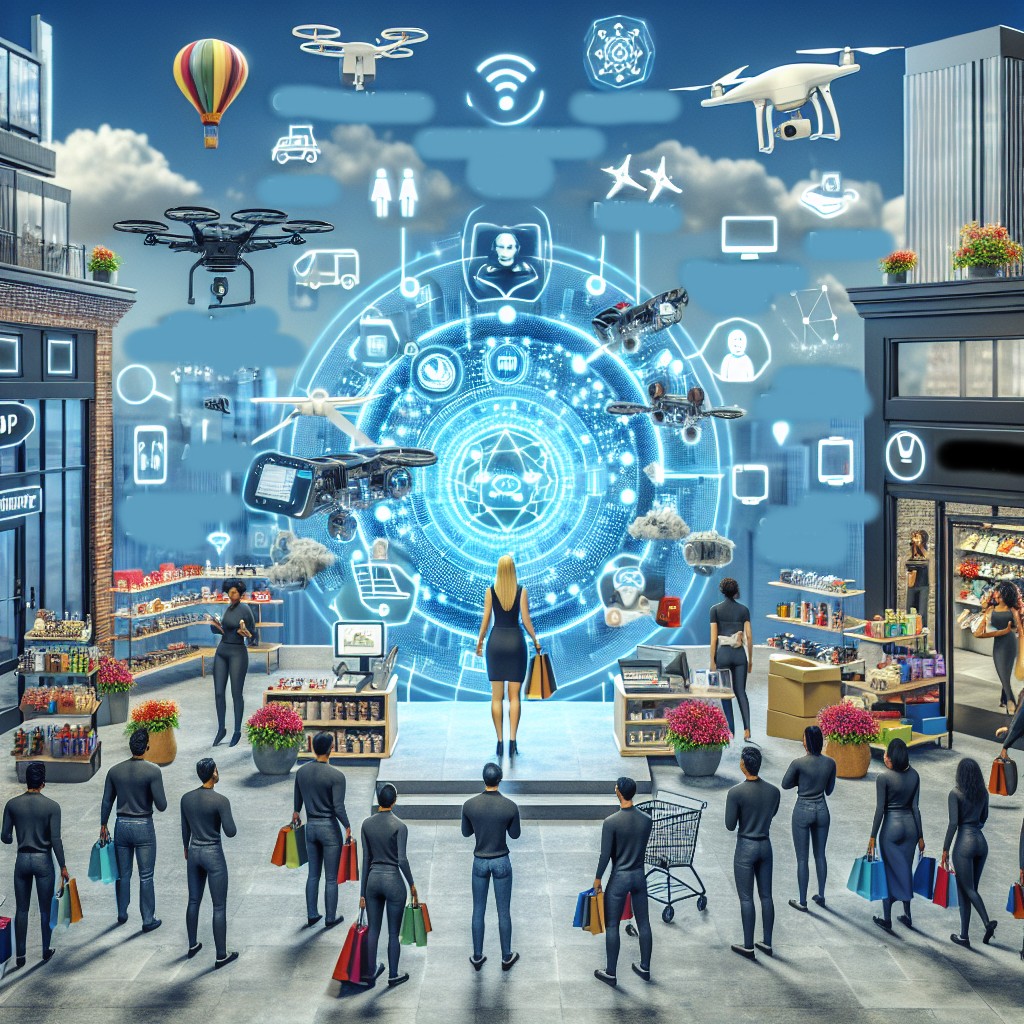
The retail landscape has witnessed a seismic shift over the past few years, largely propelled by the relentless march of technology. Central to this evolution is Silicon Valley, the cradle of technological innovation, where startups and tech giants alike are crafting the future of retail. As traditional retail models face increasing pressure from e-commerce, Silicon Valley has become a cauldron of emerging technologies and disruptive startups that are redefining consumer experiences. From artificial intelligence and blockchain to virtual reality and Internet of Things (IoT), the tech innovations emanating from Silicon Valley are not only enhancing operational efficiencies but also reshaping how consumers interact with brands and products. This article delves into how Silicon Valley’s technological advancements are setting new benchmarks in the retail sector, offering a sneak peek into what the future holds for this ever-evolving industry.
Artificial Intelligence and Machine Learning in Retail
Artificial intelligence (AI) and machine learning (ML) are at the forefront of retail innovation. Silicon Valley companies are leveraging these technologies to offer personalized shopping experiences, optimize inventory management, and enhance customer service. For instance, AI-driven recommendation engines analyze customer data to suggest products tailored to individual preferences, boosting sales and customer satisfaction. Amazon’s AI-based suggestions and chatbots employed by various e-commerce sites for 24/7 customer service are prime examples of how AI is revolutionizing retail.
AI also plays a pivotal role in demand forecasting and inventory management. Retailers can now predict buying patterns and stock levels with greater accuracy, reducing the risks of overstocking or stockouts. Machine learning algorithms analyze vast amounts of data, such as sales history and seasonal trends, to deliver actionable insights. This improves supply chain efficiency and reduces operational costs, ultimately leading to better pricing strategies for consumers.
Another remarkable innovation is the use of AI in visual search. Startups like ViSenze and tech giants like Google are integrating AI to allow consumers to search for products using images. This technology significantly enhances the user experience, as shoppers can simply upload a photo of an item they are interested in, and the AI will find similar products available for purchase.
Blockchain and Retail
Blockchain technology, though often associated with cryptocurrencies, is finding increasing relevance in the retail sector. The most profound impact of blockchain in retail lies in supply chain transparency and security. By enabling a decentralized and immutable ledger, blockchain ensures that every transaction and movement of goods is recorded and transparent, reducing fraud and improving trust between retailers and consumers.
Startups in Silicon Valley are developing blockchain-based solutions that allow consumers to trace the origin and journey of products. This is particularly beneficial in sectors like food and fashion, where consumers are becoming increasingly concerned about ethical sourcing and sustainability. For example, Provenance, a Silicon Valley-based startup, utilizes blockchain to verify the origins and authenticity of products, providing transparency from farm to fork or factory to closet.
Additionally, blockchain has the potential to revolutionize loyalty programs and digital payments. Traditional loyalty programs can be cumbersome and prone to fraud. Blockchain can streamline these systems by eliminating intermediaries and providing a secure, efficient way to manage rewards. Furthermore, with the rise of digital currencies, blockchain offers a secure option for transactions, appealing to tech-savvy consumers looking for decentralized payment options.
Virtual and Augmented Reality in Retail
Virtual reality (VR) and augmented reality (AR) are among the most exciting advancements from Silicon Valley impacting the retail sector. These technologies offer immersive shopping experiences that blur the lines between the physical and digital worlds. Companies like Oculus, now a part of Facebook, and startups like Modiface (acquired by L’Oréal) are pioneering the use of VR and AR in retail.
AR applications in retail include virtual try-ons and fitting rooms. Sephora, for instance, uses AR to allow customers to try on makeup virtually, enhancing the online shopping experience and reducing product returns. Similarly, clothing retailers are adopting AR to offer virtual fitting rooms, enabling consumers to see how clothes will look and fit without physically trying them on.
VR, on the other hand, is transforming the way consumers experience products. Retailers are creating virtual stores where customers can walk through aisles, view products in 3D, and make purchases just as they would in a physical store. This not only provides a novel shopping experience but also allows retailers to reach a global audience without the constraints of physical store locations. Additionally, VR can be used for product demonstrations and tutorials, offering an interactive way to showcase features and benefits.
The Role of IoT in Retail
The Internet of Things (IoT) is another technological frontier that Silicon Valley is exploring to enhance the retail experience. IoT refers to a network of interconnected devices that communicate and exchange data. In the retail sector, IoT can optimize everything from inventory management to customer engagement.
Smart shelves equipped with IoT sensors can monitor inventory levels in real-time, alerting store managers when stock is low or when a product needs reordering. This reduces the chances of stockouts and ensures that shelves are always well-stocked. Additionally, IoT can track product movement within a store, providing valuable data on consumer behavior and preferences.
IoT is also enhancing the in-store experience with innovations like smart mirrors and connected fitting rooms. Smart mirrors can offer personalized recommendations based on the items a customer tries on, suggest complementary products, and even allow customers to make purchases directly from the mirror. Connected fitting rooms can provide real-time assistance, such as calling for a different size or color, without the customer needing to leave the room.
Moreover, IoT enhances logistics and supply chain management. Connected trucks and warehouses can communicate their status, reducing delays and improving the efficiency of deliveries. Cold chain logistics, crucial for perishable goods, benefit from IoT sensors that monitor temperature and humidity levels, ensuring products reach consumers in optimal condition.
Challenges and Future Directions
Despite the numerous benefits and innovations, the integration of these technologies in retail is not without challenges. One of the primary concerns is data privacy and security. With technologies like AI, IoT, and blockchain relying heavily on data, protecting consumer information becomes paramount. Retailers must ensure they are compliant with regulations and implement robust security measures to guard against breaches.
Another challenge is the high cost of implementation. Small and medium-sized retailers may find it daunting to invest in advanced technologies, potentially widening the gap between larger corporations with substantial resources and smaller players. This makes it crucial for technology providers to offer scalable solutions that can be adopted by businesses of all sizes.
Looking ahead, the future of retail will likely see an even greater convergence of these technologies. The rise of 5G networks will facilitate faster and more reliable connections, boosting the efficiency of IoT devices and enabling more sophisticated AR and VR applications. Furthermore, advancements in AI will lead to more precise and predictive analytics, allowing retailers to anticipate trends and consumer needs with unprecedented accuracy.
Collaboration between tech companies and retailers will be vital in driving these innovations. By working together, they can develop and refine technologies that address specific retail challenges and enhance the overall shopping experience. Additionally, consumer education will play a significant role in the adoption of new technologies, as retailers must ensure that customers understand and are comfortable using these innovations.
Conclusion
Silicon Valley remains at the vanguard of technological innovation, continually reshaping the retail landscape with groundbreaking advancements. From AI and machine learning to blockchain, VR, AR, and IoT, the future of retail is being crafted in the labs and minds of Silicon Valley’s brightest entrepreneurs and engineers. These technologies are not only enhancing the efficiency and effectiveness of retail operations but are also revolutionizing the way consumers interact with brands and products.
As we look to the future, the retail sector must navigate challenges related to data privacy, security, and the cost of technological adoption. However, the potential benefits far outweigh these challenges, promising a retail experience that is more personalized, efficient, and engaging than ever before.
Retailers who embrace these innovations from Silicon Valley will be well-positioned to meet the evolving demands of consumers and stay competitive in an increasingly digital world. The symbiotic relationship between technology and retail is set to flourish, driving the industry toward new horizons and redefining the shopping experience for generations to come.
In conclusion, the future of retail is bright, and Silicon Valley will continue to play a pivotal role in shaping it. By harnessing the power of technological innovations, retailers can not only survive but thrive in the ever-evolving market landscape.