Smart cities are moving from conference slides to everyday infrastructure, and Silicon Valley remains one of the clearest windows into where the model is heading next. A smart city uses connected sensors, software platforms, data analytics, and automated controls to improve public services such as transportation, energy, water, safety, and permitting. The goal is not gadget density; it is better urban outcomes. In practice, that means shorter commute times, faster emergency response, lower energy waste, cleaner streets, and more responsive local government. I have worked with startup teams and city innovation groups on pilot programs, and the consistent lesson is simple: technology only matters when it solves a measurable civic problem.
The future of smart cities matters because urban areas concentrate economic activity, emissions, housing demand, and infrastructure stress. According to the United Nations, roughly 55 percent of the world’s population already lives in cities, and that share is expected to rise. As populations grow, legacy systems struggle. Power grids face peak demand volatility, transit systems need real-time coordination, and public works departments are expected to deliver more with constrained budgets. Silicon Valley’s influence comes from its ability to compress the cycle from idea to prototype to deployment. Startups there test computer vision at intersections, AI-assisted utility forecasting, curbside logistics software, and digital permitting workflows that can spread far beyond California.
For readers following tech innovations and startups, this topic sits at the intersection of venture funding, enterprise software, climate technology, and public-sector modernization. It also serves as a hub for deeper articles on mobility technology, civic data platforms, climate resilience tools, digital twins, urban cybersecurity, and startup go-to-market strategy in government sales. Understanding the broad picture helps founders identify real procurement pain points, helps investors separate durable platforms from feature products, and helps city leaders avoid expensive pilot programs that never scale. Silicon Valley offers valuable insights, but the most useful ones are not flashy. They involve interoperability, procurement discipline, resident trust, and proof that innovation can survive contact with streets, budgets, and regulations.
How Silicon Valley Is Shaping the Smart City Stack
Silicon Valley’s most important contribution is not a single product category; it is a technology stack that combines sensing, connectivity, software orchestration, and operational decision-making. At the edge, cities increasingly deploy cameras, lidar, environmental monitors, smart meters, parking sensors, and connected traffic controllers. Connectivity may come from fiber, 5G, LoRaWAN, Wi-Fi, or private LTE, depending on bandwidth and reliability needs. Above that layer, cloud platforms ingest data streams into systems such as Microsoft Azure, Amazon Web Services, or Google Cloud, where APIs expose the information to city departments and approved vendors. The top layer adds analytics, dashboards, automation rules, and increasingly AI models that detect anomalies and recommend actions.
What I have seen in successful deployments is a shift away from isolated point solutions. Ten years ago, a city might buy smart streetlights from one vendor, parking software from another, and water leak monitoring from a third, with almost no interoperability. Today, the strongest platforms use open APIs, geospatial standards, and identity controls that let multiple systems exchange information securely. Esri remains central because geographic information systems provide the shared map layer for assets, incidents, maintenance routes, and zoning constraints. Startups that understand this reality win more business than those selling a standalone dashboard with no integration path. In smart cities, the system of record matters as much as the user interface.
Silicon Valley also shapes expectations around iteration. Traditional municipal projects often followed multiyear procurement cycles and fixed requirements. Startup culture introduced minimum viable pilots, structured key performance indicators, and fast feedback loops. The best city innovation offices now run pilots with baseline metrics, success thresholds, privacy reviews, and explicit scale-or-stop decisions. That discipline prevents “pilot purgatory,” where promising tools never become budgeted programs. It also creates better conditions for startup success, because founders can prove impact with hard numbers instead of general claims about transformation.
Advancements Driving the Next Generation of Smart Cities
Several advances are moving smart cities from reactive administration to predictive operations. Artificial intelligence is the most visible. In transportation, AI models optimize signal timing using live traffic conditions rather than static schedules, reducing delays and idling. Companies working in this area combine video feeds, loop detectors, and historical patterns to adjust intersections corridor by corridor. Computer vision can also detect blocked bike lanes, illegal dumping, near misses, and pedestrian conflicts. The operational value comes from turning raw footage into events that public works or traffic teams can act on, often within minutes.
Digital twins are another major development. A digital twin is a dynamic software model of physical assets and systems, updated with real-world data. In cities, that can mean a 3D representation of buildings, roads, utility lines, flood zones, and traffic flows. Tools from Bentley Systems, Autodesk, Nvidia Omniverse, and Esri allow planners to simulate road redesigns, construction impacts, or flood scenarios before committing capital. This is not just visualization. During capital planning, a digital twin can reveal utility conflicts, emergency access constraints, and heat-island effects early enough to change a project design.
Climate and energy technology are equally important. Grid-interactive buildings use building management systems, occupancy sensors, and demand response software to cut peaks in electricity use. Advanced metering infrastructure gives utilities interval data for forecasting and outage management. Water utilities now deploy acoustic sensors and pressure analytics to spot leaks that were previously invisible for months. In places facing drought, that intelligence has immediate budget and resilience value. San Jose and other innovation-oriented cities have explored combining building performance standards, EV charging management, and distributed energy resources into coordinated local energy strategies rather than isolated sustainability programs.
| Advancement | Primary Use Case | Example Outcome |
|---|---|---|
| AI traffic optimization | Adaptive signal control | Lower congestion and reduced idling at busy corridors |
| Digital twins | Scenario modeling for planning | Earlier detection of design conflicts and infrastructure risk |
| Smart water analytics | Leak detection and pressure monitoring | Reduced water loss and faster maintenance response |
| Grid-interactive buildings | Energy load management | Lower peak demand and improved building efficiency |
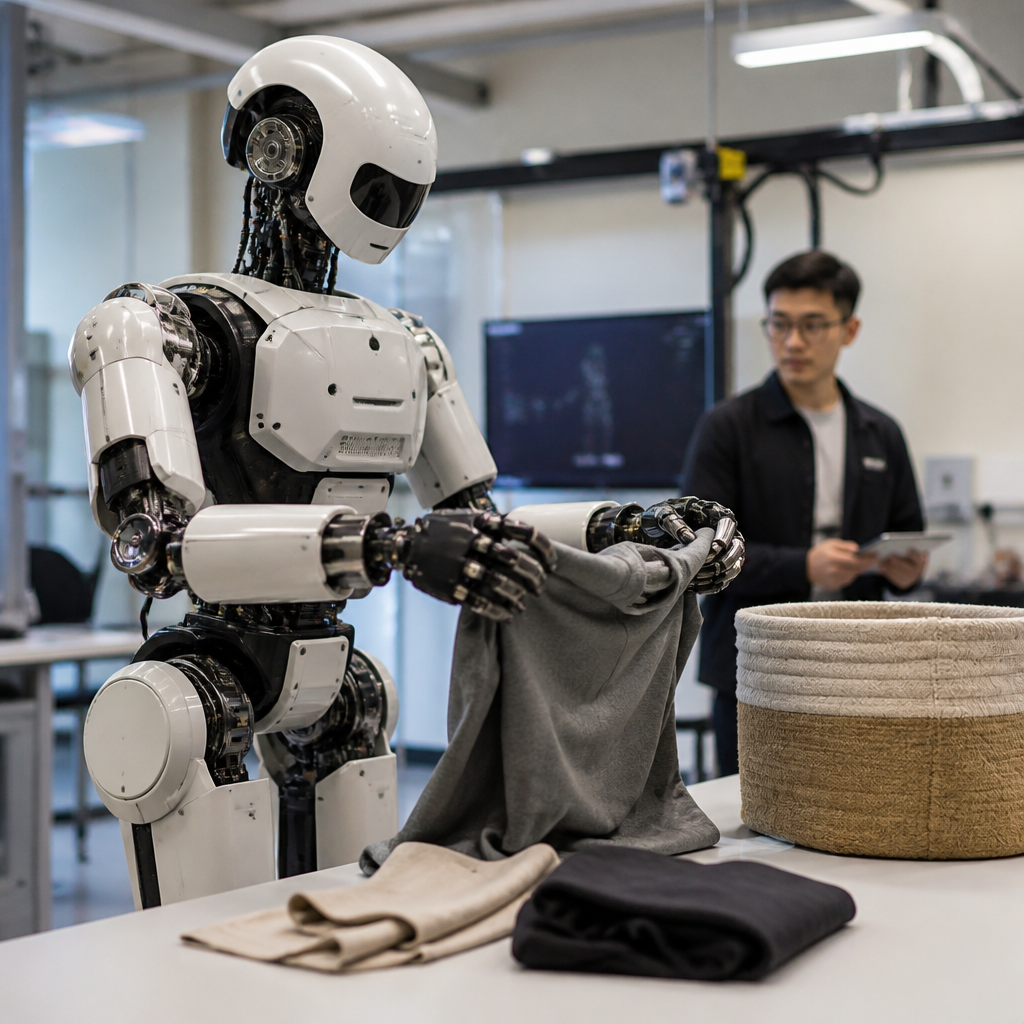
Robotics and autonomous systems are progressing more unevenly, but the direction is clear. Sidewalk delivery robots, autonomous shuttles in geofenced zones, and drone-based infrastructure inspection all have niche traction. The lesson from Silicon Valley is that autonomy succeeds first in constrained environments: campuses, ports, warehouses, industrial parks, and predictable inspection routes. Cities should treat these tools as targeted operational assets rather than near-term replacements for broad public services.
Why Startup Success in Smart Cities Depends on Procurement and Trust
Founders often assume that a strong product demo will win a city contract. It rarely does. Startup success in smart cities depends on procurement literacy, stakeholder mapping, and risk reduction. A transportation director may love a curb management platform, but the legal team will ask about public records retention, the privacy officer will ask about camera data minimization, and the finance department will ask whether savings are recurring or one-time. Silicon Valley companies that understand these questions early can shorten sales cycles dramatically. Those that ignore them burn cash while waiting for “next quarter” approvals that never arrive.
Trust is equally decisive. Residents are increasingly skeptical of surveillance, algorithmic bias, and opaque data-sharing agreements. Any smart city program using cameras, license plate data, biometric inference, or location traces needs governance before deployment, not after public backlash. Strong programs publish clear use policies, retention periods, audit procedures, and redress mechanisms. The National Institute of Standards and Technology cybersecurity framework and privacy engineering principles are useful anchors because they translate broad concerns into operational controls. In my experience, cities that communicate purpose and safeguards early see higher adoption and fewer delays than those treating governance as a legal formality.
Another reason trust matters is that public infrastructure is long-lived. A startup may pivot in a year, but a traffic signal cabinet, water network, or public safety integration may remain in service for decades. City buyers therefore care deeply about vendor viability, support models, service-level agreements, and exportability of data. The smartest startups design for this reality by supporting open standards, documenting APIs, and making migration feasible if a contract ends. That approach can feel less sticky in the short term, but it builds confidence and creates better references, which are essential in government markets.
What City Leaders and Founders Should Prioritize Next
The next phase of smart cities will reward disciplined execution more than novelty. City leaders should start with high-value operational domains where outcomes are measurable: signal timing, fleet maintenance, leak detection, building energy management, inspections, and permitting. Define a baseline, choose a limited geography, and require integration with existing systems from day one. Founders should target budget lines, not abstract innovation goals. If a product reduces overtime, avoids water loss, speeds permit issuance, or defers capital spending, it has a better chance of moving from pilot to program.
Cybersecurity must be treated as core infrastructure, not an add-on. Every connected camera, meter, sensor gateway, and building controller expands the attack surface. Cities should require asset inventories, network segmentation, multifactor authentication, logging, patch management, and incident response playbooks. Founders should be prepared to answer detailed security questionnaires and support third-party testing. The market increasingly favors vendors that can prove operational maturity, especially after ransomware incidents have disrupted municipalities across the United States.
Finally, smart city strategy should connect innovation to inclusion. Benefits must reach neighborhoods that historically received less investment, not just downtown innovation districts. That means evaluating service improvements by geography, accessibility, and affordability. It also means designing procurement pathways that let smaller startups compete through challenge programs, cooperative purchasing, and phased contracts. Silicon Valley’s clearest insight is that technology scales when incentives, governance, and user needs align. If you are building, funding, or buying urban technology, focus on measurable public value first, then use that evidence to scale the right systems with confidence.
Frequently Asked Questions
1. What does the future of smart cities actually look like, and why is Silicon Valley such an important reference point?
The future of smart cities is less about flashy technology and more about making everyday urban systems work better for residents, businesses, and public agencies. In practical terms, that means cities using connected sensors, cloud-based software platforms, real-time analytics, and automated controls to improve transportation flow, energy efficiency, water management, emergency response, public safety, and permitting. Instead of treating each city service as a separate department with separate data, the smart city model increasingly connects these systems so leaders can respond faster, allocate resources more effectively, and measure outcomes with far more precision.
Silicon Valley matters because it brings together many of the ingredients shaping this transition: advanced software companies, semiconductor innovation, artificial intelligence research, startup experimentation, venture capital, and close collaboration between public and private sectors. It is one of the few places where ideas about urban automation, mobility, digital infrastructure, and data-driven governance are tested at speed. That does not mean every city should copy Silicon Valley directly. Local priorities, budgets, regulations, and community expectations vary widely. But the region offers a useful preview of what is becoming possible, from adaptive traffic systems and grid optimization to predictive maintenance and digital service delivery.
Most importantly, the next generation of smart cities will be judged by outcomes, not by how many devices they deploy. Residents care about whether buses arrive more reliably, whether power outages are shorter, whether water leaks are detected earlier, and whether city permits are processed faster. Silicon Valley’s biggest lesson is that technology has value only when it improves the lived experience of urban life in measurable, repeatable ways.
2. Which smart city technologies are expected to have the biggest real-world impact over the next several years?
Several technologies are likely to have an outsized impact, but the most important ones are not always the most visible. One of the biggest is the expansion of sensor networks across roads, utility systems, public buildings, and environmental infrastructure. These sensors can monitor traffic congestion, air quality, water pressure, energy demand, equipment health, and occupancy patterns in near real time. When that data feeds into well-designed software platforms, cities gain operational awareness they simply did not have before.
Artificial intelligence and machine learning will also play a major role, especially in helping cities move from reactive operations to predictive management. Rather than waiting for a traffic bottleneck, a pipe failure, or an equipment breakdown, cities can identify patterns early and intervene sooner. In transportation, that may mean adaptive signal timing that changes based on live traffic conditions. In utilities, it may mean forecasting peak energy demand more accurately or detecting leaks before they become costly disruptions. In public safety, it may support faster situational awareness during emergencies, though that use must be balanced carefully with privacy protections and civil liberties.
Digital twins are another promising development. A digital twin is a virtual model of a physical system such as a district, transit corridor, or utility network. With the right data, city planners can simulate changes before making expensive real-world decisions. That could include testing new bus lanes, evaluating stormwater resilience, or modeling the energy impact of building upgrades. At the same time, edge computing and faster connectivity will help cities process critical data closer to where it is generated, reducing latency for applications that depend on immediate response.
Still, the highest-impact technology may be the least glamorous: integrated platforms that allow departments to share data and coordinate decisions. A smart city becomes truly effective when transportation, energy, public works, and emergency management are no longer operating in digital silos. Silicon Valley’s influence is especially clear here, as the region continues to push platform-based models that unify fragmented infrastructure into more responsive urban systems.
3. How can smart cities improve daily life for residents instead of just adding more technology to the urban environment?
This is the central question, because the purpose of a smart city is not gadget density or innovation for its own sake. The objective is to produce better urban outcomes that people can feel in ordinary routines. For residents, that often begins with mobility. Smart traffic management can reduce congestion, improve travel time reliability, and support more efficient coordination between cars, buses, cyclists, and pedestrians. Real-time transit updates help commuters make better choices, while smart parking systems can reduce time spent circling for spaces in busy districts.
Energy and utilities are another major area of impact. Smart grids can balance supply and demand more efficiently, reduce waste, and support the integration of renewable energy. Intelligent building systems can lower energy consumption in public facilities, while connected water infrastructure can detect leaks, monitor quality, and improve conservation. These improvements may be largely invisible, but they matter because they lower operating costs, strengthen resilience, and improve service continuity.
Residents can also benefit from faster and more transparent government services. Digital permitting systems, online service portals, automated inspections support, and better data workflows can reduce the friction people often experience when dealing with city agencies. Emergency services may improve through better dispatch data, smarter routing, and more coordinated incident response. Environmental monitoring can help cities identify pollution hotspots, heat risks, and flooding vulnerabilities, which is especially valuable as climate pressures intensify.
The strongest smart city programs are designed around specific pain points residents already understand: long commutes, unreliable services, delayed permits, high utility costs, or poor emergency responsiveness. Silicon Valley’s broader insight is that when cities start with clear public-value goals and then apply technology selectively, adoption is more effective and public trust is easier to earn. In other words, smart cities work best when residents experience them as better services, not as a constant display of technology.
4. What are the biggest challenges and risks facing smart city development?
Even with strong momentum, smart city development comes with meaningful challenges. One of the biggest is governance. Technology can move quickly, but city procurement, legal review, budgeting, and public consultation often move much more slowly. That gap can delay implementation or cause cities to adopt tools before they have fully defined ownership, accountability, and performance standards. Smart city success depends as much on institutional capacity as on technical sophistication.
Privacy and cybersecurity are also major concerns. The more connected a city becomes, the more data it collects and the more systems become potentially vulnerable to intrusion, misuse, or poor oversight. Traffic systems, utility controls, public service portals, and sensor networks all require robust security architecture, clear access controls, and long-term maintenance. Residents also need confidence that data collection is proportionate, lawful, transparent, and tied to legitimate public purposes. Without that trust, even useful programs may face backlash.
Another challenge is interoperability. Cities often work with a patchwork of legacy systems, different vendors, and department-specific tools that do not communicate easily with one another. If new smart city investments create additional silos, they can increase complexity instead of reducing it. Funding is a related issue. While some technologies eventually reduce operating costs, the upfront expense of infrastructure, integration, training, and maintenance can be significant. Smaller cities in particular may struggle to scale projects without regional partnerships, grants, or private-sector collaboration.
There is also the risk of inequity. If smart city investments are concentrated only in high-growth districts or affluent neighborhoods, the benefits of innovation may bypass the communities that need service improvements most. Silicon Valley’s example is useful here too, not just for its innovation strengths but also for the caution it offers: rapid technological progress does not automatically produce inclusive public outcomes. The cities that lead in the next phase will be the ones that pair digital transformation with strong governance, equity planning, security protections, and clear public accountability.
5. How should city leaders and urban planners prepare for the future of smart cities?
City leaders and planners should begin by focusing on outcomes before tools. That means identifying the most urgent local problems, such as congestion, energy inefficiency, infrastructure failures, water loss, slow permitting, or emergency response gaps, and then mapping which technologies can realistically improve those areas. A strong smart city strategy is not a shopping list of devices. It is a structured operating model that connects policy goals, infrastructure priorities, departmental workflows, data governance, and resident experience.
Building a solid data foundation is essential. Cities need clear standards for how data is collected, stored, shared, secured, and used across departments and vendor relationships. They also need internal talent or trusted partners who can interpret analytics, manage platforms, and evaluate performance over time. Pilot projects can be useful, but they should be designed with scalability in mind. Too many cities run isolated pilots that never become durable systems because integration, staffing, maintenance, or budgeting were not addressed from the start.
Leaders should also prioritize open architecture and interoperability so that future investments do not lock the city into rigid, closed ecosystems. Procurement processes may need modernization to support more agile experimentation while still maintaining transparency and public accountability. Community engagement matters as well. Residents should understand what problems the city is trying to solve, what data is being collected, what safeguards are in place, and how success will be measured. Public trust is not a side issue in smart city planning; it is foundational.
Silicon Valley suggests that the cities best prepared for the future will combine digital ambition with operational discipline. They will invest in resilient infrastructure, cross-department collaboration, cybersecurity, climate readiness, and measurable service improvement. They will treat smart city technology not as a branding exercise, but as a long