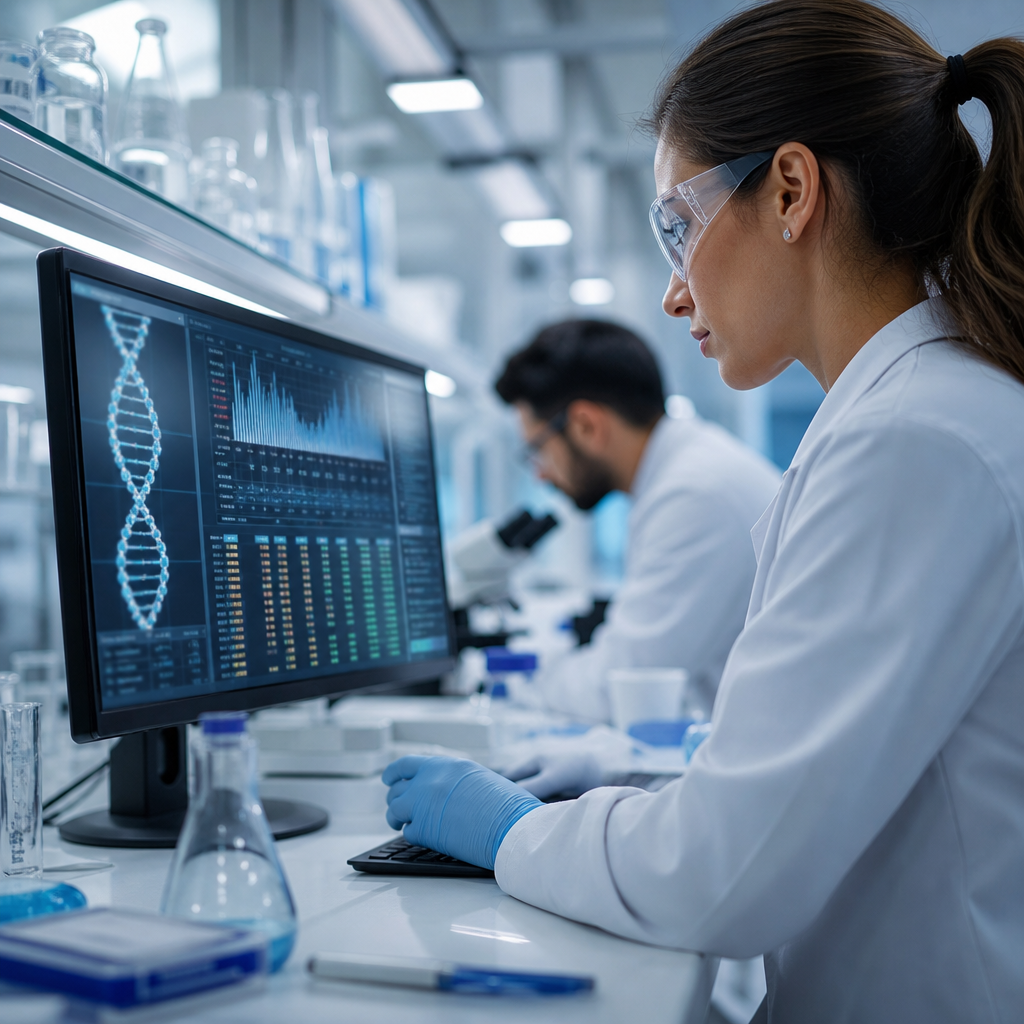
Silicon Valley is no longer defined only by software, semiconductors, and social platforms; it has become one of the world’s most influential launchpads for biotech innovation. Emerging biotech wonders from Silicon Valley startups now span gene editing, AI-guided drug discovery, precision diagnostics, synthetic biology, and programmable cell therapies. For readers following tech innovations and startups, this field matters because biology is becoming an engineering discipline, and the companies shaping that shift are creating products that affect medicine, agriculture, climate resilience, and manufacturing.
In practical terms, biotech refers to the use of living systems, cells, or biological processes to build useful products. Silicon Valley biotech adds another layer: venture-backed speed, software-style iteration, data infrastructure, and deep integration with machine learning, robotics, and cloud computing. I have worked with startup teams translating research into product roadmaps, and the defining pattern is clear. The strongest companies are not simply inventing molecules; they are building repeatable platforms that can design, test, and improve biological systems faster than traditional laboratories could a decade ago.
This hub article explores cutting-edge tech across the startup biotech landscape and explains why the sector has become central to modern innovation strategy. It covers the core categories driving attention, the enabling tools behind them, the business models investors favor, and the technical and regulatory realities every founder faces. If you want one page that frames the major biotech trends emerging from Silicon Valley startups, this article is designed to provide that map with direct, usable context.
Why Silicon Valley Became a Biotech Launchpad
Silicon Valley’s biotech rise was enabled by a convergence of capital, talent, and infrastructure. World-class universities such as Stanford and the University of California system generated foundational research and a steady talent pipeline. Venture firms that once focused almost entirely on software expanded into life sciences. Cloud computing lowered the cost of storing and analyzing genomic and experimental data. At the same time, lab automation reduced the manual burden of running thousands of assays. The result was a startup environment where biology could be approached with the mindset of rapid prototyping.
Another reason the region matters is cross-disciplinary density. In the same week, a biotech founder can meet a CRISPR scientist, a machine learning engineer, a regulatory advisor, and a manufacturing specialist within a few miles. That proximity accelerates company formation and problem-solving. Startups like Ginkgo Bioworks, although based elsewhere, helped validate the platform model; Silicon Valley companies adapted that playbook by combining wet-lab execution with software workflows, high-throughput screening, and data science. The region became especially strong in areas where biological uncertainty could be reduced through computation and automation.
Gene Editing and Programmable Medicine
Gene editing remains one of the most closely watched biotech frontiers. Technologies such as CRISPR-Cas9, base editing, and prime editing allow scientists to modify DNA with increasing precision. Silicon Valley startups are applying these tools to inherited disorders, oncology, and immune system engineering. The promise is straightforward: instead of treating symptoms indefinitely, a company may be able to correct the molecular cause of disease. That is why programmable medicine attracts major funding despite long timelines and strict oversight.
The technical challenge is not only making the edit but delivering the editor to the right cells safely and efficiently. Startups work on viral vectors, lipid nanoparticles, and ex vivo workflows where cells are removed, edited, tested, and reinfused. In practice, delivery determines commercial viability. A brilliant editing system that cannot reliably reach target tissue will fail in development. Founders who understand this early tend to build stronger platforms, often pairing editing tools with proprietary delivery technology rather than treating delivery as an afterthought.
Real-world momentum in this area is visible in the first approved CRISPR-based therapies for specific blood disorders, which proved that editing can move beyond theory into regulated clinical use. Startups in Silicon Valley are now pushing into harder targets such as liver disease, autoimmune conditions, and solid tumors. The field is exciting, but it is not frictionless. Off-target effects, immune reactions, durability, and manufacturing cost all remain serious constraints.
AI-Driven Drug Discovery and Computational Biology
One of the most important biotech shifts in Silicon Valley is the use of artificial intelligence to improve how drugs are discovered. Traditional drug development is expensive, slow, and failure-prone. Estimates often place the cost of bringing a new drug to market above $1 billion when failures are included. Startups are using machine learning to identify targets, predict molecular interactions, optimize compounds, and stratify patient populations. The immediate value is not magic automation; it is better decision quality earlier in the pipeline.
Companies in this category blend cheminformatics, structural biology, omics data, and foundation models trained on protein sequences or molecular properties. Tools such as AlphaFold changed expectations by making protein structure prediction far more accessible, while cloud-scale compute lets startups run screening and simulation workflows that once required major pharmaceutical infrastructure. In my experience, the best teams do not claim AI replaces biology. They treat models as hypothesis engines, then close the loop with disciplined experimentation. That combination of computation plus validation is what investors and partners trust.
| Biotech area | Core technology | Typical startup goal | Main challenge |
|---|---|---|---|
| Gene editing | CRISPR, base editing, prime editing | Correct disease-causing mutations | Safe, efficient delivery |
| Drug discovery | Machine learning, protein modeling | Find better targets and compounds faster | Experimental validation quality |
| Diagnostics | Sequencing, biomarkers, microfluidics | Detect disease earlier and more accurately | Clinical utility and reimbursement |
| Synthetic biology | Engineered microbes, DNA design automation | Produce materials, chemicals, or therapeutics | Scale-up economics |
For startup operators, success in computational biology depends on data quality more than marketing narratives. Models trained on biased, sparse, or poorly labeled data produce weak predictions. That is why leading companies invest heavily in assay design, laboratory information management systems, and standardized experimental pipelines. The software stack matters, but robust biology operations matter just as much.
Precision Diagnostics and the Move Toward Earlier Detection
Diagnostics is another area where Silicon Valley startups are producing meaningful biotech advances. Precision diagnostics use biomarkers, sequencing, imaging, and algorithmic interpretation to detect disease earlier or classify it more accurately. This includes liquid biopsies for cancer detection, cell-free DNA analysis, infectious disease panels, and companion diagnostics linked to targeted therapies. Earlier detection changes outcomes because treatment is usually more effective before disease progresses.
What makes startup diagnostics attractive is the possibility of combining hardware, bioinformatics, and clinical workflow into a scalable product. A company may build a microfluidic sample-prep device, pair it with a sequencing workflow, and deliver results through software that fits directly into hospital systems. But diagnostics businesses face a different commercial test than therapeutics. It is not enough to show analytical accuracy. Founders must prove clinical utility, fit into reimbursement pathways, and survive procurement cycles inside health systems. Those hurdles are substantial, which is why many technically elegant diagnostic startups still struggle to scale.
Still, the opportunity remains large. Population screening, infectious disease surveillance, and personalized oncology all depend on better diagnostics. Silicon Valley excels when interpretation and workflow are central to value creation, and diagnostics sits squarely in that zone.
Synthetic Biology, Biofabrication, and Climate-Focused Platforms
Synthetic biology extends the engineering mindset to cells and microbes. Startups design biological systems to manufacture enzymes, therapeutics, specialty chemicals, food ingredients, and advanced materials. Instead of extracting a compound from scarce natural sources or synthesizing it through energy-intensive chemistry, a company can engineer an organism to produce it through fermentation. This is one of the clearest examples of cutting-edge tech changing both industry and sustainability economics.
Biofabrication startups are also moving beyond pharmaceuticals into cultivated materials and climate applications. Some engineer microbes to create low-carbon feedstocks. Others develop biological alternatives to plastics, dyes, or animal-derived ingredients. In Silicon Valley, these companies often look like full-stack platforms: DNA design software, automated build-test-learn cycles, robotics, process development, and partnerships with manufacturers. The science is impressive, but scale-up is where many models are proven or broken. A process that works in a benchtop bioreactor can become uneconomic at industrial volume if yield, purity, or downstream processing costs disappoint.
The most resilient synthetic biology startups understand that unit economics must guide research priorities. They choose target markets where performance advantages justify early cost premiums, then improve process efficiency over time. That discipline separates durable platform companies from science projects.
Regulation, Manufacturing, and What Determines Long-Term Winners
Biotech startup success is never determined by novelty alone. Regulation, quality systems, manufacturing readiness, and clinical design decide whether innovation reaches real users. Therapeutic companies must navigate FDA pathways, Good Manufacturing Practice requirements, pharmacovigilance obligations, and carefully staged clinical trials. Diagnostic companies may face CLIA, CAP, or FDA-related requirements depending on their model. Synthetic biology firms must manage biosafety, containment, and commercial production controls. These are not peripheral issues; they are part of the product.
Manufacturing is especially decisive. In software, distribution can be nearly free. In biotech, every batch reflects process discipline. Cell therapies need chain-of-custody controls. Gene therapies need vector production capacity. Fermentation companies need reproducible scale-up. Investors increasingly reward founders who think about chemistry, manufacturing, and controls early rather than after proof of concept. Strategic partnerships with contract development and manufacturing organizations can help, but outsourcing does not remove accountability.
The long-term winners in Silicon Valley biotech usually share five traits: they solve a real clinical or industrial problem, own a differentiated platform, generate high-quality data, plan for regulation early, and understand how they will manufacture at scale. Readers exploring cutting-edge tech should watch this sector closely, then dive deeper into the specific areas most relevant to their goals. Biotech is becoming a core engine of startup innovation, and the next decade will reward those who learn its platforms, constraints, and possibilities now.
Frequently Asked Questions
1. Why is Silicon Valley becoming such a powerful hub for biotech startups?
Silicon Valley has become a major force in biotech because it combines several advantages that rarely exist in one place: deep technical talent, a strong startup culture, access to venture capital, and a long-standing belief that difficult problems can be solved through engineering. In software, that mindset led to breakthroughs in computing, networking, and artificial intelligence. In biotech, it is now being applied to biology itself. Founders, investors, and researchers increasingly view cells, proteins, genes, and biological systems as platforms that can be measured, programmed, optimized, and scaled.
Another major reason is the convergence of disciplines. Modern biotech companies often sit at the intersection of biology, machine learning, automation, robotics, cloud computing, and advanced data analytics. Silicon Valley already has world-class expertise in those areas, so startups can build teams that include computational biologists, AI researchers, hardware engineers, software developers, and life sciences specialists under one roof. That multidisciplinary collaboration is especially valuable in fields like AI-guided drug discovery, precision diagnostics, and synthetic biology, where progress depends on both wet-lab science and high-performance computing.
The region also benefits from proximity to research institutions, experienced operators, and a dense network of early adopters and strategic partners. Startups can more easily connect with incubators, accelerators, specialized lab spaces, and investors who understand frontier technologies. As biotech tools become faster, cheaper, and more data-driven, Silicon Valley’s strengths in speed, iteration, and platform thinking make it a natural launchpad for companies trying to transform how therapies are discovered, how diseases are detected, and how biology is engineered.
2. What kinds of biotech innovations are coming out of Silicon Valley startups today?
Emerging biotech startups in Silicon Valley are working across several high-impact categories, each with the potential to reshape healthcare, industry, and scientific research. One of the most watched areas is gene editing, where companies are developing more precise ways to modify DNA for therapeutic applications, agricultural improvements, and disease modeling. These tools aim to correct harmful mutations, improve cellular function, or create custom biological systems with much greater control than earlier methods allowed.
Another fast-growing segment is AI-guided drug discovery. Instead of relying only on traditional trial-and-error screening, startups are using machine learning to predict how molecules behave, identify promising drug targets, and shorten early-stage development timelines. This can potentially reduce costs and improve success rates by helping scientists focus on candidates with stronger biological and chemical potential. While AI does not replace clinical validation, it can dramatically improve the way hypotheses are generated and tested.
Precision diagnostics is also a major area of innovation. Startups are building tools that detect disease earlier and more accurately by analyzing genomic signals, protein patterns, biomarkers, or even subtle changes in patient data. These diagnostics may support earlier cancer detection, better monitoring of chronic conditions, or more personalized treatment decisions. In many cases, the goal is to move from one-size-fits-all medicine toward care that is tailored to the biology of the individual patient.
Synthetic biology and programmable cell therapies are equally important. Synthetic biology companies design and engineer biological components to perform useful functions, such as manufacturing materials, producing therapeutic compounds, or creating more sustainable industrial processes. Programmable cell therapy startups, meanwhile, are trying to turn living cells into targeted treatments that can identify disease, respond to biological signals, and carry out therapeutic actions inside the body. Together, these categories show how Silicon Valley biotech is expanding far beyond traditional pharmaceuticals into a much broader vision of biology as a programmable technology stack.
3. How is artificial intelligence changing biotech startups in Silicon Valley?
Artificial intelligence is changing biotech in Silicon Valley by helping startups process biological complexity at a scale that would be nearly impossible through manual research alone. Biology generates enormous volumes of data, from genomic sequences and protein structures to imaging results, clinical records, and lab experiment outputs. AI systems can identify patterns in these datasets, surface hidden relationships, and generate predictions that guide researchers toward better experiments and more promising development paths.
In drug discovery, AI is being used to identify novel targets, model molecular interactions, design compounds, and prioritize candidates for lab testing. This does not eliminate the need for biology, chemistry, and clinical trials, but it can make early research much more efficient. Startups can test more ideas virtually before committing time and capital to expensive laboratory work. That means they may be able to move faster, reduce waste, and uncover opportunities that traditional pipelines might miss.
AI is also transforming diagnostics and personalized medicine. Startups can combine genomic, proteomic, and patient-level data to build models that detect disease risk, classify disease subtypes, or predict treatment response. In synthetic biology and cell engineering, machine learning can help optimize designs, improve manufacturing processes, and accelerate the cycle of build-test-learn. This is especially valuable in Silicon Valley, where AI talent and computing infrastructure are already abundant.
That said, the most credible companies are careful not to present AI as magic. In biotech, predictions must still be validated experimentally and clinically. Regulatory standards, reproducibility, biological variability, and patient safety remain central. The strongest startups use AI as a powerful tool within a rigorous scientific framework, not as a shortcut around real-world evidence.
4. What makes these emerging biotech startups important for investors, entrepreneurs, and everyday readers?
These startups matter because they represent a shift in how innovation is being created and where future economic value may come from. For investors, biotech in Silicon Valley offers exposure to platforms that could influence multiple industries at once, including healthcare, pharmaceuticals, agriculture, materials science, and manufacturing. Unlike single-product companies, many of these startups are building repeatable technology engines, such as gene editing platforms, AI drug design systems, or programmable biology tools that can generate multiple products over time.
For entrepreneurs, the rise of biotech in Silicon Valley signals that biology is increasingly becoming an engineering and software-adjacent field. This opens the door for founders who may come from computational backgrounds, not only traditional wet-lab science. Startups are forming around ideas that blend code, automation, machine intelligence, and molecular biology, creating new opportunities for company building. In other words, the next generation of transformative startups may not just build apps or chips; they may build therapies, diagnostics, and engineered biological systems.
For everyday readers and technology followers, this trend matters because it will likely affect how people live, receive medical care, and understand health in the coming years. Advances in diagnostics could lead to earlier detection of disease. AI-driven discovery may contribute to faster development of treatments. Cell therapies and gene editing could change how certain illnesses are managed or even cured. Beyond medicine, synthetic biology may influence sustainability, food production, and advanced materials. Following these startups is not just about tracking niche science news; it is about understanding a broad technological shift that could touch nearly every part of society.
5. What challenges do Silicon Valley biotech startups face as they grow?
Despite the excitement, biotech startups face a very different path from typical software companies. One of the biggest challenges is time. Biological research, preclinical validation, clinical trials, regulatory review, and manufacturing scale-up can take years. Even when early data looks promising, translating a scientific breakthrough into a safe, approved, widely used product is complex and expensive. Startups must balance the fast-moving expectations of the tech world with the slower, evidence-driven realities of medicine and life sciences.
Capital intensity is another major hurdle. Building a biotech company often requires specialized laboratories, scientific equipment, compliance systems, manufacturing capabilities, and highly trained teams. That makes it far more expensive than launching many digital startups. Access to funding can be strong in Silicon Valley, but investors also expect startups to demonstrate clear technical differentiation, strong intellectual property, credible scientific leadership, and a realistic path to commercialization.
Regulation and trust are equally important. Companies developing therapies, diagnostics, or gene-based tools must navigate strict oversight designed to protect patients and ensure product quality. They must also communicate clearly about what their technology can and cannot do. In an industry shaped by high stakes and public interest, hype can damage credibility quickly. The most durable startups are those that pair bold vision with rigorous data, transparent milestones, and responsible claims.
Finally, scaling remains a real test. It is one thing to prove an idea in a small research setting; it is another to manufacture consistently, integrate into healthcare systems, gain physician adoption, and reach patients at meaningful scale. The startups most likely to succeed are those that combine scientific excellence with operational discipline, regulatory awareness, and a clear understanding of real-world clinical or commercial needs.