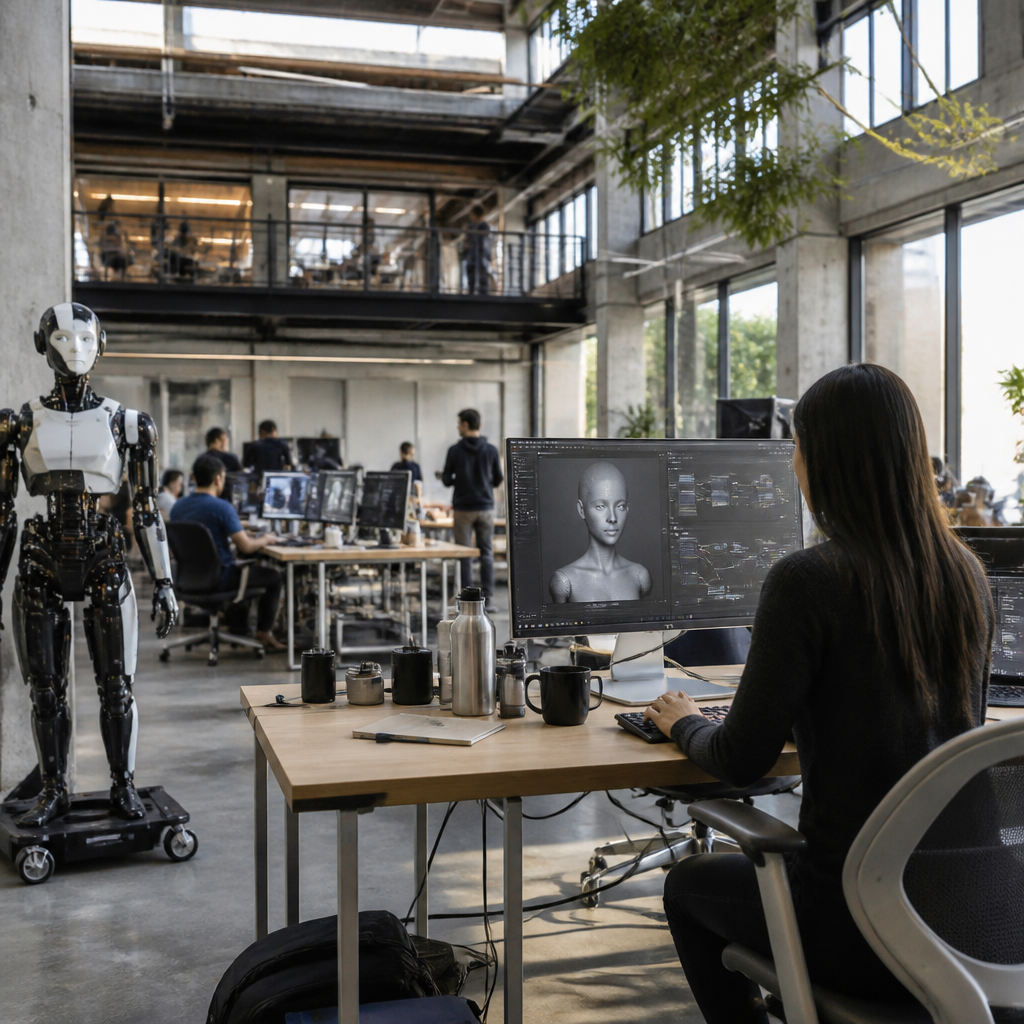
In the modern world, technological advancement significantly shapes industries, with Silicon Valley being a key player in driving innovation. At the heart of this transformation is industrial automation—a broad field focusing on using technology to perform processes with minimal human intervention. Industrial automation improves efficiency, quality, and safety in various industrial sectors. This subject is crucial as industries worldwide strive to meet growing demands while maximizing efficiency and minimizing operational costs. Also, with increasing global competition, companies must adapt quickly to changing technological landscapes. Thus, understanding Silicon Valley’s influence on future trends in industrial automation is essential for stakeholders aiming to maintain competitive edges.
The Role of Artificial Intelligence (AI) in Industrial Automation
Silicon Valley is synonymous with cutting-edge technology, and artificial intelligence lies at its core. AI’s significance in industrial automation cannot be overstated, as it allows machines to learn from data, adapt to changes, and make decisions independently. An exemplary case is the implementation of AI-driven predictive maintenance systems. By analyzing data from machinery, these systems forecast potential failures, allowing companies to preemptively address issues before costly breakdowns occur. Companies like IBM Watson have successfully integrated AI into industrial settings, exemplifying how AI enables smarter and more efficient operations. As AI continues to evolve, its integration in industrial automation will likely lead to even greater levels of operational efficiency and productivity.
The Internet of Things (IoT) Revolutionizing Operations
Another significant influence of Silicon Valley originates from the realm of the Internet of Things (IoT). IoT refers to the network of interconnected devices that communicate and exchange data, paving the way for smart factories. In industrial settings, IoT enhances connectivity and data accessibility, allowing real-time monitoring and control of processes. A notable real-world example is Amazon’s application of IoT in its fulfillment centers. Through interconnected devices and sensors, Amazon optimizes its inventory management, streamlining order fulfillment and reducing human error. The IoT is not only a catalyst for improving current operations but also drives innovation by facilitating the seamless integration of new technologies into industrial systems.
Robotics Transforming Manufacturing Practices
The evolution of robotics is another testament to Silicon Valley’s impact on industrial automation. As robotics technology advances, firms increasingly deploy autonomous robots within manufacturing settings to enhance efficiency and precision. A pioneering example is Tesla’s Gigafactories, which employ robotic systems to produce electric vehicles at unprecedented scales. Equipped with state-of-the-art robotics, these factories combine speed and precision, drastically reducing the time required to complete complex assembly tasks. Furthermore, the flexibility and scalability offered by robotic systems make them indispensable tools in responding to market demand shifts. By redefining manufacturing practices, robotics continues to set new standards in industrial efficiency and productivity.
Cloud Computing and Data Analysis
Often positioned at the forefront of digital innovation, Silicon Valley is instrumental in advancing cloud computing technologies. Cloud computing supports industrial automation by providing scalable, secure data storage and analysis platforms. For instance, General Electric has adopted the use of cloud services to optimize its operations. With access to vast amounts of data, industrial entities can derive actionable insights that drive informed decision-making. Moreover, cloud computing enhances collaboration across geographic locations, breaking down barriers that once hampered efficient operations. This capability aligns with the growing trend of globalization, further exemplifying the importance of cloud computing within the domain of industrial automation.
| Technology | Impact | Example |
|---|---|---|
| AI | Predictive Maintenance | IBM Watson’s systems |
| IoT | Real-Time Monitoring | Amazon Fulfillment Centers |
| Robotics | Enhanced Manufacturing | Tesla Gigafactories |
| Cloud Computing | Data Analysis and Collaboration | General Electric’s use of cloud services |
Cybersecurity Challenges in an Automated World
As industries lean heavily on digital processes, cybersecurity becomes a paramount concern. Silicon Valley companies focus on developing robust cyber defense systems to protect sensitive industrial data and operations. With the growing complexity of cyber threats, leading firms like Palo Alto Networks innovate security solutions tailored for industrial systems. The rise in cyber-attacks on critical infrastructure highlights the need for stringent security measures to safeguard automated processes. Ensuring cybersecurity is not only vital for protecting intellectual property but also crucial for maintaining trust and reliability in automated systems. Thus, the synergy between advanced cybersecurity solutions and industrial automation is essential for a secure and reliable industrial future.
The Changing Workforce Dynamics
The integration of sophisticated automation technologies has significant implications for the workforce, bringing changes that must be addressed proactively. Silicon Valley’s pursuit of innovation necessitates a workforce equipped with new skills to manage, maintain, and optimize advanced systems. Companies like Coursera and other educational platforms offer programs designed to upskill workers, preparing them for the evolving industrial landscape. Furthermore, automation technologies often lead to workforce displacement, urging policymakers and organizations to develop strategies for employment transitions. By fostering a culture of lifelong learning and skills enhancement, companies ensure a seamless transition to an automated environment that benefits both businesses and the workforce.
Environmental Impacts and Sustainable Practices
Silicon Valley’s drive for innovation extends to promoting environmentally sustainable practices in industrial automation. Automation technologies facilitate efficient resource usage, promoting sustainability and reducing waste. A prime example is Apple, which integrates sustainable automation processes within its supply chain. By maximizing energy efficiency and promoting the recycling of materials, Apple not only reduces its carbon footprint but also sets a standard for other companies to follow. Industries adopting automated systems are poised to achieve substantial environmental goals by reducing emissions and optimizing energy consumption, aligning with broader efforts toward sustainability and environmental stewardship. This approach ensures that future industrial evolutions contribute positively to the environment.
The Future of Industrial Automation: An Outlook
Looking ahead, Silicon Valley’s role in shaping industrial automation remains promising. Future developments will likely focus on enhancing machine learning, IoT, cloud computing, and robotics, paving the way for groundbreaking innovations. Industries will increasingly rely on these advanced technologies to achieve unprecedented levels of automation, efficiency, and interconnectedness. Data-driven decision-making, enabled through comprehensive data analysis, will redefine operational strategies across sectors. As automation technologies become more sophisticated, companies must continuously evaluate and integrate new advancements to remain competitive. Ultimately, embracing innovation ensures that industries capitalize on the vast potential of Silicon Valley-fueled technological advancements, propelling industrial automation into a new era of efficiency and intelligence.
The future is bright and full of potential for industries willing to embrace these changes and challenges. Companies are urged to stay informed about technological advancements and partner with leaders in Silicon Valley to leverage cutting-edge innovations. As the industrial landscape continues to evolve, fostering a culture that supports collaboration, sustainable practices, and continuous learning becomes imperative. By doing so, businesses can harness the full power of automation technologies, ensuring long-term success and resilience in an ever-changing world of industrial automation.
Frequently Asked Questions
1. What role does Silicon Valley play in the future of industrial automation?
Silicon Valley is often regarded as the epicenter of technological innovation and change, and it plays a critical role in driving the future of industrial automation. The region is home to numerous tech companies and startups that specialize in developing cutting-edge solutions, including AI, robotics, machine learning, and IoT (Internet of Things) technologies. These innovations are integral to transforming how industries operate by automating processes for improved efficiency and effectiveness.
One of Silicon Valley’s major contributions is the advancement and integration of artificial intelligence into industrial automation systems. AI enables machines to learn, adapt, and provide insights on industrial processes, leading to smarter and more adaptive systems. This evolution helps industries optimize their operations, reduce downtime, and enhance productivity.
Additionally, the region’s culture of innovation fosters continuous research and development, encouraging the progression of new technologies that can be applied to automation. The collaboration between technology companies, research institutions, and industrial players in Silicon Valley creates an ecosystem that propels the future of industrial automation forward.
2. How does the integration of AI and machine learning impact industrial automation?
The integration of AI and machine learning into industrial automation marks a significant leap towards smarter industrial operations. AI and machine learning technologies enable automation systems to analyze vast amounts of data generated during industrial processes and use that data to improve efficiency, accuracy, and decision-making capabilities.
By employing machine learning algorithms, industrial systems can go beyond predefined workflows, adapting to changes in real-time and optimizing operations on the fly. For instance, AI-powered predictive maintenance can foresee equipment failures before they occur, thereby minimizing downtime and maintenance costs.
Moreover, these technologies enhance quality control by allowing for real-time monitoring and immediate corrective actions, reducing waste, and improving the overall standard of production. As a result, industries capable of utilizing AI and machine learning in their operations can achieve significant gains in productivity, product quality, and safety.
3. In what ways is industrial automation improving workplace safety?
Industrial automation greatly enhances workplace safety by reducing the need for human intervention in hazardous or high-risk activities. Automated systems can take over tasks that are dangerous, repetitive, or require precision beyond human capabilities, greatly minimizing the chances of workplace accidents.
For example, robots can handle toxic materials, operate in extreme temperatures or environments, and perform heavy lifting, protecting workers from potential physical harm. Automation also brings about precise control over processes, ensuring operations are carried out safely and within regulatory guidelines.
Furthermore, real-time monitoring technology can identify potential safety hazards and alert operators before they escalate into significant issues. Safety sensors and automated shutoff systems can intervene immediately should an unsafe condition arise, ensuring corrective actions are taken swiftly and preventing accidents and injuries.
4. What challenges do industries face when adopting new automation technologies?
Despite the undeniable benefits of industrial automation, adopting new technologies also comes with its fair share of challenges. One of the most notable challenges is the initial cost of implementing automation systems, which can be significant—especially for smaller enterprises or those operating on limited budgets.
Another challenge is the need for skilled personnel who can manage and maintain these advanced systems. As automation becomes more prevalent, there’s a growing demand for workers who understand the intricacies of these technologies and can troubleshoot when issues arise. This leads to a skills gap where industries must invest in training or hiring individuals with these specialized skills.
Additionally, integrating new automation technologies means dealing with potential cybersecurity risks. With more connected devices and systems, industrial operations become vulnerable to cyber-attacks. Industries must prioritize securing their networks and systems to prevent breaches that could disrupt operations or result in data loss.
5. How does industrial automation affect job opportunities in the industry?
The impact of industrial automation on job opportunities is a topic of ongoing debate and concern. While automation can lead to the displacement of certain jobs that are repetitive and easily automatable, it simultaneously creates new roles and opportunities that require higher technical skills.
Automation can replace jobs that involve manual labor or routine tasks, but it also paves the way for roles that require oversight of automated systems, maintenance, data analysis, and system management. The demand for professionals skilled in AI, robotics, and IT solutions is on the rise, offering opportunities in these growing fields.
Moreover, the efficiency gains achieved through automation allow industries to grow, leading to the creation of new products and services. This growth can stimulate job creation in supporting sectors and roles focused on innovation and development.
Ultimately, while automation shifts the job landscape, it does not eliminate opportunities. Instead, it requires a transition towards a workforce equipped with the necessary skills for future industrial environments.